
Business
Oregon Lawmakers Expand Corporate Influence Despite Campaign Reform

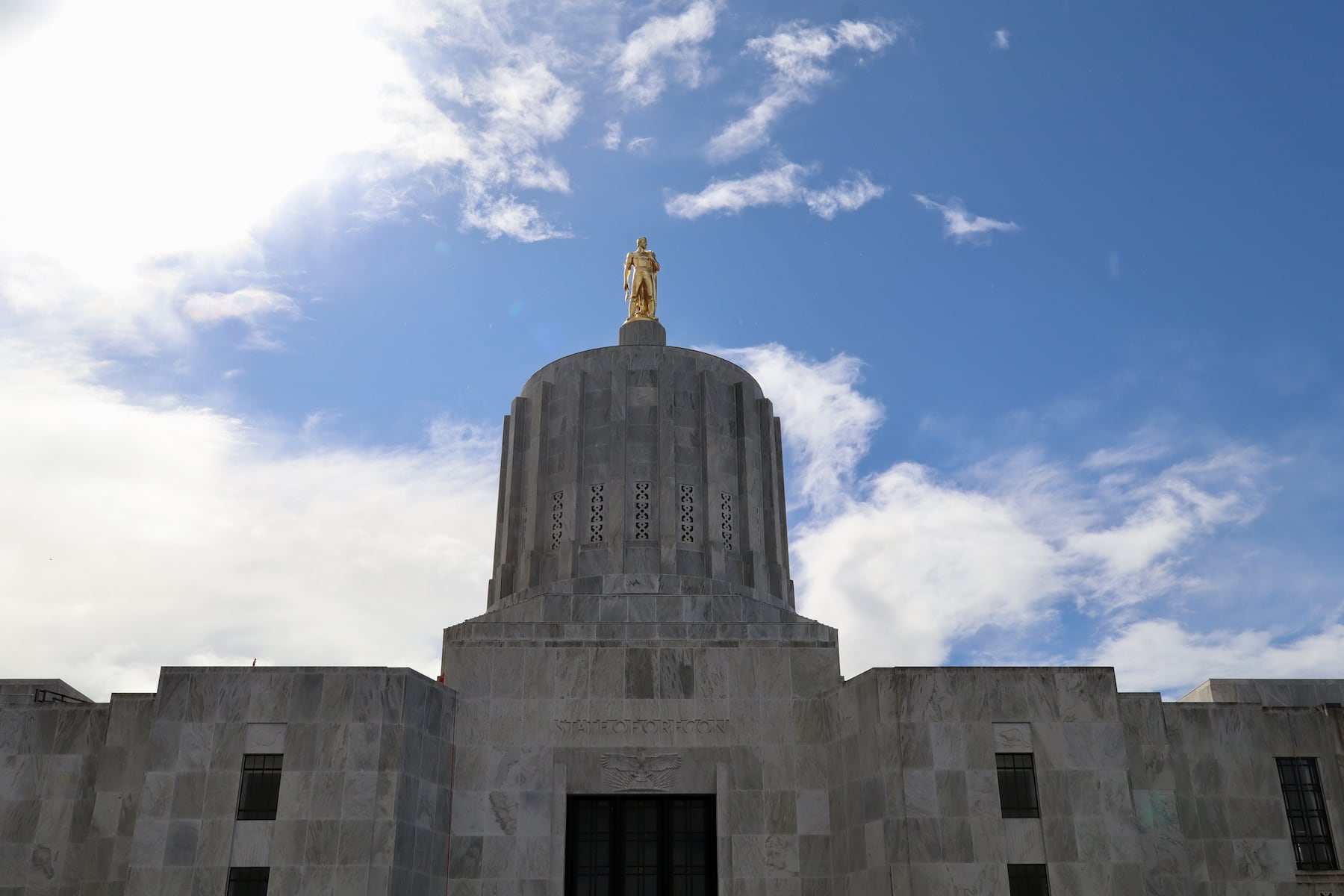
Oregon lawmakers have approved a controversial bill that critics argue undermines recent campaign finance reform efforts. Despite a significant voter mandate in 2020 allowing for contribution limits, the new legislation appears to expand corporate influence in state politics.
In March 2024, the Democratic-controlled Legislature passed a bill that supporters describe as necessary technical fixes to prior legislation. However, campaign reform advocates warn that it introduces loopholes that will enable corporations to circumvent donation limits. Dan Meek, a prominent attorney advocating for campaign finance reform, labeled the new bill as “the bill to destroy campaign finance reform in Oregon.”
Oregon has been unique in its lack of contribution limits on campaign donations, a status that has allowed corporate entities to contribute more than in any other state. Following a 2019 investigation by former journalist and advocate for campaign finance reform, the state Supreme Court ruled that campaign donations are protected free speech under the Oregon Constitution. This ruling has led to a political landscape where money significantly shapes public policy.
In 2020, Oregon voters overwhelmingly supported a measure to change the constitution to allow for contribution limits, with 78% in favor—one of the widest margins for any ballot measure in decades. Despite this mandate, lawmakers failed to implement any restrictions until 2024, when they set a limit of $3,300 per individual donation. This figure is much higher than the $1,000 to $2,000 range that many good-government groups had sought.
Further complicating matters, the new law allows corporate donations to continue, something many other states have banned. Lawmakers also delayed the implementation of these limits until 2027, well after the current gubernatorial race has concluded.
During the recent legislative session, the bill introduced significant changes that critics argue dilute the effectiveness of the original campaign finance reform efforts. Notably, it included provisions that would allow companies to bypass limits through their corporate affiliates, which has raised alarms among those advocating for stricter controls on political donations.
Phil Keisling, a former secretary of state, remarked on the Legislature’s track record, calling it “one of the most profound public policy failures” in Oregon’s recent history. He emphasized that limits should have been established decades ago, citing the powerful interests within both political parties that prefer the status quo.
Lawmakers have defended their actions, claiming that the adjustments are essential for ensuring that the voices of everyday people are not drowned out by wealthy interests. House Majority Leader Ben Bowman described the contribution limits as a step toward more equitable elections.
While the investigation into Oregon’s campaign finance practices revealed numerous instances of lawmakers misusing campaign funds for personal benefits, advocates continue to battle for tighter restrictions. Kate Titus, Oregon director of Common Cause, expressed frustration over the recent legislative changes, suggesting that they undermine the spirit of the 2020 voter mandate.
The complexities of Oregon’s campaign finance landscape were further amplified when labor unions threatened to introduce their own competing initiative in response to advocates pushing for tighter donation limits. This resulted in a compromise bill that attempted to balance the interests of various stakeholders, including unions, campaign reform advocates, and big businesses.
Despite these negotiations, the recent legislative session introduced a surprise bill with significant implications. The newly proposed legislation would extend the deadline for launching a campaign finance tracking website from 2028 to 2032 and effectively double the annual donation limit for certain political committees.
Critics, including the Campaign Legal Center, a nonpartisan watchdog organization, have called these changes a means to render Oregon’s contribution limits ineffective. They assert that the new provisions could allow for even greater corporate influence in elections, undermining the progress made in recent years.
As discussions continue, the bill now awaits the decision of Gov. Tina Kotek, who has until April 17, 2024, to sign it into law. The outcome could have lasting implications for campaign finance reform in Oregon, affecting how political contributions are managed in the years to come.

Robinhood Stock Surges 2.5% in Early Trading on March 17

Israel Intensifies Strikes as Global Energy Crisis Looms

CALV Offers Class on Communication Skills for Real Estate Professionals

Historic Bideford Pub Reopens as The Patch Wine Bar & Kitchen

Oscar Night Celebrations: Winners, Guests, and Exclusive After-Parties

Samsung Galaxy Watch 9 Set for Larger Battery Boost, Report Reveals

Kibble vs. Fresh Dog Food: What’s Best for Your Dog’s Health?

Acclaimed San Francisco Pizzeria Del Popolo to Close in May

‘Invincible’ Season 4 Launches on Prime Video with Epic Action

ALMA Discovers Companion Orbiting Giant Red Star π 1 Gruis

Doctoral Candidate Trivanni Yadav Advances Battery Research at UTulsa

Global Air Forces Ranked by Annual Defense Budgets in 2025

Rev. Bry Shields to Retire as McGill-Toolen President in 2026

Mass Production of F-35 Fighter Jet Drives Down Costs

DirecTV to Launch AI-Driven Ads with User Likenesses in 2026

Gold Investment Surge: Top Mutual Funds and ETF Alternatives

Tucson Celebrates Life and Remembrance at 36th Annual All Souls Procession

New ‘Star Trek: Voyager’ Game Demo Released, Players Test Limits
-
 Science8 months ago
ALMA Discovers Companion Orbiting Giant Red Star π 1 Gruis
-
 Science8 months ago
Doctoral Candidate Trivanni Yadav Advances Battery Research at UTulsa
-
 World9 months ago
Global Air Forces Ranked by Annual Defense Budgets in 2025
-
 Lifestyle9 months ago
Rev. Bry Shields to Retire as McGill-Toolen President in 2026
-
 World9 months ago
Mass Production of F-35 Fighter Jet Drives Down Costs
-
 Top Stories9 months ago
DirecTV to Launch AI-Driven Ads with User Likenesses in 2026
-
 Business9 months ago
Gold Investment Surge: Top Mutual Funds and ETF Alternatives
-
 Lifestyle8 months ago
Tucson Celebrates Life and Remembrance at 36th Annual All Souls Procession
-
 Top Stories9 months ago
New ‘Star Trek: Voyager’ Game Demo Released, Players Test Limits
-

 Entertainment9 months ago
Paul Giamatti Reveals Villainous Role in Star Trek: Starfleet Academy
-

 Entertainment9 months ago
Freeport Art Gallery Transforms Waste into Creative Masterpieces
-

 Entertainment9 months ago
Fast & Furious Coaster Hits the Track at Universal Studios