
Science
Exploring the Concept of White Holes: Astrophysics Unveiled

In a recent inquiry into the mysteries of the universe, two young students, Darwin from British Columbia and Rubal from Australia, posed a question about the existence of white holes. Their curiosity sparked an exploration into this theoretical concept, which, according to Vivienne Baldassare, an astrophysicist at Washington State University, remains largely a mathematical idea rather than a confirmed phenomenon.
Understanding White Holes
White holes are described as the inverse of black holes. While black holes are regions in space with such intense gravity that nothing, not even light, can escape, white holes would theoretically be areas where nothing can enter. Baldassare explains, “White holes are really the mathematical inverse of a black hole. But we have no reason to think they exist right now.”
The concept of a black hole arises when a massive star exhausts its nuclear fuel and undergoes a catastrophic collapse, resulting in an explosion known as a supernova. This event compresses the remaining matter into an extraordinarily dense point. The gravitational pull of a black hole is so overwhelming that any object approaching would be subjected to a phenomenon known as spaghettification, where it would be stretched and torn apart by gravitational forces.
On the other hand, a white hole, if it were to exist, might act as a one-way fountain, ejecting matter into the universe. However, the creation of such a phenomenon is still a matter of theoretical speculation. Baldassare elaborates, “To make it work mathematically on paper, you run time backwards, which is hard to imagine happening in real life.”
Theoretical Implications of White Holes
Some theoretical models suggest that white holes could exist on the other side of black holes, potentially leading to another universe. This idea raises intriguing possibilities about the nature of our universe and the fabric of space-time itself. “Maybe white holes are on the other side of black holes in another universe,” Baldassare stated, although she emphasized that this concept remains purely theoretical.
Despite the imaginative allure of traveling through these hypothetical portals, the reality is starkly different. Any object or person attempting to navigate this route would face deadly gravitational forces before ever reaching a white hole. The concept of spaghettification highlights the extreme dangers associated with black holes, making such travel impossible.
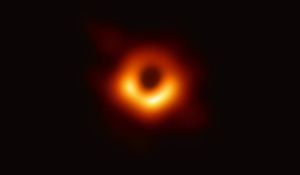
The discourse surrounding black holes has evolved over centuries. The first serious scientific discussions about these enigmatic objects began in the 1600s, but it was not until 1971 that the existence of black holes was confirmed. The first image of a black hole was captured in 2019, marking a significant milestone in astrophysics.
Black holes come in various sizes, from supermassive ones that can be millions to billions of times the mass of the Sun to smaller black holes scattered throughout galaxies. These findings suggest that while the existence of white holes remains unverified, the search for understanding such cosmic phenomena continues to captivate scientists and the public alike.
While the quest for white holes may take time, the journey of discovery in astrophysics is ongoing. As our understanding of the universe expands, who knows what new revelations may come to light in the future?
For those interested in exploring cosmic questions further, adults can assist children in submitting inquiries at askdruniverse.wsu.edu/ask.

Robinhood Stock Surges 2.5% in Early Trading on March 17

Israel Intensifies Strikes as Global Energy Crisis Looms

CALV Offers Class on Communication Skills for Real Estate Professionals

Historic Bideford Pub Reopens as The Patch Wine Bar & Kitchen

Oscar Night Celebrations: Winners, Guests, and Exclusive After-Parties

Samsung Galaxy Watch 9 Set for Larger Battery Boost, Report Reveals

Kibble vs. Fresh Dog Food: What’s Best for Your Dog’s Health?

Acclaimed San Francisco Pizzeria Del Popolo to Close in May

‘Invincible’ Season 4 Launches on Prime Video with Epic Action

ALMA Discovers Companion Orbiting Giant Red Star π 1 Gruis

Doctoral Candidate Trivanni Yadav Advances Battery Research at UTulsa

Global Air Forces Ranked by Annual Defense Budgets in 2025

Mass Production of F-35 Fighter Jet Drives Down Costs

Gold Investment Surge: Top Mutual Funds and ETF Alternatives

DirecTV to Launch AI-Driven Ads with User Likenesses in 2026

New ‘Star Trek: Voyager’ Game Demo Released, Players Test Limits

Paul Giamatti Reveals Villainous Role in Star Trek: Starfleet Academy

Freeport Art Gallery Transforms Waste into Creative Masterpieces
-
 Science6 months ago
ALMA Discovers Companion Orbiting Giant Red Star π 1 Gruis
-
 Science6 months ago
Doctoral Candidate Trivanni Yadav Advances Battery Research at UTulsa
-
 World7 months ago
Global Air Forces Ranked by Annual Defense Budgets in 2025
-
 World7 months ago
Mass Production of F-35 Fighter Jet Drives Down Costs
-
 Business7 months ago
Gold Investment Surge: Top Mutual Funds and ETF Alternatives
-
 Top Stories7 months ago
DirecTV to Launch AI-Driven Ads with User Likenesses in 2026
-
 Top Stories7 months ago
New ‘Star Trek: Voyager’ Game Demo Released, Players Test Limits
-
 Entertainment7 months ago
Paul Giamatti Reveals Villainous Role in Star Trek: Starfleet Academy
-
 Entertainment7 months ago
Freeport Art Gallery Transforms Waste into Creative Masterpieces
-
 Science7 months ago
NTSB Report Reveals Hull Damage Caused Titan Submersible Implosion
-

 Lifestyle7 months ago
Rev. Bry Shields to Retire as McGill-Toolen President in 2026
-

 Entertainment7 months ago
Fast & Furious Coaster Hits the Track at Universal Studios