
Entertainment
John Travolta’s ‘Urban Cowboy’ Turns 43: A Bold Shift in Film

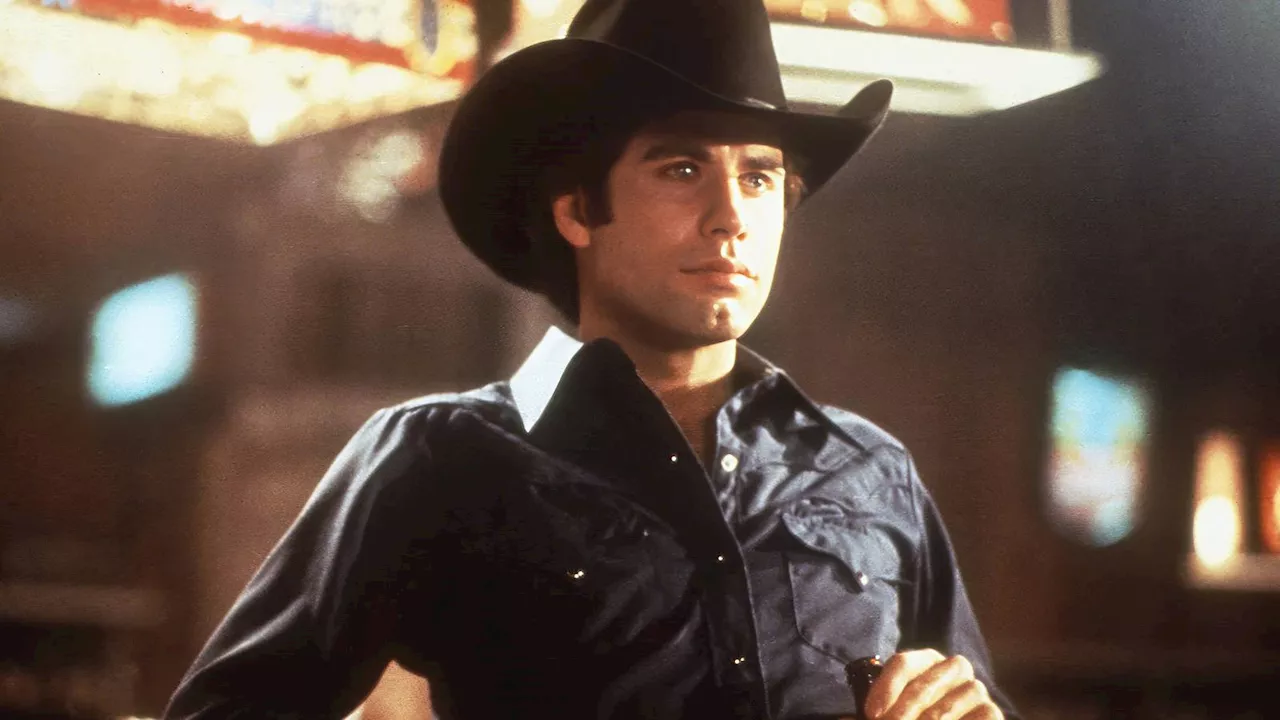
John Travolta’s film, *Urban Cowboy*, debuted on June 6, 1980, marking a significant moment in his career as he transitioned from the disco era to a new genre. Following his success in *Saturday Night Fever* and *Grease*, Travolta took a risk by embracing a country music-themed romantic drama set in Texas, which reflected the cultural shifts of the time.
Directed by James Bridges, *Urban Cowboy* draws inspiration from Aaron Latham’s 1978 article in *Esquire Magazine*. The film follows the life of Buford “Bud” Davis, portrayed by Travolta, as he navigates love and rivalry in the honky-tonk scene of Pasadena, Texas. Despite its modest box office earnings of $53 million, the film earned a 71% fresh score on Rotten Tomatoes, indicating a mixed reception from critics.
Plot Overview and Cultural Context
In the film, Bud arrives in Pasadena to work at an oil refinery with his Uncle Bob. He quickly becomes enamored with Sissy, a strong-willed woman who frequents Gilley’s, a local nightclub known for its mechanical bull. Their whirlwind romance leads to a hasty marriage, but the pressures of competition surrounding the mechanical bull and Sissy’s attraction to ex-con Wes Hightower threaten their relationship. Bud’s pursuit of a $5,000 prize in a rodeo contest further complicates matters, leading to a tragic event that forces both characters to reassess their feelings.
*Urban Cowboy* subtly reflects the changing dynamics of masculinity during the late 1970s and early 1980s, a time when more women began entering the workforce. The film showcases this shift through the tension between Bud and Sissy, as Bud grapples with his inability to accept her independence and talent. This theme resonates with audiences, echoing similar narratives in contemporary films such as *9 to 5* and *Mr. Mom*.
Musical Influence and Legacy
The film’s soundtrack plays a crucial role in enhancing its narrative, with country music serving as the backdrop for Bud’s tumultuous journey. Johnny Lee’s “Looking for Love” sets the tone for the film, capturing the chaos of Bud’s romantic escapades. Other notable tracks, such as “Look What You’ve Done to Me” by Boz Scaggs, resonate with the film’s emotional undercurrents, particularly during key scenes of heartbreak.
One of the standout moments in the film features “The Devil Went Down to Georgia” by The Charlie Daniels Band, which underscores the climax of Bud’s rodeo contest. The energetic tempo of the song reflects Bud’s confrontation with his past and future, marking a pivotal moment in the story.
Although *Urban Cowboy* did not achieve the same iconic status as Travolta’s previous films, it represents a transitional phase in his career. It showcases his willingness to explore a more complex character, moving away from the polished image of a disco-era heartthrob.
As the Western genre was evolving, *Urban Cowboy* modernized the archetype of the rugged man, incorporating emotional depth that aligned with the changing societal landscape. While not as celebrated as his blockbuster hits, the film remains an important piece of Travolta’s filmography, illustrating his versatility and growth as an actor.
In retrospect, *Urban Cowboy* stands as a significant cultural artifact, reflecting both the era’s music and shifting gender roles. It invites audiences to reconsider the narratives surrounding masculinity and relationships in a rapidly changing America.

Four Arrested, Including Mastermind, in Islamabad Mosque Bombing

Transdermal HRT Significantly Enhances Bone Density in Women

Stony Brook Secures Victory Over Northeastern with 69-55 Win

Haiti’s Transitional Council Dissolves, PM Fils-Aime Takes Charge

Netanyahu to Meet Trump Next Week Amid Iran Negotiations

Northwestern Study Reveals How Cells Construct Egg Scaffolding

Patriots Boost Roster with D’Ernest Johnson, Leonard Taylor Ahead of Super Bowl LX

Ilia Malinin Shines at Skate America with Unmatched Performance

Minneapolis Police Dismantle Anti-ICE Blockades Amid Tensions

ALMA Discovers Companion Orbiting Giant Red Star π 1 Gruis

Doctoral Candidate Trivanni Yadav Advances Battery Research at UTulsa

New ‘Star Trek: Voyager’ Game Demo Released, Players Test Limits

Global Air Forces Ranked by Annual Defense Budgets in 2025

Mass Production of F-35 Fighter Jet Drives Down Costs

NASCAR Faces Fan Backlash as Steve Phelps’ Texts Surface

DirecTV to Launch AI-Driven Ads with User Likenesses in 2026

Gold Investment Surge: Top Mutual Funds and ETF Alternatives

SEVENTEEN’s Mingyu Faces Backlash Over Alcohol Incident at Concert
-
 Science3 months ago
ALMA Discovers Companion Orbiting Giant Red Star π 1 Gruis
-
 Science3 months ago
Doctoral Candidate Trivanni Yadav Advances Battery Research at UTulsa
-
 Top Stories4 months ago
New ‘Star Trek: Voyager’ Game Demo Released, Players Test Limits
-
 World4 months ago
Global Air Forces Ranked by Annual Defense Budgets in 2025
-
 World4 months ago
Mass Production of F-35 Fighter Jet Drives Down Costs
-
 Sports3 months ago
NASCAR Faces Fan Backlash as Steve Phelps’ Texts Surface
-
 Top Stories4 months ago
DirecTV to Launch AI-Driven Ads with User Likenesses in 2026
-
 Business4 months ago
Gold Investment Surge: Top Mutual Funds and ETF Alternatives
-
 Politics4 months ago
SEVENTEEN’s Mingyu Faces Backlash Over Alcohol Incident at Concert
-

 Science4 months ago
Time Crystals Revolutionize Quantum Computing Potential
-

 Entertainment4 months ago
Freeport Art Gallery Transforms Waste into Creative Masterpieces
-

 Science4 months ago
Remembering David E. Brest: A Life Dedicated to Nature and Family