
World
Delta Air Lines Reveals Its Top 5 Hubs for Q1 2026

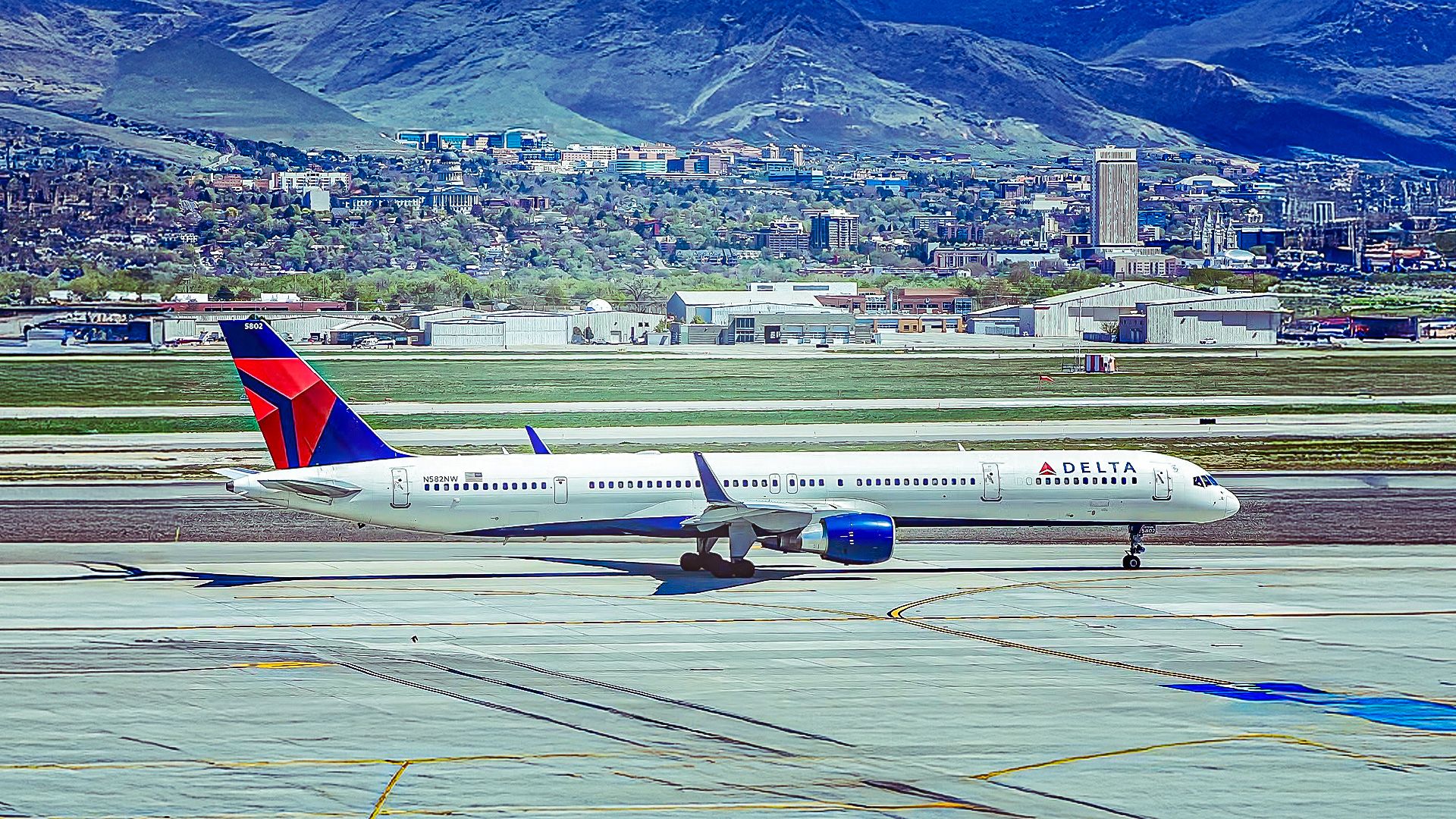
Delta Air Lines has announced its busiest hubs for the first quarter of 2026, solidifying its status as one of the largest airline networks in the United States. With operations in thousands of flights each month, the airline continues to expand its domestic and international reach through a network centred around high-capacity hub airports. According to aviation analytics provider Cirium, Delta is set to operate over 142,000 flights during Q1 2026.
Top Hubs for Delta Air Lines
At the forefront of Delta’s operations is the Hartsfield-Jackson Atlanta International Airport, which stands as the airline’s busiest hub. Delta has scheduled nearly 24,480 departures from Atlanta for the quarter, offering over 3.8 million seats. The airport facilitates more than 700 daily flights, demonstrating Delta’s significant foothold in the region.
Following Atlanta is the Detroit Metropolitan Wayne County Airport, Delta’s second-busiest hub. This airport became integral to Delta’s network after the merger with Northwest Airlines in 2008. Delta dominates capacity at Detroit, operating hundreds of flights daily and connecting passengers to a variety of domestic and international destinations, including several in Europe and Asia.
Minneapolis-St. Paul International Airport ranks as Delta’s third-busiest hub, also inherited through the Northwest Airlines merger. Delta operates between 200 to 300 flights per day from this hub. Notably, when measured by total seats offered, Minneapolis surpasses Detroit, highlighting its importance in Delta’s network.
Further down the list, Salt Lake City Airport and New York LaGuardia Airport occupy the fourth and fifth positions, respectively. Although Delta offers more seats from New York’s JFK Airport, LaGuardia remains a key operational site with substantial flight volume.
Delta’s Market Dominance
Delta’s substantial market presence across its hubs is noteworthy. At Atlanta, the airline commands approximately 80% of total market share, a position it has solidified since its early years. Since 2021, Delta has increased its capacity at Atlanta by more than 20%.
In Detroit, Delta holds around 75% of the market share. The airport has evolved into a vital gateway for the Midwest, connecting the region with destinations across North America while expanding its international services.
Minneapolis also plays a crucial role in Delta’s operations, with the airline maintaining approximately 76% market share. The airline has enhanced its long-haul services from this hub, recently launching new routes to Rome, Copenhagen, and Sicily.
Delta’s extensive network highlights the significance of these hubs, showcasing the key routes that define its operational strategy.
Expansion Plans for Summer 2026
Founded in 1924 as Huff Daland Dusters, an aerial crop-dusting company, Delta has transformed over the decades. The airline began passenger services in 1929 and has continuously expanded its route network since then. For the upcoming summer of 2026, Delta plans to introduce multiple new routes, marking its largest transatlantic program to date.
During the summer season, the airline will operate over 650 weekly flights to nearly 30 destinations across Europe. New services will commence from Boston to Madrid and Nice, Seattle to Rome and Barcelona, and New York JFK to Porto, Malta, and Olbia in Sardinia. Delta will also resume seasonal routes, including Catania starting in April.
For the winter season, the airline will maintain services to popular destinations such as Amsterdam, Paris, Marrakech, London Heathrow, Dublin, Athens, and Zurich.
As Delta Air Lines continues to enhance its extensive network, its strategic hub operations remain central to its growth and service offerings, ensuring connectivity for passengers across the globe.

Transdermal HRT Significantly Enhances Bone Density in Women

Stony Brook Secures Victory Over Northeastern with 69-55 Win

Haiti’s Transitional Council Dissolves, PM Fils-Aime Takes Charge

Netanyahu to Meet Trump Next Week Amid Iran Negotiations

Northwestern Study Reveals How Cells Construct Egg Scaffolding

Patriots Boost Roster with D’Ernest Johnson, Leonard Taylor Ahead of Super Bowl LX

Ilia Malinin Shines at Skate America with Unmatched Performance

Minneapolis Police Dismantle Anti-ICE Blockades Amid Tensions

Burberry Group and Zumiez: A Comprehensive Investment Comparison

ALMA Discovers Companion Orbiting Giant Red Star π 1 Gruis

Doctoral Candidate Trivanni Yadav Advances Battery Research at UTulsa

New ‘Star Trek: Voyager’ Game Demo Released, Players Test Limits

Global Air Forces Ranked by Annual Defense Budgets in 2025

Mass Production of F-35 Fighter Jet Drives Down Costs

NASCAR Faces Fan Backlash as Steve Phelps’ Texts Surface

DirecTV to Launch AI-Driven Ads with User Likenesses in 2026

Gold Investment Surge: Top Mutual Funds and ETF Alternatives

SEVENTEEN’s Mingyu Faces Backlash Over Alcohol Incident at Concert
-
 Science3 months ago
ALMA Discovers Companion Orbiting Giant Red Star π 1 Gruis
-
 Science3 months ago
Doctoral Candidate Trivanni Yadav Advances Battery Research at UTulsa
-
 Top Stories4 months ago
New ‘Star Trek: Voyager’ Game Demo Released, Players Test Limits
-
 World4 months ago
Global Air Forces Ranked by Annual Defense Budgets in 2025
-
 World4 months ago
Mass Production of F-35 Fighter Jet Drives Down Costs
-
 Sports3 months ago
NASCAR Faces Fan Backlash as Steve Phelps’ Texts Surface
-
 Top Stories4 months ago
DirecTV to Launch AI-Driven Ads with User Likenesses in 2026
-
 Business4 months ago
Gold Investment Surge: Top Mutual Funds and ETF Alternatives
-
 Politics4 months ago
SEVENTEEN’s Mingyu Faces Backlash Over Alcohol Incident at Concert
-

 Science4 months ago
Time Crystals Revolutionize Quantum Computing Potential
-

 Entertainment4 months ago
Freeport Art Gallery Transforms Waste into Creative Masterpieces
-

 Science4 months ago
Remembering David E. Brest: A Life Dedicated to Nature and Family