
Science
NASA’s Orion Mission to Feature First Manual Flight in Decades

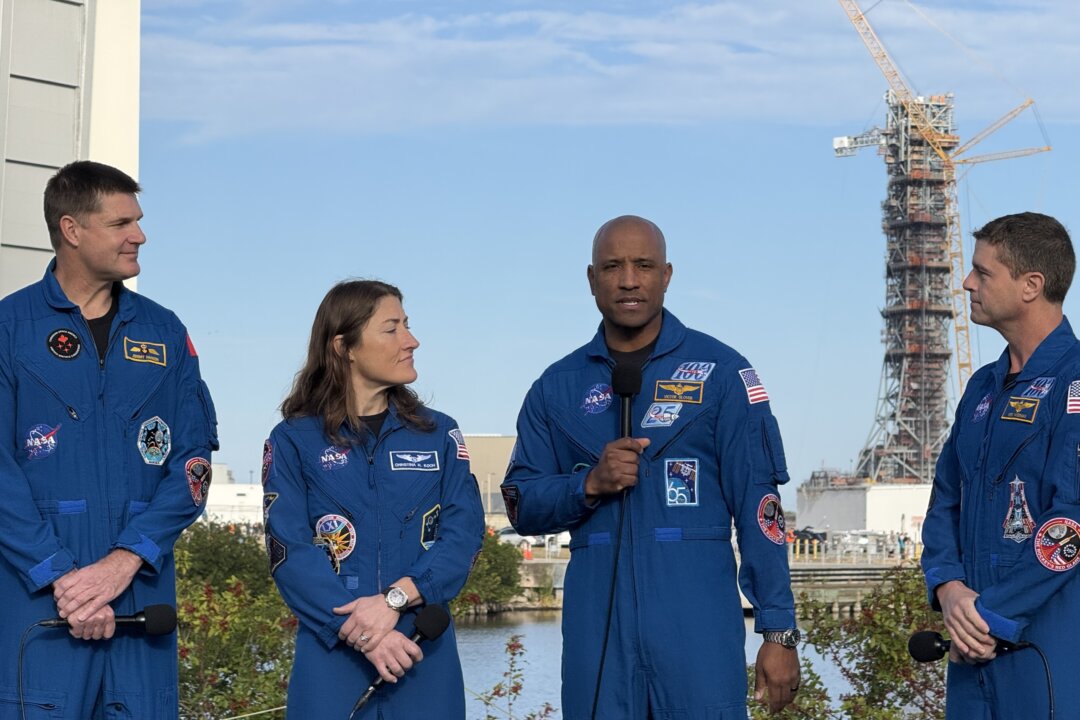
NASA is set to mark a significant milestone in space exploration as astronaut Victor Glover prepares to become the first individual to manually pilot the Orion spacecraft during the upcoming Artemis II mission. This mission, scheduled for launch from Cape Canaveral in 2024, is a crucial step toward returning humans to the Moon and potentially beyond.
The Artemis II mission will feature two manual flight demonstrations, one at the beginning and another at the end of the ten-day journey. This opportunity places Glover alongside the legendary Apollo astronauts who manually navigated their spacecraft during historic lunar voyages. As the mission unfolds, the integration of manual control will showcase NASA’s commitment to maintaining human oversight in an era dominated by advanced technology.
Shifting Dynamics in Space Operations
While manual control has been a hallmark of previous space missions, including those of the Apollo program, the evolving landscape of space exploration suggests that this aspect will adapt significantly. As spacecraft technology advances, the nature of human involvement in piloting becomes increasingly complex. The combination of automated systems with human expertise is expected to enhance the safety and efficiency of future missions.
The Artemis program represents a new chapter in space exploration, emphasizing not only the return to the Moon but also the preparation for potential manned missions to Mars. Glover’s manual piloting will serve as a vital test of the Orion spacecraft’s capabilities, ensuring that astronauts can intervene when necessary, particularly in unforeseen circumstances.
As the mission draws closer, NASA continues to refine its objectives in deep space exploration. The dual focus on innovation and human skill will likely shape the future of not only Artemis missions but also other international space endeavors.
Implications for Future Space Exploration
The incorporation of manual control into missions like Artemis II underscores the significance of human judgment in spaceflight. According to NASA officials, this approach is not merely a nod to tradition but a critical component of mission design that acknowledges the unpredictable nature of space travel.
The challenges of deep space missions necessitate a balance between automated systems and manual interventions. As missions become more intricate, the ability for astronauts to take control could prove essential for navigating unexpected situations or technical failures. This philosophy will guide NASA as it looks to future missions, including plans for the Artemis III mission, which aims to land astronauts on the lunar South Pole.
NASA’s commitment to the Artemis program, coupled with the inclusion of manual flying, reflects a broader strategy to enhance human capacity in space exploration. As technology continues to advance, the role of astronauts will evolve, blending traditional skills with cutting-edge innovations to ensure humanity’s safe and effective presence beyond Earth.
In conclusion, Victor Glover’s upcoming flight with the Orion spacecraft is not just a mission; it represents the continuous evolution of space exploration. As NASA prepares for this landmark event, the lessons learned from manual control will pave the way for future missions, highlighting the enduring importance of human involvement in the ever-expanding frontier of space.

American Airlines Celebrates a Century of Aviation Excellence

Cupid Kannapolis Event Sparks Local Business Promotions

Carolina Artists Guild Launches Monthly Art Sales for Local Artists

Orlando High School Basketball Championships: Key Scores and Highlights

Four Arrested, Including Mastermind, in Islamabad Mosque Bombing

Transdermal HRT Significantly Enhances Bone Density in Women

Stony Brook Secures Victory Over Northeastern with 69-55 Win

Haiti’s Transitional Council Dissolves, PM Fils-Aime Takes Charge

Netanyahu to Meet Trump Next Week Amid Iran Negotiations

ALMA Discovers Companion Orbiting Giant Red Star π 1 Gruis

Doctoral Candidate Trivanni Yadav Advances Battery Research at UTulsa

Global Air Forces Ranked by Annual Defense Budgets in 2025

New ‘Star Trek: Voyager’ Game Demo Released, Players Test Limits

Mass Production of F-35 Fighter Jet Drives Down Costs

NASCAR Faces Fan Backlash as Steve Phelps’ Texts Surface

Gold Investment Surge: Top Mutual Funds and ETF Alternatives

DirecTV to Launch AI-Driven Ads with User Likenesses in 2026

SEVENTEEN’s Mingyu Faces Backlash Over Alcohol Incident at Concert
-
 Science3 months ago
ALMA Discovers Companion Orbiting Giant Red Star π 1 Gruis
-
 Science3 months ago
Doctoral Candidate Trivanni Yadav Advances Battery Research at UTulsa
-
 World4 months ago
Global Air Forces Ranked by Annual Defense Budgets in 2025
-
 Top Stories4 months ago
New ‘Star Trek: Voyager’ Game Demo Released, Players Test Limits
-
 World4 months ago
Mass Production of F-35 Fighter Jet Drives Down Costs
-
 Sports3 months ago
NASCAR Faces Fan Backlash as Steve Phelps’ Texts Surface
-
 Business4 months ago
Gold Investment Surge: Top Mutual Funds and ETF Alternatives
-
 Top Stories4 months ago
DirecTV to Launch AI-Driven Ads with User Likenesses in 2026
-
 Politics4 months ago
SEVENTEEN’s Mingyu Faces Backlash Over Alcohol Incident at Concert
-
 Science4 months ago
Time Crystals Revolutionize Quantum Computing Potential
-

 Entertainment4 months ago
Freeport Art Gallery Transforms Waste into Creative Masterpieces
-

 Science4 months ago
Remembering David E. Brest: A Life Dedicated to Nature and Family