
World
HII Expands UK Operations to Boost Unmanned Vehicle Production

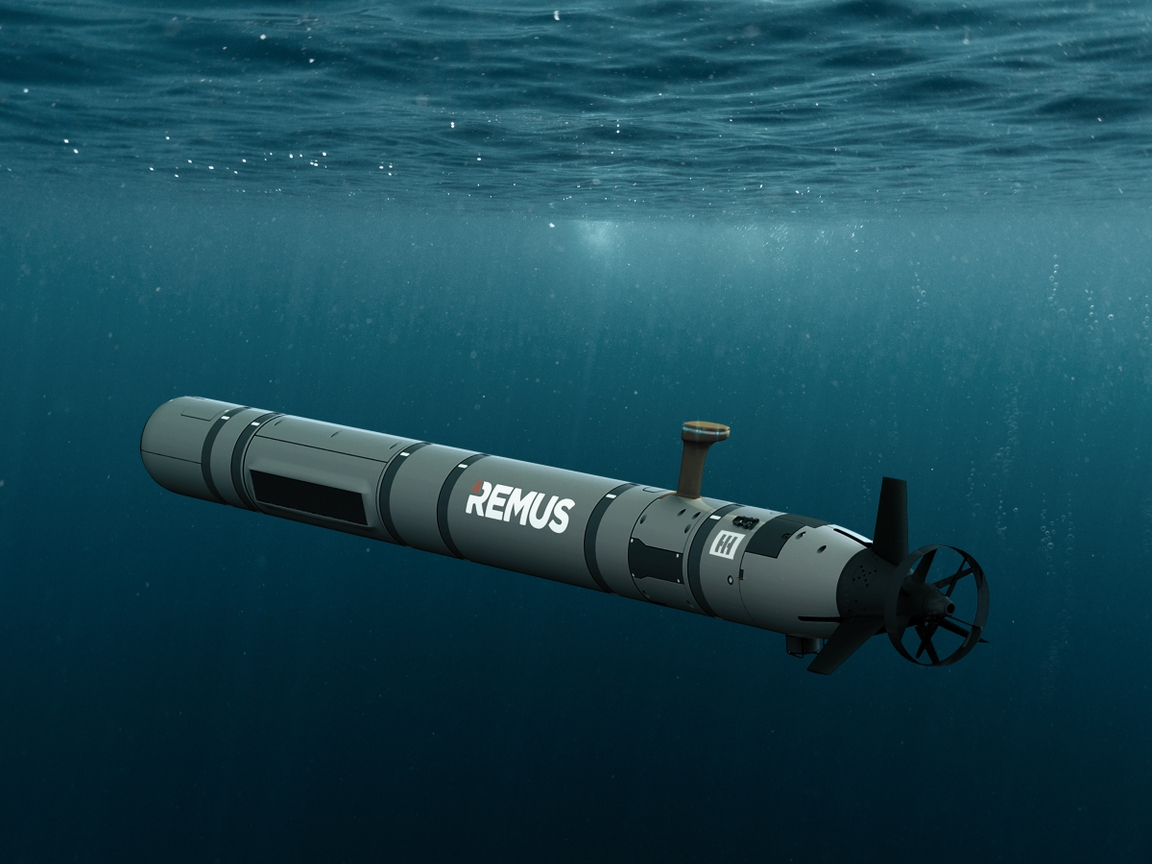
Huntington Ingalls Industries (HII) has significantly expanded its operations in the United Kingdom, doubling the size of its facility located in Portchester. This move is aimed at enhancing its capabilities in the unmanned underwater vehicle (UUV) sector to better serve the needs of the Royal Navy and other European navies. The expansion will facilitate the assembly of the Remus 620 medium-class modular UUV, reflecting a growing demand for these advanced systems amid evolving naval requirements.
The upgraded facility will enable HII to accelerate training programs for allied navies, according to Nick Green, the facility manager. During a briefing on January 12, 2024, Green highlighted that technological advancements have led to increased confidence among navies, resulting in larger orders of UUVs, often comprising 10 to 15 units instead of the previous one or two. European NATO members, including the U.K., Netherlands, and Belgium, are progressively replacing traditional crewed minehunter vessels with unmanned counterparts designed to detect and neutralize sea mines.
“The demand is there, the requirements are there as the technology is improving,” Green stated. He noted that the Royal Navy has been operating Remus vehicles since acquiring its first two in 2001 for mine warfare. The expanded operations in Portchester will support HII in fulfilling its maintenance contract for the Royal Navy, as the company’s Remus systems are currently utilized by 30 countries, including 14 NATO members.
As defense budgets rise and investment in unmanned systems increases, HII anticipates a robust interest in mine countermeasures. Duane Fotheringham, president of HII’s Unmanned Systems group, mentioned that the company is well-prepared for heightened competition in the UUV market. The modular design of the Remus drones allows for updates to both software and hardware, with various partners contributing sensors and payloads.
While the primary application for U.K. and European clients remains mine countermeasures, the capabilities for long-range patrols are becoming increasingly relevant. Green elaborated on future capabilities, stating, “The payloads that we are developing and putting onto these vehicles at this time allow sort of a future capability coverage.”
In a bid to strengthen local ties, HII plans to incorporate more U.K. production, including the assembly of launch and recovery systems for the Remus 620. Green emphasized the importance of U.K. content for U.K. contracts, stating, “We believe that U.K. content for U.K. contracts is more and more important.”
The company has conducted tests on the torpedo-tube launch and recovery of the Remus 620 and is collaborating with Babcock in this area. Babcock’s launch and recovery technology is currently employed on the Royal Navy’s submarines. Most repair and maintenance work for U.K. and other European customers will be centralized at the Portchester facility to minimize equipment transport between the U.S. and Europe.
HII has delivered over 750 UUVs from the Remus family, with the Remus 100 being the most popular model, having sold more than 400 units globally. The Portchester site will also serve as a support base for the upcoming Romulus family of unmanned surface vehicles. Fotheringham indicated that testing is underway for an intelligence, surveillance, and reconnaissance version of a Romulus platform in the United States, along with a man-portable variant.
Looking ahead, HII is developing a 190-foot Romulus vessel, which is expected to be operational by the end of 2026. The company plans to demonstrate these systems to the Royal Navy and other European naval customers, aligning its advancements with the growing needs of modern naval warfare.

Urgent Advice: Family Drama Erupts Over Past Relationship

Tensions Rise as Denmark and US Clash Over Greenland and More

New Study Questions Dark Matter’s Cold Origins in the Universe

Experience the Journey of Horses at Exclusive VIP Screening

NTSB Links UPS MD-11 Crash to Engine Mount Issues from Boeing

Canaccord Genuity Reaffirms Buy Rating for Corero Network Security

NCT’s Taeyong Faces Backlash After Fan Interaction Online

Four Astronauts Splash Down Early After Medical Emergency

ICE Officer Shoots Suspect in Minneapolis Ambush: Urgent Update

ALMA Discovers Companion Orbiting Giant Red Star π 1 Gruis

Doctoral Candidate Trivanni Yadav Advances Battery Research at UTulsa

NASCAR Faces Fan Backlash as Steve Phelps’ Texts Surface

SEVENTEEN’s Mingyu Faces Backlash Over Alcohol Incident at Concert

New ‘Star Trek: Voyager’ Game Demo Released, Players Test Limits

Global Air Forces Ranked by Annual Defense Budgets in 2025

Mass Production of F-35 Fighter Jet Drives Down Costs

Electrification Challenges Demand Advanced Multiphysics Modeling

Gold Investment Surge: Top Mutual Funds and ETF Alternatives
-
 Science2 months ago
ALMA Discovers Companion Orbiting Giant Red Star π 1 Gruis
-
 Science2 months ago
Doctoral Candidate Trivanni Yadav Advances Battery Research at UTulsa
-
 Sports2 months ago
NASCAR Faces Fan Backlash as Steve Phelps’ Texts Surface
-
 Politics3 months ago
SEVENTEEN’s Mingyu Faces Backlash Over Alcohol Incident at Concert
-
 Top Stories3 months ago
New ‘Star Trek: Voyager’ Game Demo Released, Players Test Limits
-
 World3 months ago
Global Air Forces Ranked by Annual Defense Budgets in 2025
-
 World3 months ago
Mass Production of F-35 Fighter Jet Drives Down Costs
-
 World3 months ago
Electrification Challenges Demand Advanced Multiphysics Modeling
-
 Business3 months ago
Gold Investment Surge: Top Mutual Funds and ETF Alternatives
-
 Science3 months ago
Time Crystals Revolutionize Quantum Computing Potential
-

 Top Stories3 months ago
DirecTV to Launch AI-Driven Ads with User Likenesses in 2026
-

 Entertainment3 months ago
Freeport Art Gallery Transforms Waste into Creative Masterpieces