
World
Hungary’s Orbán Pursues Increased Oil and Gas from Russia

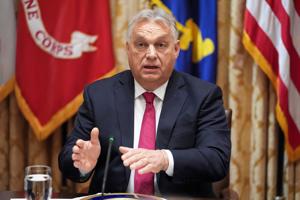
Hungarian Prime Minister Viktor Orbán engaged in discussions with Russian President Vladimir Putin at the Kremlin, seeking to secure additional oil and gas supplies from Russia. This meeting, which took place on October 16, 2023, is significant amid the ongoing conflict in Ukraine and reflects Hungary’s unique position within the European Union’s energy landscape.
During the talks, Orbán emphasized Hungary’s reliance on Russian energy resources, highlighting the critical role these supplies play in the nation’s economy. As the war in Ukraine continues to disrupt energy markets and supply chains, Orbán’s approach stands out as he seeks to fortify Hungary’s energy security through closer ties with Moscow.
Strategic Energy Negotiations
Orbán’s discussions with Putin come at a time when many European nations are reconsidering their energy partnerships due to the geopolitical ramifications of the war in Ukraine. Hungary, however, has maintained a different stance. Orbán’s government has repeatedly asserted the necessity of Russian energy to sustain Hungary’s economic stability, demonstrating a willingness to engage with Russia despite widespread European sanctions.
The Hungarian Prime Minister stated, “We need to ensure that our energy supply is stable and secure.” This declaration underscores Hungary’s ongoing commitment to Russian oil and gas, even as the EU grapples with a broader strategy to reduce dependency on Russian energy sources.
The Kremlin has welcomed Hungary’s stance, viewing it as an opportunity to strengthen bilateral relations. In previous statements, Putin has expressed satisfaction with Hungary’s position, describing it as a vital partnership within Europe. The discussions at the Kremlin may lead to new agreements that could further entrench Hungary’s reliance on Russian energy.
Implications for the European Union
Orbán’s meeting raises questions about the unity among EU member states regarding their responses to the conflict in Ukraine. While some nations have taken a hardline approach, Hungary’s pursuit of Russian energy highlights a divide in the EU’s strategy. As the bloc aims to transition towards alternative energy sources, Hungary’s reliance on Russia could complicate collective efforts to impose further sanctions or restrictions.
Analysts suggest that Hungary’s actions might encourage other EU nations to reevaluate their energy strategies, especially those with significant energy ties to Russia. The outcomes of the Kremlin talks could set a precedent for how EU member states negotiate their energy needs amidst ongoing geopolitical tensions.
As Hungary continues to navigate its energy policy, the implications of Orbán’s meeting with Putin will likely resonate beyond its borders, shaping the future of energy security and diplomatic relations within the European Union and with Russia. The ongoing developments will remain a focal point for both energy analysts and political observers as the situation unfolds.

Four Arrested, Including Mastermind, in Islamabad Mosque Bombing

Transdermal HRT Significantly Enhances Bone Density in Women

Stony Brook Secures Victory Over Northeastern with 69-55 Win

Haiti’s Transitional Council Dissolves, PM Fils-Aime Takes Charge

Netanyahu to Meet Trump Next Week Amid Iran Negotiations

Northwestern Study Reveals How Cells Construct Egg Scaffolding

Patriots Boost Roster with D’Ernest Johnson, Leonard Taylor Ahead of Super Bowl LX

Ilia Malinin Shines at Skate America with Unmatched Performance

Minneapolis Police Dismantle Anti-ICE Blockades Amid Tensions

ALMA Discovers Companion Orbiting Giant Red Star π 1 Gruis

Doctoral Candidate Trivanni Yadav Advances Battery Research at UTulsa

New ‘Star Trek: Voyager’ Game Demo Released, Players Test Limits

Global Air Forces Ranked by Annual Defense Budgets in 2025

Mass Production of F-35 Fighter Jet Drives Down Costs

NASCAR Faces Fan Backlash as Steve Phelps’ Texts Surface

DirecTV to Launch AI-Driven Ads with User Likenesses in 2026

Gold Investment Surge: Top Mutual Funds and ETF Alternatives

SEVENTEEN’s Mingyu Faces Backlash Over Alcohol Incident at Concert
-
 Science3 months ago
ALMA Discovers Companion Orbiting Giant Red Star π 1 Gruis
-
 Science3 months ago
Doctoral Candidate Trivanni Yadav Advances Battery Research at UTulsa
-
 Top Stories4 months ago
New ‘Star Trek: Voyager’ Game Demo Released, Players Test Limits
-
 World4 months ago
Global Air Forces Ranked by Annual Defense Budgets in 2025
-
 World4 months ago
Mass Production of F-35 Fighter Jet Drives Down Costs
-
 Sports3 months ago
NASCAR Faces Fan Backlash as Steve Phelps’ Texts Surface
-
 Top Stories4 months ago
DirecTV to Launch AI-Driven Ads with User Likenesses in 2026
-
 Business4 months ago
Gold Investment Surge: Top Mutual Funds and ETF Alternatives
-
 Politics4 months ago
SEVENTEEN’s Mingyu Faces Backlash Over Alcohol Incident at Concert
-
 Science4 months ago
Time Crystals Revolutionize Quantum Computing Potential
-

 Entertainment4 months ago
Freeport Art Gallery Transforms Waste into Creative Masterpieces
-

 Science4 months ago
Remembering David E. Brest: A Life Dedicated to Nature and Family