
World
Myanmar’s Upcoming Elections Criticized as ‘Sham’ Amid Civil War

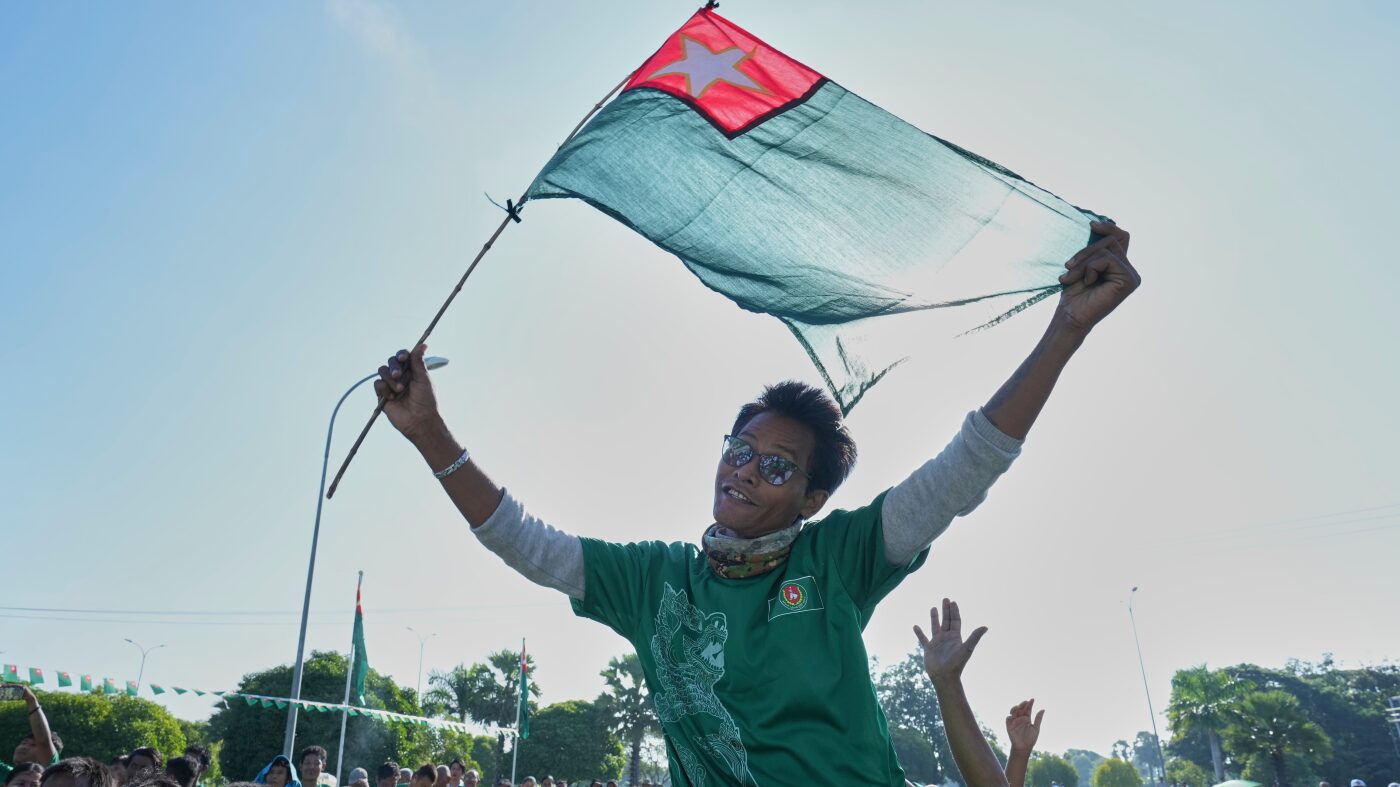
Myanmar’s military junta has announced plans to hold phased general elections starting on December 28, 2023, despite the ongoing civil war that has ravaged the country since the military coup in February 2021. The elections are intended to restore stability and alleviate the junta’s diplomatic isolation. However, widespread skepticism surrounds the legitimacy of these elections, with many experts and international leaders labeling them as a “sham.”
The voting process will unfold over several weeks, concluding in late January. This comes amidst a backdrop of severe humanitarian crises, with the military conducting indiscriminate bombings, detaining tens of thousands, and displacing millions. According to aid agencies, more than 11 million people face food insecurity as the military struggles to reclaim territories lost to opposition forces.
At a recent summit of the Association of Southeast Asian Nations in Malaysia, United Nations Secretary General António Guterres questioned the feasibility of free and fair elections in the current climate. He stated, “Is there anyone who believes that there will be free and fair elections in Myanmar? It is quite obvious that… the conditions for free and fair elections are not there.”
To manipulate the electoral process, the military has enacted a new law prohibiting what it terms “interference” in the elections. Reports indicate that nearly 100 people were detained under this law as of November, a figure that has reportedly more than doubled. Individuals have faced charges for merely criticizing the election on social media, with some risking lengthy prison sentences for their dissent.
Most Western governments have refrained from sending election observers, denouncing the elections as illegitimate. Critics argue that the military aims to establish a parliament primarily controlled by its proxy party, the Union Solidarity and Development Party (USDP), which suffered a significant defeat in the previous election by Aung San Suu Kyi‘s National League for Democracy (NLD). The NLD has been banned, and many of its leaders, including Suu Kyi, remain in prison.
The military has intensified its efforts to reclaim lost territories to bolster its electoral prospects. According to Morgan Michaels, a Southeast Asia security analyst at the International Institute for Strategic Studies, the military has regained the initiative through conscription, improved drone capabilities, and better battlefield organization. However, opposition forces remain fragmented and have made several strategic errors.
China’s stance toward the Myanmar military is complex. While it does not support the coup, it views the military as a stabilizing force amid the chaos that threatens its substantial infrastructure investments in Myanmar. Yun Sun, who directs the China program at the Stimson Center, notes that Myanmar’s civil unrest jeopardizes the China-Myanmar economic corridor, vital for Beijing’s regional ambitions. Consequently, China has pressured ethnic armed groups to relinquish territory gained from the military.
The military’s conscription campaign and support from China have contributed to a fatigue among the opposition. As the conflict drags on, many young fighters are leaving the struggle for more stable lives in neighboring countries like Thailand. Analyst Min Zaw Oo observes that this shift indicates a waning resolve among those initially driven to oppose the military.
Despite setbacks, some rebels remain committed to their cause. One commander, formerly a doctor, expressed frustration at the lack of unity among opposition groups but continues to view the current moment as critical. He argues that the upcoming elections merely represent a temporary solution to a deeper problem, stating, “If you see the crisis in the country as a disease, the election is like injecting steroids into a patient. The pain can be eased temporarily, but it will be worse in the long term.”
Longtime Myanmar analyst David Mathieson highlights another critical issue: the perception of the shadow National Unity Government, which is the political successor to the ousted government. Many citizens and fighters are losing faith in its ability to provide a coherent plan for the future, leading to a growing discontent with the military regime, which some believe at least offers a semblance of stability.
As the military proceeds with its election plans, it is banking on the hope that a semblance of order will satisfy both domestic aspirations and international critics. The second and third rounds of elections are scheduled for January 2024, and the military’s ability to navigate this tumultuous landscape remains uncertain.

Twin Capital Management Reduces Stake in Public Storage by Over 54%

Pennsylvania Republican Party Endorses Jason Richey for Lt. Governor

Lara Exploration Reaches New High: Is It Time to Invest?

**Gavin Pritzkau Crowned MVP at Urgent 2026 Orlando FBU Camp**

Medline and TransEnterix: A Comparative Investment Analysis

First Federal of Greene County Celebrates Growth with New Office Launch

Urgent Update: Cardinal Mindszenty Sentenced 77 Years Ago Today

Upwork Set to Reveal Q4 2025 Earnings on February 9

Marin Graduate Enhances Aurora Borealis Research Using AI

ALMA Discovers Companion Orbiting Giant Red Star π 1 Gruis

Doctoral Candidate Trivanni Yadav Advances Battery Research at UTulsa

Global Air Forces Ranked by Annual Defense Budgets in 2025

New ‘Star Trek: Voyager’ Game Demo Released, Players Test Limits

Mass Production of F-35 Fighter Jet Drives Down Costs

NASCAR Faces Fan Backlash as Steve Phelps’ Texts Surface

Gold Investment Surge: Top Mutual Funds and ETF Alternatives

DirecTV to Launch AI-Driven Ads with User Likenesses in 2026

SEVENTEEN’s Mingyu Faces Backlash Over Alcohol Incident at Concert
-
 Science3 months ago
ALMA Discovers Companion Orbiting Giant Red Star π 1 Gruis
-
 Science3 months ago
Doctoral Candidate Trivanni Yadav Advances Battery Research at UTulsa
-
 World4 months ago
Global Air Forces Ranked by Annual Defense Budgets in 2025
-
 Top Stories4 months ago
New ‘Star Trek: Voyager’ Game Demo Released, Players Test Limits
-
 World4 months ago
Mass Production of F-35 Fighter Jet Drives Down Costs
-
 Sports3 months ago
NASCAR Faces Fan Backlash as Steve Phelps’ Texts Surface
-
 Business4 months ago
Gold Investment Surge: Top Mutual Funds and ETF Alternatives
-
 Top Stories4 months ago
DirecTV to Launch AI-Driven Ads with User Likenesses in 2026
-
 Politics4 months ago
SEVENTEEN’s Mingyu Faces Backlash Over Alcohol Incident at Concert
-

 Science4 months ago
Time Crystals Revolutionize Quantum Computing Potential
-

 Entertainment4 months ago
Freeport Art Gallery Transforms Waste into Creative Masterpieces
-

 Science4 months ago
Remembering David E. Brest: A Life Dedicated to Nature and Family