
World
Supreme Court Limits Dual Convictions Under Overlapping Gun Laws

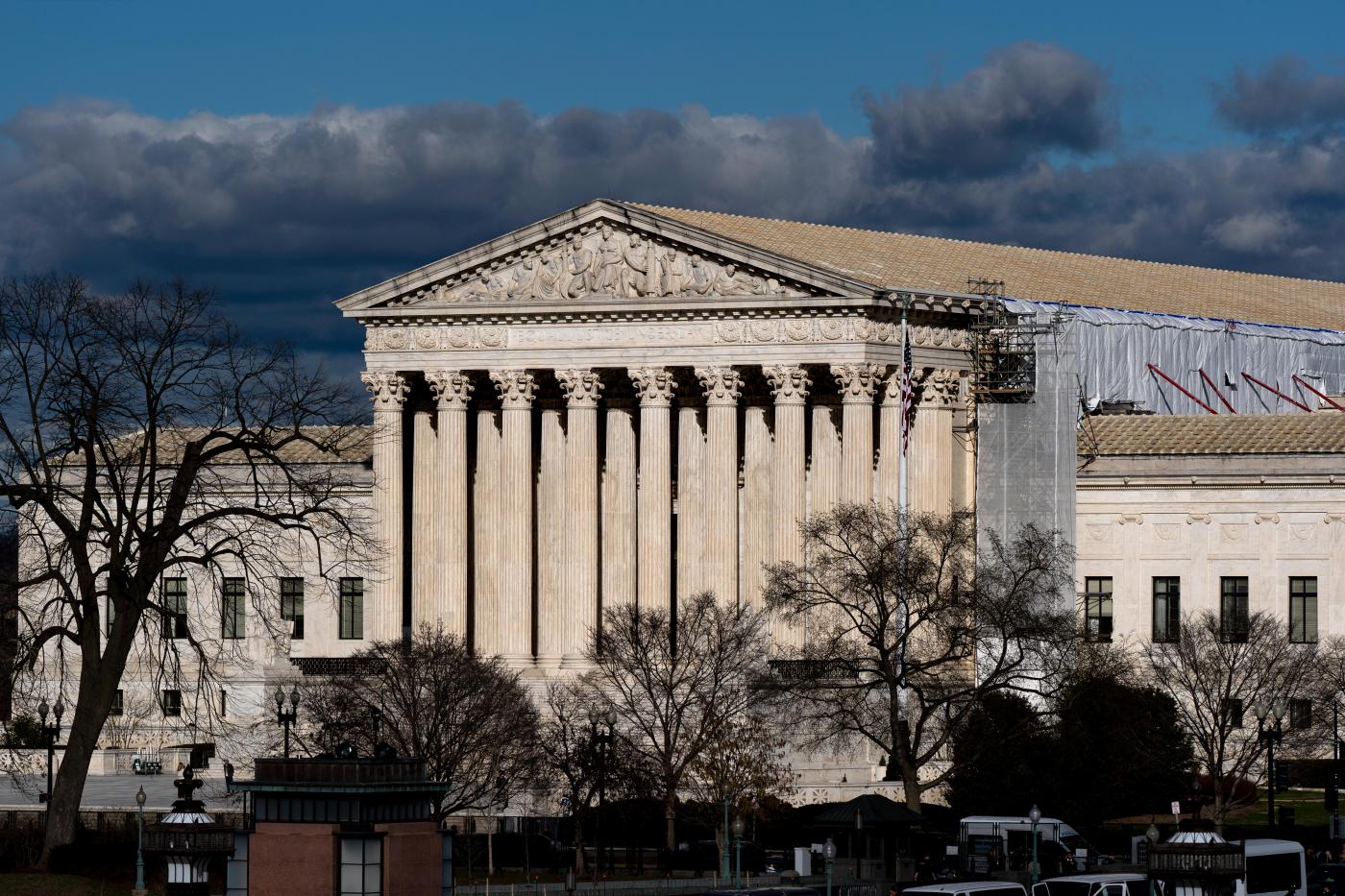
The U.S. Supreme Court delivered a significant ruling on March 6, 2024, clarifying the application of federal gun statutes when a single act potentially violates two overlapping provisions. In the case of Barrett v. United States (No. 24-5774), the Court determined that prosecutors cannot secure separate convictions under both statutes when one act triggers identical criminal elements. This decision reverses part of a previous lower court ruling, thereby limiting the government’s ability to impose cumulative punishments for a single criminal act involving firearms.
The case originated from the prosecution of Dwayne Barrett, who was convicted in federal district court of robbery and associated gun offenses. Court documents indicate that Barrett committed a series of robberies from August 2011 to January 2012, during which Gamar Dafalla was shot and killed. In March 2013, Barrett and a co-defendant were convicted of murder, robbery, and gun charges after a two-week jury trial.
During the commission of the crimes, Barrett carried and used a firearm, which led prosecutors to charge him under two separate provisions of federal law. One statute criminalizes the use or carrying of a gun during a violent crime or drug trafficking, while the other escalates penalties when a death results from such conduct, potentially exposing a defendant to life imprisonment or even the death penalty.
The government argued that Barrett should face convictions under both statutes for the same act, essentially treating the firearm use that resulted in Dafalla’s death as grounds for two separate convictions. However, the Supreme Court rejected this view. The justices reasoned that Barrett’s actions, although triggering multiple statutory provisions, constituted the same offense based on the traditional legal test for distinct crimes.
The Court ruled that two offenses are only distinct if each statute requires proof of an element that the other does not. Consequently, the justices concluded that the statutes do not clearly permit separate convictions for a single act that satisfies both provisions. The ruling emphasized that Congress did not intend for dual punishments within these overlapping statutes, leading to the determination that only one conviction can stand when a defendant’s conduct violates both sections.
This decision addresses a growing divergence among federal appellate courts regarding the permissibility of dual convictions based on identical conduct. Legal experts noted that the Supreme Court’s ruling reinforces a fundamental principle in criminal law that limits cumulative punishments. When statutes overlap and Congress has not explicitly indicated an intent to allow multiple punishments, courts must treat the overlapping offenses as a single crime for sentencing.
Supporters of the ruling argue that it reinstates predictability and fairness to federal sentencing. Critics, however, express concerns that it may reduce prosecutors’ leverage in pursuing complex violent crime cases involving firearms.
As lower courts implement the Supreme Court’s guidance in the Barrett case, they will need to revisit prior cases where defendants received multiple convictions under overlapping gun statutes for the same actions. This decision represents a noteworthy moment in the Court’s recent federal criminal jurisprudence and is likely to influence how prosecutors charge and judges sentence gun-related offenses in the future.

NTSB Links UPS MD-11 Crash to Engine Mount Issues from Boeing

Canaccord Genuity Reaffirms Buy Rating for Corero Network Security

NCT’s Taeyong Faces Backlash After Fan Interaction Online

Four Astronauts Splash Down Early After Medical Emergency

ICE Officer Shoots Suspect in Minneapolis Ambush: Urgent Update

Jack Black Regrets Turning Down Iconic Pixar Role in ‘Incredibles’

Fayetteville Fire Department Pursues Mental Health Program

Forbes Launches Search for Arizona’s Top Young Innovators

Senate Republicans Reject Venezuela War Powers Resolution Amid Trump Pressure

ALMA Discovers Companion Orbiting Giant Red Star π 1 Gruis

Doctoral Candidate Trivanni Yadav Advances Battery Research at UTulsa

NASCAR Faces Fan Backlash as Steve Phelps’ Texts Surface

SEVENTEEN’s Mingyu Faces Backlash Over Alcohol Incident at Concert

New ‘Star Trek: Voyager’ Game Demo Released, Players Test Limits

Global Air Forces Ranked by Annual Defense Budgets in 2025

Mass Production of F-35 Fighter Jet Drives Down Costs

Gold Investment Surge: Top Mutual Funds and ETF Alternatives

Electrification Challenges Demand Advanced Multiphysics Modeling
-
 Science2 months ago
ALMA Discovers Companion Orbiting Giant Red Star π 1 Gruis
-
 Science2 months ago
Doctoral Candidate Trivanni Yadav Advances Battery Research at UTulsa
-
 Sports2 months ago
NASCAR Faces Fan Backlash as Steve Phelps’ Texts Surface
-
 Politics3 months ago
SEVENTEEN’s Mingyu Faces Backlash Over Alcohol Incident at Concert
-
 Top Stories3 months ago
New ‘Star Trek: Voyager’ Game Demo Released, Players Test Limits
-
 World3 months ago
Global Air Forces Ranked by Annual Defense Budgets in 2025
-
 World3 months ago
Mass Production of F-35 Fighter Jet Drives Down Costs
-
 Business3 months ago
Gold Investment Surge: Top Mutual Funds and ETF Alternatives
-
 World3 months ago
Electrification Challenges Demand Advanced Multiphysics Modeling
-

 Science3 months ago
Time Crystals Revolutionize Quantum Computing Potential
-

 Top Stories3 months ago
DirecTV to Launch AI-Driven Ads with User Likenesses in 2026
-

 Entertainment3 months ago
Freeport Art Gallery Transforms Waste into Creative Masterpieces