
Politics
Legal Frameworks Explore Justice for ICE Shooting Victims

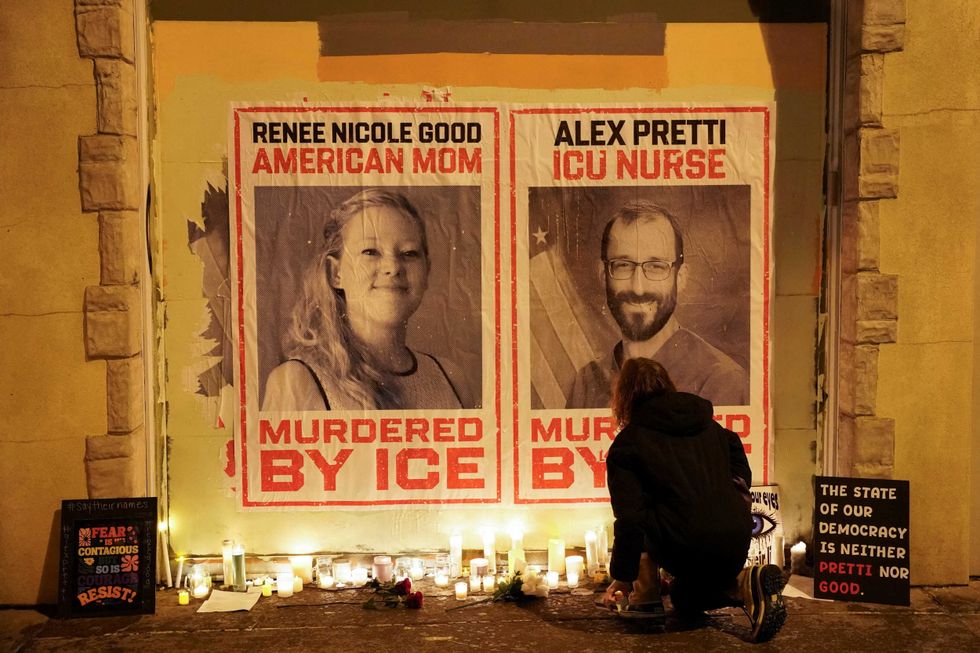
Lawyers are investigating potential avenues for justice in the cases of Renee Good and Alex Pretti, two individuals shot dead by federal agents in Minneapolis earlier this month. Good, a 37-year-old mother of three, was killed by a U.S. Immigration and Customs Enforcement (ICE) officer on January 7, 2023. Pretti, also 37 and an intensive care nurse, died on January 24, 2023, after agents used pepper spray, physically subdued him, and then opened fire, shooting him at least ten times.
The Trump administration has been criticized for its lack of cooperation with state investigations into these incidents. In response to this, legal experts argue that the framework for assessing summary executions may provide a pathway for justice. According to Todd Howland, a professor at Vermont Law and Graduate School, both deaths might be classified as summary executions. This classification is based on the principle that individuals accused of crimes should not be executed without a fair trial.
Summary Execution and Accountability
In the aftermath of both shootings, federal officials labeled the victims as threats. Kristi Noem, the Secretary of Homeland Security, described Good as a “domestic terrorist” and accused her of obstructing ICE agents. Similarly, Noem claimed Pretti had attacked officers, while White House Deputy Chief of Staff Stephen Miller alleged that Pretti attempted to “murder federal agents.”
Even if these accusations were accurate, Howland asserts that ICE could have pursued conventional legal avenues. “Their actions weren’t focused on protecting the rights of the individuals involved,” he noted. He referenced the Minnesota Protocol, a United Nations mechanism designed to investigate potential unlawful deaths, as a crucial tool for ensuring accountability in such cases.
Howland emphasized that adopting a summary execution framework is vital to prevent similar incidents in the future. “This approach highlights the importance of non-recurrence,” he stated, suggesting that adhering to these principles could have averted Pretti’s death, following Good’s shooting.
Challenges in Pursuing Justice
Legal experts recognize significant challenges in seeking justice for Good and Pretti. Daniel Pi, an assistant professor at the University of New Hampshire School of Law, noted that the summary execution framework often lacks practical effectiveness, as international law can be broadly interpreted. Despite the federal government withholding crucial evidence, such as the vehicle involved in Good’s shooting and eyewitness testimony, Pi believes the State of Minnesota could still establish a strong case using the autopsy report and available video evidence.
Drew Evans, superintendent of the Minnesota Bureau of Criminal Apprehension, has pointed out that state investigators face obstacles in probing Pretti’s shooting as well. “It’s a very uphill battle,” said Pi, acknowledging the low likelihood of successful prosecution, estimated at less than 10 percent. However, civil damages may be more attainable, albeit still complex.
Former district attorney Matthew Mangino highlighted that state investigators can utilize video footage and witness interviews to potentially bring charges against the agents involved in both shootings. “You should be able to reconstruct what happened,” he explained, emphasizing the importance of pursuing criminal prosecutions when crimes are believed to have occurred.
Following Good’s shooting, Vice President J.D. Vance incorrectly claimed that the accused officer, Jonathan Ross, had “absolute immunity.” In reality, law enforcement officials typically possess “qualified immunity,” which protects them from personal civil liability if they acted in good faith. For agents to be immune from state prosecution, a court must confirm that they acted within the bounds of the law.
“It’s unfathomable to think that ICE agents could act without consequences,” Mangino remarked. He emphasized that families of victims may still pursue federal tort claims against the U.S. government for negligence, underscoring that legal avenues exist, albeit challenging.
Mangano criticized the federal government’s refusal to investigate Good’s death as “preposterous.” He noted that political and public pressure eventually led to a commitment from federal authorities to investigate Pretti’s shooting. “The Department of Justice has said they will not bow to political pressure, yet they have,” he observed.
In light of the federal government’s rapid expansion, with ICE’s budget reportedly reaching $85 billion and a hiring increase of 120 percent, concerns about the competence of law enforcement are growing. More than 3,000 ICE officers and Customs and Border Patrol agents were reportedly present in Minneapolis recently. “The rapid expansion leads to absolute incompetence,” Howland argued, stressing that political ideologies should not overshadow the duty to protect lives.
As public sentiment increasingly assigns blame to the administration, Howland believes accountability may eventually be achieved. “Even if there are hurdles in criminal prosecutions, public opinion will influence change,” he concluded. “The people will not tolerate these tactics that lack a legal basis.”

Trump Proposes Name Change for Dulles Airport to Unlock Funds

DBV Technologies Receives “Moderate Buy” Consensus Rating from Analysts

Netflix Launches Highly Rated Crime Thriller ‘Hell or High Water’

Microsoft Launches Dark Mode for SharePoint Admins—Now Available!

Celebrating a Legacy of Peace: The Life of Archbishop Joseph Raya

Trump Reports Positive Talks with Iran in Oman Amid New Sanctions

Woman Left in Shock After Husband Abruptly Abandons Family

Maj. Gen. Timothy Sejba to Address Space Innovation at Florida Tech

Adams Central Girls Shine with 12 Wrestlers in District Semis

ALMA Discovers Companion Orbiting Giant Red Star π 1 Gruis

Doctoral Candidate Trivanni Yadav Advances Battery Research at UTulsa

Global Air Forces Ranked by Annual Defense Budgets in 2025

New ‘Star Trek: Voyager’ Game Demo Released, Players Test Limits

Mass Production of F-35 Fighter Jet Drives Down Costs

NASCAR Faces Fan Backlash as Steve Phelps’ Texts Surface

DirecTV to Launch AI-Driven Ads with User Likenesses in 2026

Gold Investment Surge: Top Mutual Funds and ETF Alternatives

SEVENTEEN’s Mingyu Faces Backlash Over Alcohol Incident at Concert
-
 Science3 months ago
ALMA Discovers Companion Orbiting Giant Red Star π 1 Gruis
-
 Science3 months ago
Doctoral Candidate Trivanni Yadav Advances Battery Research at UTulsa
-
 World4 months ago
Global Air Forces Ranked by Annual Defense Budgets in 2025
-
 Top Stories4 months ago
New ‘Star Trek: Voyager’ Game Demo Released, Players Test Limits
-
 World4 months ago
Mass Production of F-35 Fighter Jet Drives Down Costs
-
 Sports3 months ago
NASCAR Faces Fan Backlash as Steve Phelps’ Texts Surface
-
 Top Stories4 months ago
DirecTV to Launch AI-Driven Ads with User Likenesses in 2026
-
 Business4 months ago
Gold Investment Surge: Top Mutual Funds and ETF Alternatives
-
 Politics4 months ago
SEVENTEEN’s Mingyu Faces Backlash Over Alcohol Incident at Concert
-

 Science4 months ago
Time Crystals Revolutionize Quantum Computing Potential
-

 Entertainment4 months ago
Freeport Art Gallery Transforms Waste into Creative Masterpieces
-

 Science4 months ago
Remembering David E. Brest: A Life Dedicated to Nature and Family