
Science
Mass Spectrometry Advances Transform Biotech and Drug Development

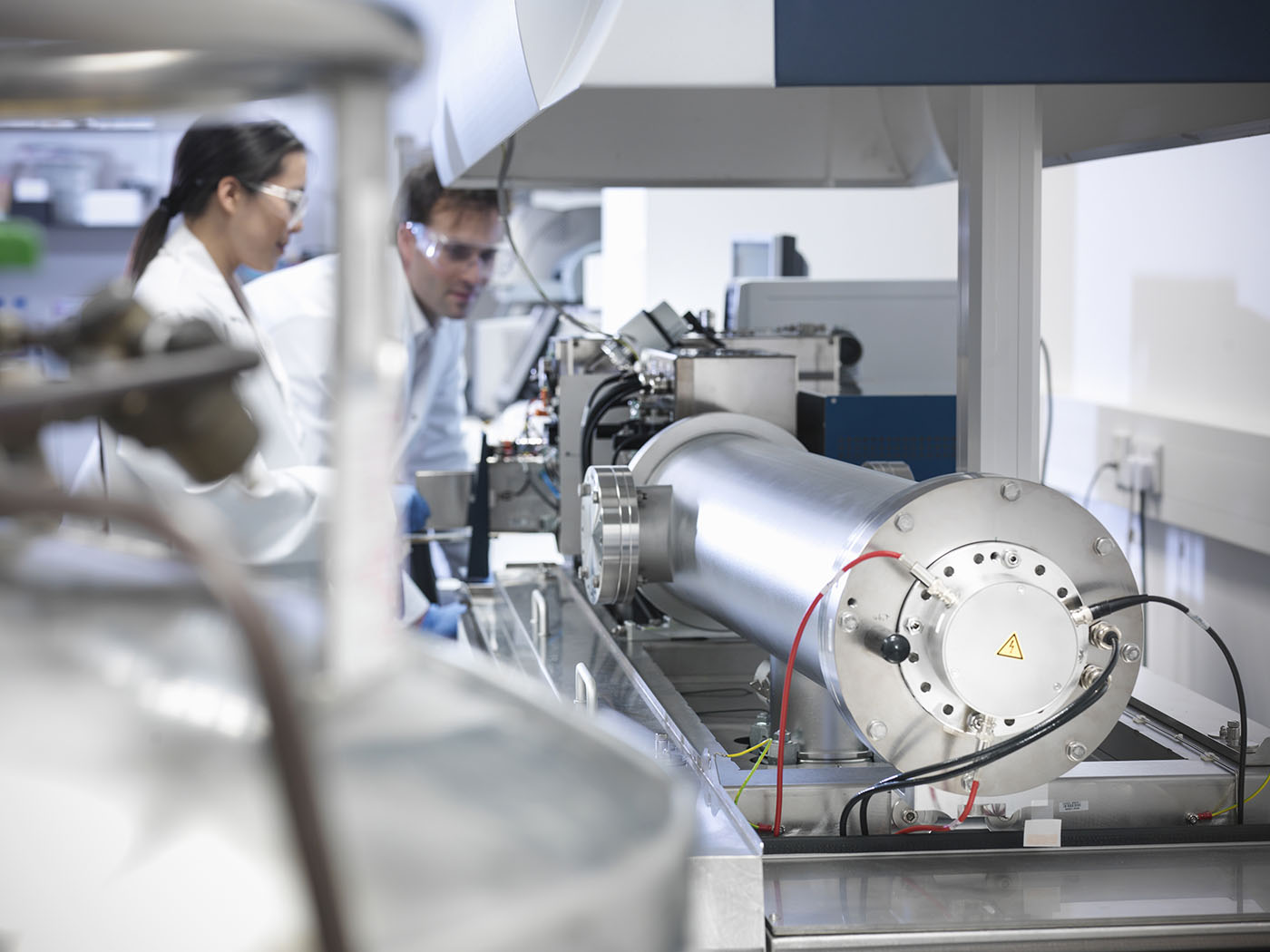
Mass spectrometry (MS) is experiencing significant advancements in the biotech sector, fundamentally changing how drugs are analyzed and developed. As drug modalities expand, including mRNA vaccines, peptides, and CRISPR components, the analytical demands on the industry have surged. Experts in the field highlight a need for cutting-edge mass spectrometers, innovative workflows, and real-time instrumentation to meet the complexities of modern therapeutics.
Interviews with leading figures in mass spectrometry reveal the industry’s evolution is accelerating to address these challenges. Josh McBee, PhD, mass spectrometry scientist lead at Advanced Materials Technology, describes the current era as a “golden age of pharmaceuticals.” He points to the rapid growth of new therapeutic modalities, including GLP-1 peptide drugs and mRNA vaccines, as catalysts for this transformation.
The diversification of drug types has led to unprecedented analytical challenges. Peptides and RNAs, known for their rapid degradation in the body, necessitate modifications that can generate a host of synthetic by-products. According to McBee, understanding these impurities is critical. “You can have an impurity up to 0.5 percent in the final product, but anything down to 0.1 percent you need to characterize and understand,” he states, underscoring the stringent regulatory expectations.
To achieve this level of characterization, high-resolution mass spectrometry and exceptional chromatographic resolution are essential. Despite advances, even the most sophisticated systems face difficulties with oligonucleotides, particularly siRNAs and longer CRISPR guide RNAs. McBee notes that separating these compounds is significantly more complex than traditional protein and peptide separations.
His team is developing superficially porous silica particles that enhance resolving power while mitigating the high back pressures typically associated with smaller particle sizes. Nevertheless, managing data has become a significant barrier. “The bigger the data sets you collect, the harder it is to maintain your data integrity,” McBee explains, referencing compliance requirements like 21 CFR Part 11.
Many manufacturers are hesitant to adopt high-resolution MS in regulated production environments. Instead, they are increasingly using simpler triple-quad and single-quad systems for automated in-process control, which are more reliable for quantifying known impurities quickly.
While McBee focuses on therapeutic characterization, Xiaoran Zhang, PhD, a senior scientist at Cytiva, addresses challenges stemming from manufacturing materials. Extractables and leachables (E&L) can migrate from these materials into drug products, impacting patient safety and product quality. Zhang explains that failure to identify these contaminants can compromise biologics’ efficiency and shelf life.
Identification of E&L contaminants is complicated, as manufacturing materials produce a complex mix of oligomers and additives. Zhang noted the difficulty in characterizing BADGE-related compounds due to their structural diversity and the absence of reference spectra. “High-resolution MS is critical in these cases,” she states, highlighting its role in confirming elemental compositions.
Sample preparation further complicates analysis. For example, protein-rich matrices often require intricate steps such as precipitation or liquid-liquid extraction, which can lead to recovery issues for certain compounds. To tackle these challenges, Zhang’s team has developed targeted liquid chromatography (LC)-QToF workflows that enable simultaneous collection of low- and high-energy fragmentation data, significantly improving identification times.
Another innovative approach comes from Tucker Kitchengs, MBA, a field applications scientist at Syft Technologies. He specializes in selected ion flow tube-MS (SIFT-MS), a technique that allows for real-time analysis of volatile compounds without the need for chromatographic separation. Kitchengs emphasizes the speed of SIFT-MS, stating that traditional workflows for residual-solvent analysis and nitrosamine testing can be completed in seconds rather than hours.
The SIFT-MS platform is user-friendly and can be operated with minimal training, making it particularly beneficial for fast-paced manufacturing environments. Recently, Syft launched the Tracer Pharm11, the first 21 CFR Part 11-compliant real-time mass spectrometer aimed at nitrite and nitrosamine testing. Early results in nitrite analysis have shown promising speed and sensitivity, with sample results available in as little as two minutes.
In contrast to the minimalism of SIFT-MS, supercritical fluid chromatography (SFC) represents a highly tunable analytical technique. Bill Farrell and Don Nguyen, PhD, senior scientists at Virscidian, describe SFC as versatile, capable of achieving separations that traditional high-performance liquid chromatography (HPLC) struggles with. SFC utilizes supercritical CO2 and organic modifiers to create unique separation mechanisms.
Farrell highlights SFC’s ability to facilitate chiral separations, which are crucial in pharmaceutical development. Contamination by the wrong enantiomer can have severe consequences, making SFC indispensable in discovery chemistry. However, the integration of SFC with mass spectrometry poses challenges due to the gas volumes generated during decompression, which can complicate electrospray ionization.
SFC also offers environmental benefits, as the evaporated CO2 leaves minimal solvent behind, reducing energy consumption and simplifying the purification process. The unusual environment of SFC can reveal physicochemical properties that conventional solvents obscure, providing valuable insights during early drug development.
Overall, the insights from these experts indicate that mass spectrometry is not just adapting to the evolving landscape of biotechnology; it is actively shaping the future of drug development. As therapeutic designs become more sophisticated and manufacturing processes more intricate, the industry is poised to rely on innovative MS techniques to ensure safety and efficacy in pharmaceuticals. With continued advancements, the field may indeed be entering a new golden age for biotechnology and drug manufacturing.

Robinhood Stock Surges 2.5% in Early Trading on March 17

Israel Intensifies Strikes as Global Energy Crisis Looms

CALV Offers Class on Communication Skills for Real Estate Professionals

Historic Bideford Pub Reopens as The Patch Wine Bar & Kitchen

Oscar Night Celebrations: Winners, Guests, and Exclusive After-Parties

Samsung Galaxy Watch 9 Set for Larger Battery Boost, Report Reveals

Kibble vs. Fresh Dog Food: What’s Best for Your Dog’s Health?

Acclaimed San Francisco Pizzeria Del Popolo to Close in May

‘Invincible’ Season 4 Launches on Prime Video with Epic Action

ALMA Discovers Companion Orbiting Giant Red Star π 1 Gruis

Doctoral Candidate Trivanni Yadav Advances Battery Research at UTulsa

Global Air Forces Ranked by Annual Defense Budgets in 2025

Rev. Bry Shields to Retire as McGill-Toolen President in 2026

Mass Production of F-35 Fighter Jet Drives Down Costs

Tucson Celebrates Life and Remembrance at 36th Annual All Souls Procession

Gold Investment Surge: Top Mutual Funds and ETF Alternatives

DirecTV to Launch AI-Driven Ads with User Likenesses in 2026

Paul Giamatti Reveals Villainous Role in Star Trek: Starfleet Academy
-
 Science9 months ago
ALMA Discovers Companion Orbiting Giant Red Star π 1 Gruis
-
 Science8 months ago
Doctoral Candidate Trivanni Yadav Advances Battery Research at UTulsa
-
 World10 months ago
Global Air Forces Ranked by Annual Defense Budgets in 2025
-
 Lifestyle10 months ago
Rev. Bry Shields to Retire as McGill-Toolen President in 2026
-
 World10 months ago
Mass Production of F-35 Fighter Jet Drives Down Costs
-
 Lifestyle9 months ago
Tucson Celebrates Life and Remembrance at 36th Annual All Souls Procession
-
 Business10 months ago
Gold Investment Surge: Top Mutual Funds and ETF Alternatives
-
 Top Stories10 months ago
DirecTV to Launch AI-Driven Ads with User Likenesses in 2026
-
 Entertainment10 months ago
Paul Giamatti Reveals Villainous Role in Star Trek: Starfleet Academy
-

 Lifestyle8 months ago
Maumee’s Shop With a Hero Event Delivers Joy to Local Children
-

 Top Stories10 months ago
New ‘Star Trek: Voyager’ Game Demo Released, Players Test Limits
-

 Lifestyle7 months ago
Cape May Shines as New Jersey’s Only Entry on Beach Town List