
Science
Discoveries in Hoyo Negro Unveil Secrets of the Ice Age

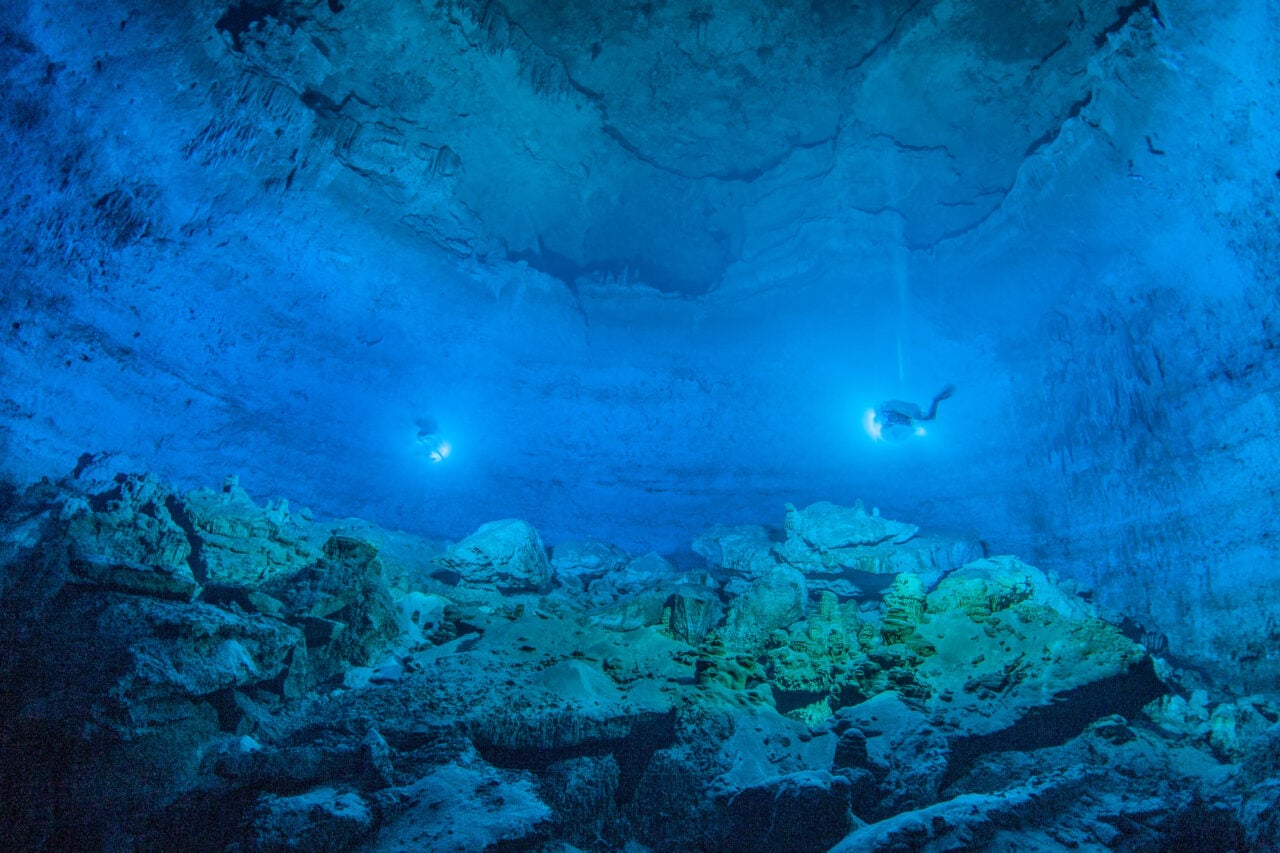
Deep within the Yucatán Peninsula lies Hoyo Negro, a submerged cave that has become a significant archaeological site, revealing vital insights into the Ice Age. Discovered in 2007 by divers Alejandro Alvarez, Franco Attolini, and Alberto Nava Blank, this bell-shaped pit is part of the Sac Actun cave system, which is among the largest underwater cave networks in the world. The National Institute of Anthropology and History (INAH) established the Hoyo Negro Underwater Archaeological Project in 2010, combining the efforts of paleontologists, archaeologists, and divers from Mexico, Canada, and the United States.
Exploring these underwater tunnels has proven challenging and dangerous. Roberto Chávez Arce, a co-director of the project, highlighted the risks involved in diving through largely unmapped and dark waters. Divers must carry essential safety gear, including breathing apparatuses, lights, and redundant equipment in case of failure. Initially, reaching Hoyo Negro involved a lengthy swim of approximately 914 meters from the nearest cenote, but the team has since identified a closer cenote, allowing for quicker access with the aid of motorized scooters.
The cave system has provided a treasure trove of fossils and artifacts that tell the story of both ancient humans and animals. One of the most remarkable discoveries is Naia, one of the oldest known human skeletons in the Americas, dating back approximately 12,000 years. Found at the bottom of Hoyo Negro, Naia was a young woman, likely between 15 and 17 years old, who met a tragic end due to a fall into the pit. Dr. James Chatters, co-director of the project, explained that her injuries indicate she fell from a significant height, which contributed to her untimely death.
The research team continues to analyze the findings, which reveal that the ecosystem of the Yucatán during the Pleistocene was vastly different from today. The area was more savanna-like and provided vital resources such as fresh water, which would have attracted both humans and animals. Chatters noted that evidence suggests humans may have entered the caves for various reasons, including seeking water or clay for tools.
In addition to human remains, the cave has yielded fossil evidence of various extinct species. The bones of the short-faced bear, known as Arctotherium wingei, and a newly identified genus of ground sloth, Nohochichak xibalbahkah, have been uncovered. These discoveries are reshaping our understanding of the migration patterns and habitats of these ancient animals. The gomphothere, a prehistoric elephant-like creature, has also been found in the cave, suggesting it ventured underground possibly in search of water.
Significance of the Discoveries
Research conducted in Hoyo Negro and the surrounding cave systems is contributing to the broader narrative of the Great American Biotic Interchange, a series of migrations between North and South America. The fossils, particularly those of Protocyon troglodytes and other carnivores, are providing new insights into the biodiversity of the region during the Ice Age.
The findings at Hoyo Negro are not only significant for understanding ancient ecosystems but also for recognizing the human activity that took place within these caves. Evidence of ochre mining, stone cairns, and fire remnants suggests that early humans utilized the caves for various purposes, including burial practices and possibly even as a source of pigments for decoration.
Despite the challenges of underwater research, the collaboration of international teams has opened pathways to understanding the past. Researchers continue to study the sediment cores, fossil remains, and human artifacts to unravel the mysteries of the Ice Age and its inhabitants. The ongoing work at Hoyo Negro exemplifies the importance of cave systems in preserving ancient life and the narratives they hold.
The exploration and study of Hoyo Negro are ongoing, with new findings being presented at conferences and published in scientific papers. As Chávez Arce remarked, “Caves allow us to travel back in time and more fully experience the environment in which past organisms lived and died.” With each dive, the team is uncovering layers of history that contribute to our understanding of both human and animal evolution during a pivotal time in Earth’s history.

Grab the Wyze Cam OG Now at 50% Off for Enhanced Home Security

Big Bear’s Bald Eagles Capture Hearts as Social Media Sensations

Water Molecules Transform Prolinol Catalyst Structure, Study Finds

New York Times Bestsellers: Top Titles Revealed for January 24

Twin Capital Management Reduces Stake in Public Storage by Over 54%

Pennsylvania Republican Party Endorses Jason Richey for Lt. Governor

Lara Exploration Reaches New High: Is It Time to Invest?

**Gavin Pritzkau Crowned MVP at Urgent 2026 Orlando FBU Camp**

Medline and TransEnterix: A Comparative Investment Analysis

ALMA Discovers Companion Orbiting Giant Red Star π 1 Gruis

Doctoral Candidate Trivanni Yadav Advances Battery Research at UTulsa

Global Air Forces Ranked by Annual Defense Budgets in 2025

New ‘Star Trek: Voyager’ Game Demo Released, Players Test Limits

Mass Production of F-35 Fighter Jet Drives Down Costs

NASCAR Faces Fan Backlash as Steve Phelps’ Texts Surface

Gold Investment Surge: Top Mutual Funds and ETF Alternatives

DirecTV to Launch AI-Driven Ads with User Likenesses in 2026

SEVENTEEN’s Mingyu Faces Backlash Over Alcohol Incident at Concert
-
 Science3 months ago
ALMA Discovers Companion Orbiting Giant Red Star π 1 Gruis
-
 Science3 months ago
Doctoral Candidate Trivanni Yadav Advances Battery Research at UTulsa
-
 World4 months ago
Global Air Forces Ranked by Annual Defense Budgets in 2025
-
 Top Stories4 months ago
New ‘Star Trek: Voyager’ Game Demo Released, Players Test Limits
-
 World4 months ago
Mass Production of F-35 Fighter Jet Drives Down Costs
-
 Sports3 months ago
NASCAR Faces Fan Backlash as Steve Phelps’ Texts Surface
-
 Business4 months ago
Gold Investment Surge: Top Mutual Funds and ETF Alternatives
-
 Top Stories4 months ago
DirecTV to Launch AI-Driven Ads with User Likenesses in 2026
-
 Politics4 months ago
SEVENTEEN’s Mingyu Faces Backlash Over Alcohol Incident at Concert
-

 Science4 months ago
Time Crystals Revolutionize Quantum Computing Potential
-

 Entertainment4 months ago
Freeport Art Gallery Transforms Waste into Creative Masterpieces
-

 Science4 months ago
Remembering David E. Brest: A Life Dedicated to Nature and Family