
Science
Rare Desert Plant Thrives at Innovative Solar Farm Near Las Vegas

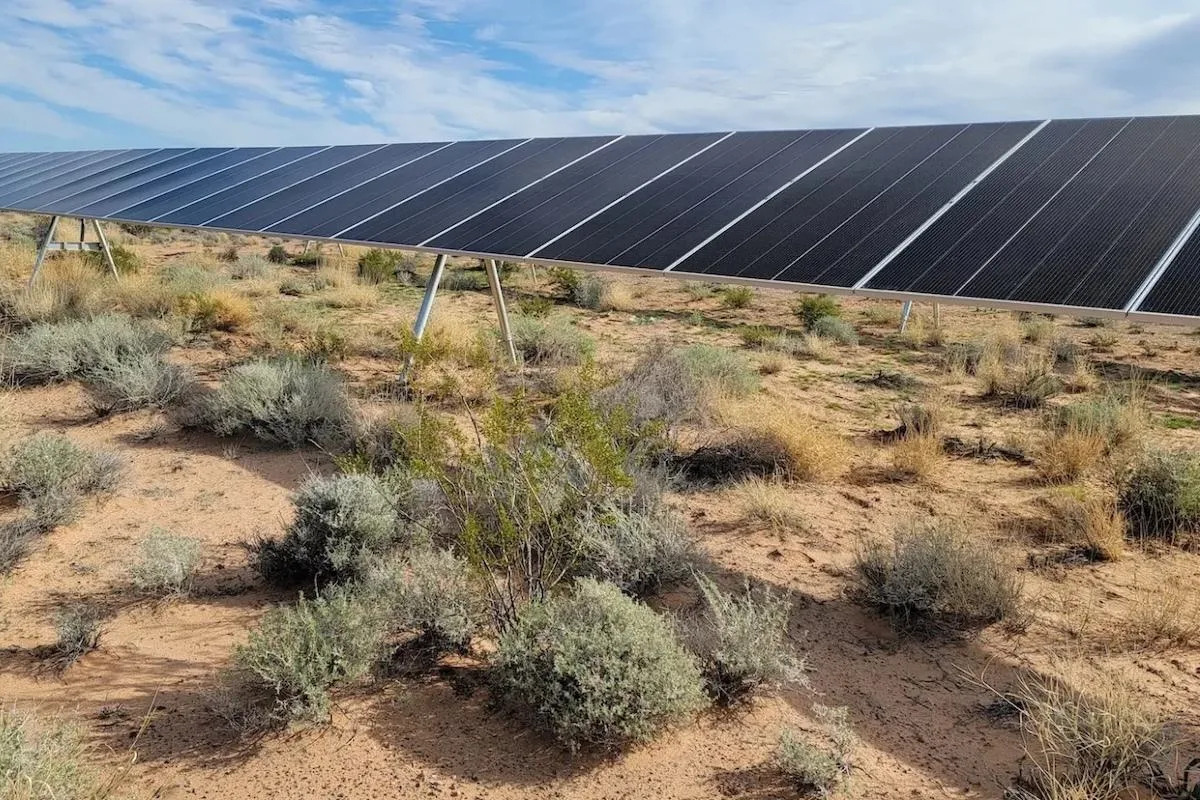
A recent study has revealed that the Gemini Solar Project near Las Vegas has become an unexpected sanctuary for a rare desert plant. The threecorner milkvetch, a member of the pea family, has flourished in an area traditionally viewed as barren. This finding highlights the potential for solar farms to coexist with and even support local ecosystems.
The threecorner milkvetch, which waits for rain to blossom, is currently being considered for listing under the Endangered Species Act. Despite its resilience, the plant is sensitive to environmental disturbances, particularly those caused by traditional solar farm construction techniques. Typically, energy companies employ a “blade and grade” method, which involves clearing vegetation and leveling the soil, disrupting vital seed banks.
In contrast, the Gemini Solar Project adopted a more ecologically conscious approach. Researchers from the Desert Research Institute conducted a study that showed a remarkable increase in the number of threecorner milkvetch plants on-site. Prior to the project’s development, scientists documented only 12 plants. By 2024, that number had surged to 93, indicating that the seeds had survived the construction process.
Innovative Construction Techniques Foster Biodiversity
The study found that the plants at the Gemini site not only increased in number but also exhibited healthier growth compared to a nearby plot. Plants grew wider and taller, producing more flowers and fruits. This success may be attributed to the shade provided by the solar panels, which reduces soil evaporation and allows for greater water retention. Tiffany Pereira, an ecologist and lead author of the study, noted, “So you just have the potential for a lot more plants. There’s seedlings of so many other species coming up as well. And so the fact that the seed bank survived is phenomenal.”
The methodology employed at Gemini is part of a broader concept known as ecovoltaics. This approach prioritizes native species during the construction of solar facilities, contrasting sharply with traditional methods that often leave habitats decimated. For instance, seeding the area with native grasses and flowers can enhance the ecosystem and attract local wildlife.
Other researchers, such as Lee Walston from Argonne National Laboratory, have observed similar positive outcomes in different locations. In Minnesota, a study followed two solar sites on former cropland and noted a sevenfold increase in unique flowering plant species and a tripling of insect pollinators over five years. Native bee populations surged by a staggering 20 times, while grassland birds flocked to the areas, benefiting from the increased insect abundance.
Challenges and Opportunities for Solar Development
While the potential for biodiversity in solar farm environments is promising, challenges remain. Different plant species have varying light and shade requirements. In the Mojave Desert, for example, Pereira found only one threecorner milkvetch growing directly under a solar panel; most thrived in sunnier areas between panels. The height of the solar panels plays a crucial role in this ecosystem balance, as taller structures allow larger plants to flourish but increase material costs for solar companies.
The integration of livestock, such as sheep and goats for “conservation grazing,” presents another opportunity. This practice helps control invasive species and mitigates fire risks associated with dead vegetation. Walston emphasizes collaboration with developers to determine ideal panel heights and seed mixes that can optimize habitats for diverse species.
The concept of agrivoltaics is also gaining traction. Researchers are exploring the potential for crops to grow alongside solar installations. For instance, studies have shown that vegetables like cucumbers can thrive on rooftops under solar panels, benefiting from a unique microclimate that conserves water and protects against extreme temperatures.
Jennifer Bousselot, a horticulturist at Colorado State University, suggests that the selection of high-value crops could make agrivoltaics financially viable for farmers. “If you’re going to grow something, you want to grow something that a potential farmer could sell for decent profit,” she stated.
In summary, the success of the threecorner milkvetch at the Gemini Solar Project underscores the potential for solar farms to support biodiversity while generating clean energy. As researchers continue to investigate methods that benefit both the environment and energy production, the vision of a more harmonious relationship between renewable infrastructure and nature becomes increasingly achievable. Pereira aptly concluded, “It’s a wild and beautiful place that we live in, and it’s our job to look out for these species as well.”

Trump Proposes Name Change for Dulles Airport to Unlock Funds

DBV Technologies Receives “Moderate Buy” Consensus Rating from Analysts

Netflix Launches Highly Rated Crime Thriller ‘Hell or High Water’

Microsoft Launches Dark Mode for SharePoint Admins—Now Available!

Celebrating a Legacy of Peace: The Life of Archbishop Joseph Raya

Trump Reports Positive Talks with Iran in Oman Amid New Sanctions

Woman Left in Shock After Husband Abruptly Abandons Family

Maj. Gen. Timothy Sejba to Address Space Innovation at Florida Tech

Adams Central Girls Shine with 12 Wrestlers in District Semis

ALMA Discovers Companion Orbiting Giant Red Star π 1 Gruis

Doctoral Candidate Trivanni Yadav Advances Battery Research at UTulsa

Global Air Forces Ranked by Annual Defense Budgets in 2025

New ‘Star Trek: Voyager’ Game Demo Released, Players Test Limits

Mass Production of F-35 Fighter Jet Drives Down Costs

NASCAR Faces Fan Backlash as Steve Phelps’ Texts Surface

DirecTV to Launch AI-Driven Ads with User Likenesses in 2026

Gold Investment Surge: Top Mutual Funds and ETF Alternatives

SEVENTEEN’s Mingyu Faces Backlash Over Alcohol Incident at Concert
-
 Science3 months ago
ALMA Discovers Companion Orbiting Giant Red Star π 1 Gruis
-
 Science3 months ago
Doctoral Candidate Trivanni Yadav Advances Battery Research at UTulsa
-
 World4 months ago
Global Air Forces Ranked by Annual Defense Budgets in 2025
-
 Top Stories4 months ago
New ‘Star Trek: Voyager’ Game Demo Released, Players Test Limits
-
 World4 months ago
Mass Production of F-35 Fighter Jet Drives Down Costs
-
 Sports3 months ago
NASCAR Faces Fan Backlash as Steve Phelps’ Texts Surface
-
 Top Stories4 months ago
DirecTV to Launch AI-Driven Ads with User Likenesses in 2026
-
 Business4 months ago
Gold Investment Surge: Top Mutual Funds and ETF Alternatives
-
 Politics4 months ago
SEVENTEEN’s Mingyu Faces Backlash Over Alcohol Incident at Concert
-
 Science4 months ago
Time Crystals Revolutionize Quantum Computing Potential
-

 Entertainment4 months ago
Freeport Art Gallery Transforms Waste into Creative Masterpieces
-

 Science4 months ago
Remembering David E. Brest: A Life Dedicated to Nature and Family