
Health
Precision Robotics Revolutionizes Electronics and Medical Manufacturing

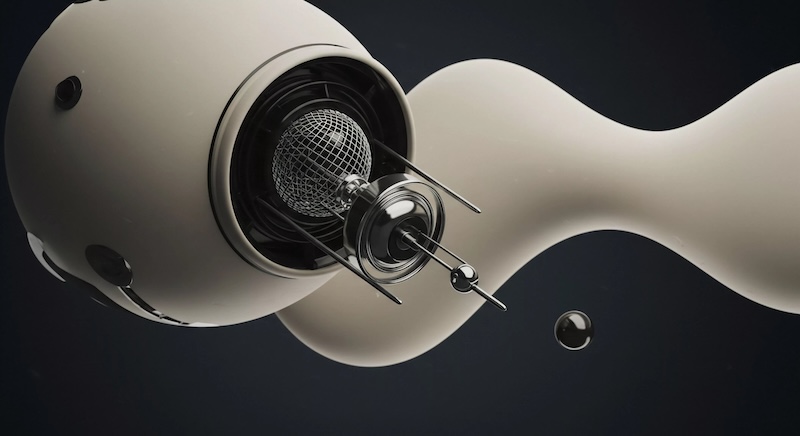
The landscape of manufacturing is undergoing a transformation as precision robotics becomes integral to sectors such as electronics assembly and medical device production. With industrial robots achieving repeatability levels of ±5 μm, and some advanced systems even reaching sub-micrometre accuracy, the capabilities of automation are expanding significantly. This evolution is particularly crucial as devices become smaller and more complex, making human assembly increasingly impractical for achieving the necessary tolerances.
Understanding Precision Robotics
The term “precision robotics” encompasses a range of technologies designed to perform tasks that require not only accuracy but also repeatability. For instance, if a robot is instructed to move to a specific position, its accuracy reflects how close it gets to that target. If it is meant to reach 100.000 mm but lands at 100.007 mm, the accuracy error is 7 μm. In contrast, repeatability measures how consistently the robot can return to the same point, regardless of whether that point is perfectly accurate.
In industrial applications, repeatability is often prioritized, as many assembly processes rely on fixed reference points or machine vision systems to correct any deviations. Precision serves as a broader term that encompasses both accuracy and repeatability, although in standard metrology, it specifically refers to the consistency of repeated measurements.
The calibration and measurement standards governing these technologies are critical. Metrology, which dictates how measurements are quantified, ensures that robots meet stringent requirements, such as those outlined by ISO and FDA regulations. These standards are vital for industries where even the slightest deviation could compromise functionality or quality.
Applications in Electronics and Medical Manufacturing
The adoption of precision robotics is particularly evident in electronics manufacturing, where the need for micrometre-scale positioning has led to significant automation. Tasks such as aligning chiplets within ±1 to 3 μm or performing wire bonding at high speeds showcase the capabilities of modern robotics. As devices shrink, the precision required for assembly increases, with robots now handling operations that were once performed manually under microscopes.
For example, Yamaha’s YK-XG and YK-TZ SCARA robot ranges claim to achieve ±5 μm repeatability, making them suitable for micro-assembly and semiconductor handling. Similarly, Fanuc’s systems emphasize high-speed precision for PCB micro-assembly, while Zimmer Group provides cleanroom-certified grippers for delicate medical devices such as catheters and stents.
As medical devices increasingly incorporate micro-electronics and microfluidics, the demand for precision robotics has surged. Modern devices, such as disposable insulin pumps, require sub-millimetre assembly and precise alignment, often pushing manufacturers to adopt techniques similar to those used in electronics production.
Robots capable of handling intricate tasks in medical settings include those that can thread micro-wires or position components with accuracies of 10 to 20 μm. The need for stringent contamination controls and adherence to ISO standards ensures that these robotic systems are designed for ultra-precision tasks while maintaining the integrity of delicate materials.
The convergence of electronics and medical manufacturing not only highlights the versatility of precision robotics but also underscores the growing market for automation technologies. Companies that can navigate the complexities of micrometre-class automation are likely to lead the way in these evolving industries.
The future of precision robotics looks promising, with expectations for continued advancements in automation technologies. As devices shrink and demand for precision grows, the integration of robotics into manufacturing processes will become essential. The companies that effectively harness these capabilities stand to define the next generation of electronics and medical technology, driving innovation and efficiency in a rapidly changing landscape.
In summary, precision robotics is not merely a technological advancement but a necessity in modern manufacturing. As sectors increasingly require extreme accuracy and repeatability, the role of automation will only become more prominent, shaping the future of how products are developed and produced.

Robinhood Stock Surges 2.5% in Early Trading on March 17

Israel Intensifies Strikes as Global Energy Crisis Looms

CALV Offers Class on Communication Skills for Real Estate Professionals

Historic Bideford Pub Reopens as The Patch Wine Bar & Kitchen

Oscar Night Celebrations: Winners, Guests, and Exclusive After-Parties

Samsung Galaxy Watch 9 Set for Larger Battery Boost, Report Reveals

Kibble vs. Fresh Dog Food: What’s Best for Your Dog’s Health?

Acclaimed San Francisco Pizzeria Del Popolo to Close in May

‘Invincible’ Season 4 Launches on Prime Video with Epic Action

ALMA Discovers Companion Orbiting Giant Red Star π 1 Gruis

Doctoral Candidate Trivanni Yadav Advances Battery Research at UTulsa

Rev. Bry Shields to Retire as McGill-Toolen President in 2026

Global Air Forces Ranked by Annual Defense Budgets in 2025

Tucson Celebrates Life and Remembrance at 36th Annual All Souls Procession

Mass Production of F-35 Fighter Jet Drives Down Costs

Gold Investment Surge: Top Mutual Funds and ETF Alternatives

Maumee’s Shop With a Hero Event Delivers Joy to Local Children

DirecTV to Launch AI-Driven Ads with User Likenesses in 2026
-
 Science9 months ago
ALMA Discovers Companion Orbiting Giant Red Star π 1 Gruis
-
 Science9 months ago
Doctoral Candidate Trivanni Yadav Advances Battery Research at UTulsa
-
 Lifestyle10 months ago
Rev. Bry Shields to Retire as McGill-Toolen President in 2026
-
 World10 months ago
Global Air Forces Ranked by Annual Defense Budgets in 2025
-
 Lifestyle10 months ago
Tucson Celebrates Life and Remembrance at 36th Annual All Souls Procession
-
 World10 months ago
Mass Production of F-35 Fighter Jet Drives Down Costs
-
 Business10 months ago
Gold Investment Surge: Top Mutual Funds and ETF Alternatives
-
 Lifestyle8 months ago
Maumee’s Shop With a Hero Event Delivers Joy to Local Children
-
 Top Stories10 months ago
DirecTV to Launch AI-Driven Ads with User Likenesses in 2026
-

 Sports8 months ago
Lawrence Launches Winterfest Skating Rink and Hot Chocolate Chalet
-

 Lifestyle8 months ago
Cape May Shines as New Jersey’s Only Entry on Beach Town List
-

 Entertainment10 months ago
Paul Giamatti Reveals Villainous Role in Star Trek: Starfleet Academy