
Science
Engineers Tackle Unique Challenges at Neumayer III Antarctic Base

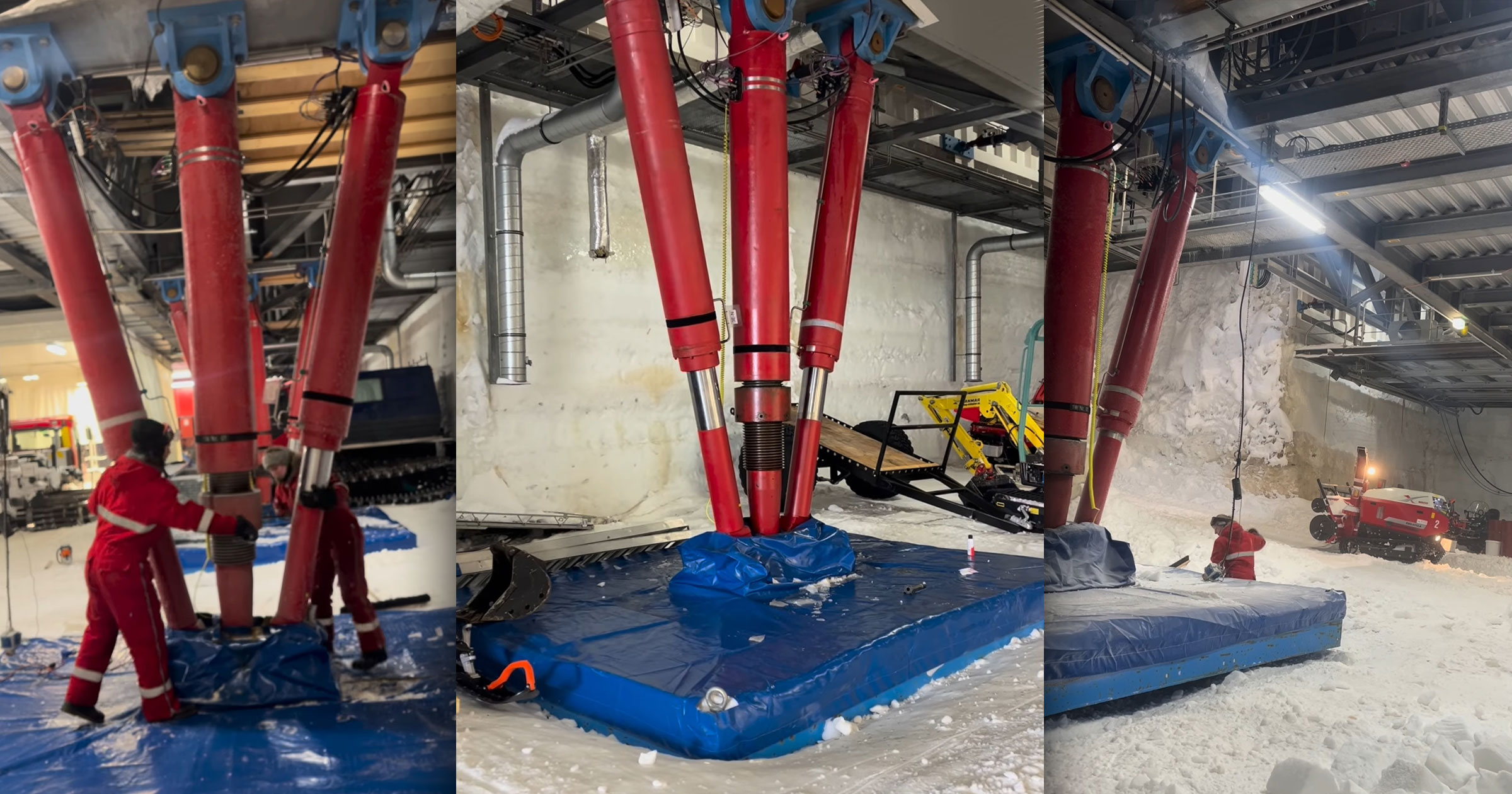
As the Sun has not risen for over two weeks at Germany’s Neumayer III base in Antarctica, researchers are navigating extreme conditions at the 16-year-old research facility. The continuous darkness is a result of the Earth’s axial tilt, presenting a unique backdrop for the ongoing challenges faced by the base, including ice shelf disintegration and shifting ice that has moved the facility more than a foot closer to the Antarctic coast.
Neumayer III, which rests on over 650 feet of ice on the Ekstrom Ice Shelf, is one of approximately 70 permanent research stations in Antarctica. Its predecessors, Neumayer Station and Neumayer Station II, were abandoned in 1992 and 2008 due to similar hazards. Designed to withstand the harsh environment that led to the demise of its predecessors, Neumayer III features a unique structure elevated on 16 hydraulic stilts. This engineering innovation allows the 20,000-square-foot, 2,200-ton facility to remain above the surface of the ice.
The engineering team at Neumayer III faces the complex task of maintaining the station’s position. Swiss engineer and technical lead, Thomas Schenk, who has been stationed there since 2024, oversees the delicate process of adjusting the hydraulic stilts to accommodate shifting snow and ice. In a recently shared video, Schenk demonstrated the intricate system that keeps the station stable.
“We align the station every week to ensure that it is always perfectly level,” Schenk explained. The video captures the team loosening horizontal brackets that secure the structure, followed by lifting each bipod leg using hydraulic cylinders. Once elevated, fresh snow is scooped underneath the leg to maintain the station’s height and stability.
In his post, Schenk remarked, “Everything here in Antarctica that isn’t built on rock will inevitably sink into the snow sooner or later.” The hydraulic lifting system, developed by the German engineering firm IgH, ensures that the two massive parallel steel tubes housing the complex remain above the rapidly changing landscape.
The team’s efforts to maintain the base are critically important, as the station typically rises by approximately 6.5 feet each summer using similar techniques. Schenk’s meticulous approach highlights the challenges of establishing a permanent research presence in such a hostile environment.
The ongoing work at Neumayer III underscores the resilience and ingenuity required to conduct scientific research in Antarctica. As the facility continues to adapt to the dynamic conditions surrounding it, the research conducted there plays a vital role in understanding climate change and its impact on polar regions.

Robinhood Stock Surges 2.5% in Early Trading on March 17

Israel Intensifies Strikes as Global Energy Crisis Looms

CALV Offers Class on Communication Skills for Real Estate Professionals

Historic Bideford Pub Reopens as The Patch Wine Bar & Kitchen

Oscar Night Celebrations: Winners, Guests, and Exclusive After-Parties

Samsung Galaxy Watch 9 Set for Larger Battery Boost, Report Reveals

Kibble vs. Fresh Dog Food: What’s Best for Your Dog’s Health?

Acclaimed San Francisco Pizzeria Del Popolo to Close in May

‘Invincible’ Season 4 Launches on Prime Video with Epic Action

ALMA Discovers Companion Orbiting Giant Red Star π 1 Gruis

Doctoral Candidate Trivanni Yadav Advances Battery Research at UTulsa

Global Air Forces Ranked by Annual Defense Budgets in 2025

Rev. Bry Shields to Retire as McGill-Toolen President in 2026

Mass Production of F-35 Fighter Jet Drives Down Costs

Tucson Celebrates Life and Remembrance at 36th Annual All Souls Procession

Gold Investment Surge: Top Mutual Funds and ETF Alternatives

DirecTV to Launch AI-Driven Ads with User Likenesses in 2026

Paul Giamatti Reveals Villainous Role in Star Trek: Starfleet Academy
-
 Science9 months ago
ALMA Discovers Companion Orbiting Giant Red Star π 1 Gruis
-
 Science9 months ago
Doctoral Candidate Trivanni Yadav Advances Battery Research at UTulsa
-
 World10 months ago
Global Air Forces Ranked by Annual Defense Budgets in 2025
-
 Lifestyle10 months ago
Rev. Bry Shields to Retire as McGill-Toolen President in 2026
-
 World10 months ago
Mass Production of F-35 Fighter Jet Drives Down Costs
-
 Lifestyle9 months ago
Tucson Celebrates Life and Remembrance at 36th Annual All Souls Procession
-
 Business10 months ago
Gold Investment Surge: Top Mutual Funds and ETF Alternatives
-
 Top Stories10 months ago
DirecTV to Launch AI-Driven Ads with User Likenesses in 2026
-
 Entertainment10 months ago
Paul Giamatti Reveals Villainous Role in Star Trek: Starfleet Academy
-

 Lifestyle8 months ago
Maumee’s Shop With a Hero Event Delivers Joy to Local Children
-

 Top Stories10 months ago
New ‘Star Trek: Voyager’ Game Demo Released, Players Test Limits
-

 Lifestyle8 months ago
Cape May Shines as New Jersey’s Only Entry on Beach Town List