
Science
Astronomers Uncover Largest Rotating Galaxy Structure Yet

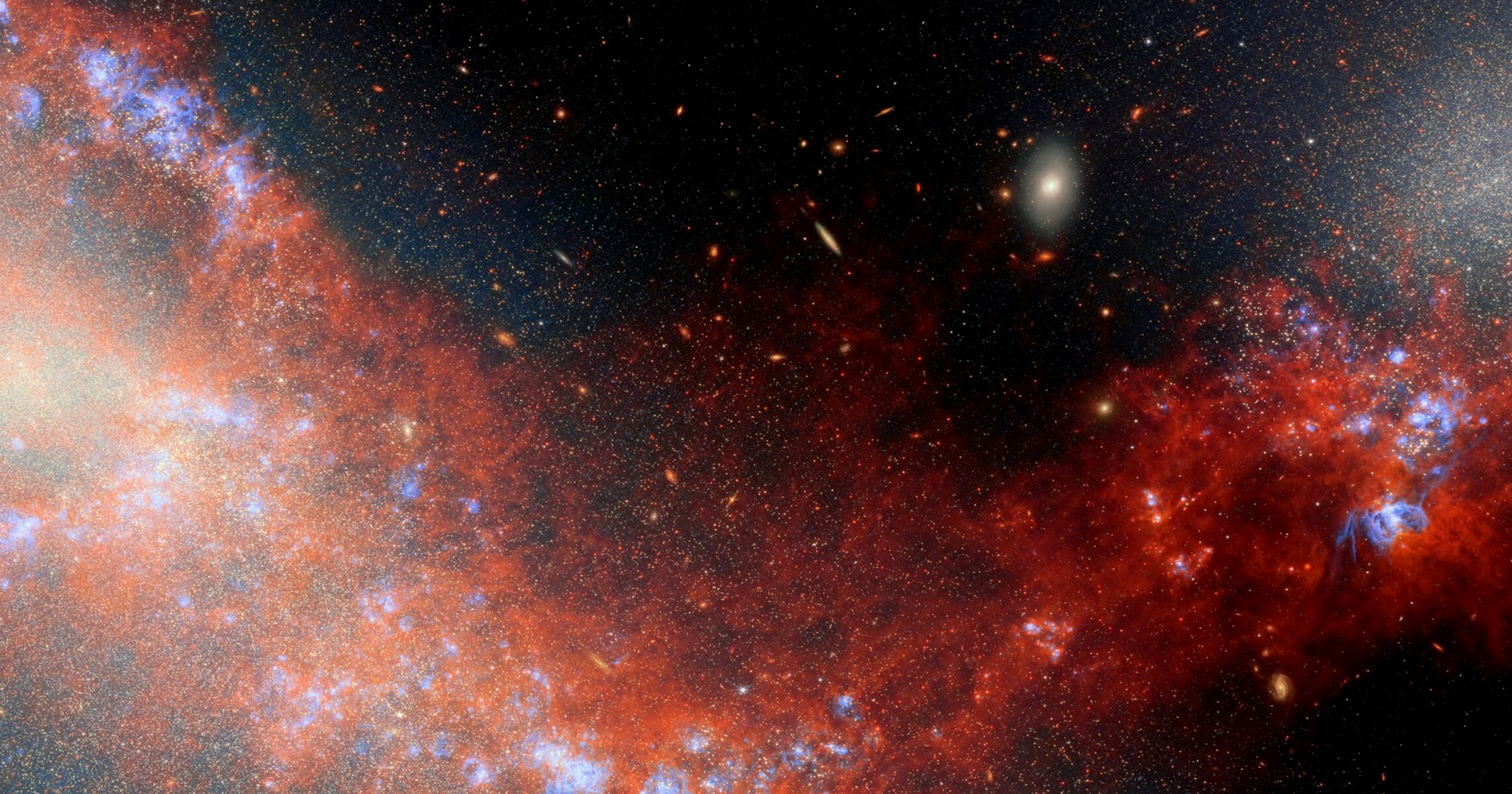
A team of international astronomers has identified the largest known rotating structure in the universe, comprised of enormous galactic filaments interconnected by dark matter. This discovery, which sheds light on the formation of galaxies and stars, was made using data from the MeerKAT radio telescope in South Africa.
Remarkable Findings from the Cosmos
The researchers, led by the University of Oxford, published their findings in the journal Monthly Notices of the Royal Astronomical Society in March 2024. They observed a string of 14 galaxies extending approximately 5.5 million light-years in length and 117,000 light-years in width. This structure exists within a larger filament containing an impressive 280 galaxies that stretches 50 million light-years.
Many of these galaxies appear to rotate in unison with the overarching filament, suggesting a complex interaction between galactic formations. “This is the largest individual spinning structure so far detected,” said Lyla Jung, a postdoctoral researcher at the University of Oxford and co-lead author of the study. She added, “Statistically, we believe there are other spinning structures, some of which could be larger.”
Insights into Galactic Dynamics
The discovery offers profound implications for our understanding of cosmic dynamics. Jung explained that the unique combination of spin alignment and rotational motion makes this structure exceptional. “You can liken it to the teacups ride at a theme park,” she noted. “Each galaxy is like a spinning teacup, but the whole platform—the cosmic filament—is rotating too.” This dual motion provides rare insight into how galaxies derive their spin from the larger structures surrounding them.
Further analysis indicates that the filament is relatively young, characterized as being in a “dynamically cold” state. The hydrogen-rich galaxies within it may still be accumulating the necessary fuel to form new stars, offering a glimpse into the early stages of galaxy evolution. “This filament is a fossil record of cosmic flows,” stated Madalina Tudorache, a postdoctoral research assistant at the University of Cambridge and co-lead author.
The researchers also detailed how gas circulates within the filament, which could greatly inform upcoming observational efforts by the European Space Agency’s Euclid mission and the Vera C. Rubin Observatory in Chile. Tudorache remarked, “This is a very exciting time to work in this field, as our capacity to discover such structures is increasing with the advent of better radio and optical surveys.”
This groundbreaking research not only expands our understanding of cosmic structures but also enhances our knowledge of the universe’s evolution. With improved technology and techniques, astronomers anticipate uncovering even more about the intricate dance of galaxies in the vast cosmos.

Robinhood Stock Surges 2.5% in Early Trading on March 17

Israel Intensifies Strikes as Global Energy Crisis Looms

CALV Offers Class on Communication Skills for Real Estate Professionals

Historic Bideford Pub Reopens as The Patch Wine Bar & Kitchen

Oscar Night Celebrations: Winners, Guests, and Exclusive After-Parties

Samsung Galaxy Watch 9 Set for Larger Battery Boost, Report Reveals

Kibble vs. Fresh Dog Food: What’s Best for Your Dog’s Health?

Acclaimed San Francisco Pizzeria Del Popolo to Close in May

‘Invincible’ Season 4 Launches on Prime Video with Epic Action

ALMA Discovers Companion Orbiting Giant Red Star π 1 Gruis

Doctoral Candidate Trivanni Yadav Advances Battery Research at UTulsa

Global Air Forces Ranked by Annual Defense Budgets in 2025

Rev. Bry Shields to Retire as McGill-Toolen President in 2026

Mass Production of F-35 Fighter Jet Drives Down Costs

Tucson Celebrates Life and Remembrance at 36th Annual All Souls Procession

Gold Investment Surge: Top Mutual Funds and ETF Alternatives

DirecTV to Launch AI-Driven Ads with User Likenesses in 2026

Paul Giamatti Reveals Villainous Role in Star Trek: Starfleet Academy
-
 Science9 months ago
ALMA Discovers Companion Orbiting Giant Red Star π 1 Gruis
-
 Science8 months ago
Doctoral Candidate Trivanni Yadav Advances Battery Research at UTulsa
-
 World10 months ago
Global Air Forces Ranked by Annual Defense Budgets in 2025
-
 Lifestyle10 months ago
Rev. Bry Shields to Retire as McGill-Toolen President in 2026
-
 World10 months ago
Mass Production of F-35 Fighter Jet Drives Down Costs
-
 Lifestyle9 months ago
Tucson Celebrates Life and Remembrance at 36th Annual All Souls Procession
-
 Business10 months ago
Gold Investment Surge: Top Mutual Funds and ETF Alternatives
-
 Top Stories10 months ago
DirecTV to Launch AI-Driven Ads with User Likenesses in 2026
-
 Entertainment10 months ago
Paul Giamatti Reveals Villainous Role in Star Trek: Starfleet Academy
-

 Top Stories10 months ago
New ‘Star Trek: Voyager’ Game Demo Released, Players Test Limits
-

 Lifestyle8 months ago
Maumee’s Shop With a Hero Event Delivers Joy to Local Children
-

 Lifestyle8 months ago
Cape May Shines as New Jersey’s Only Entry on Beach Town List