
Science
New Leaf-Scanning Technology Helps Farmers Identify Ripe Fruit

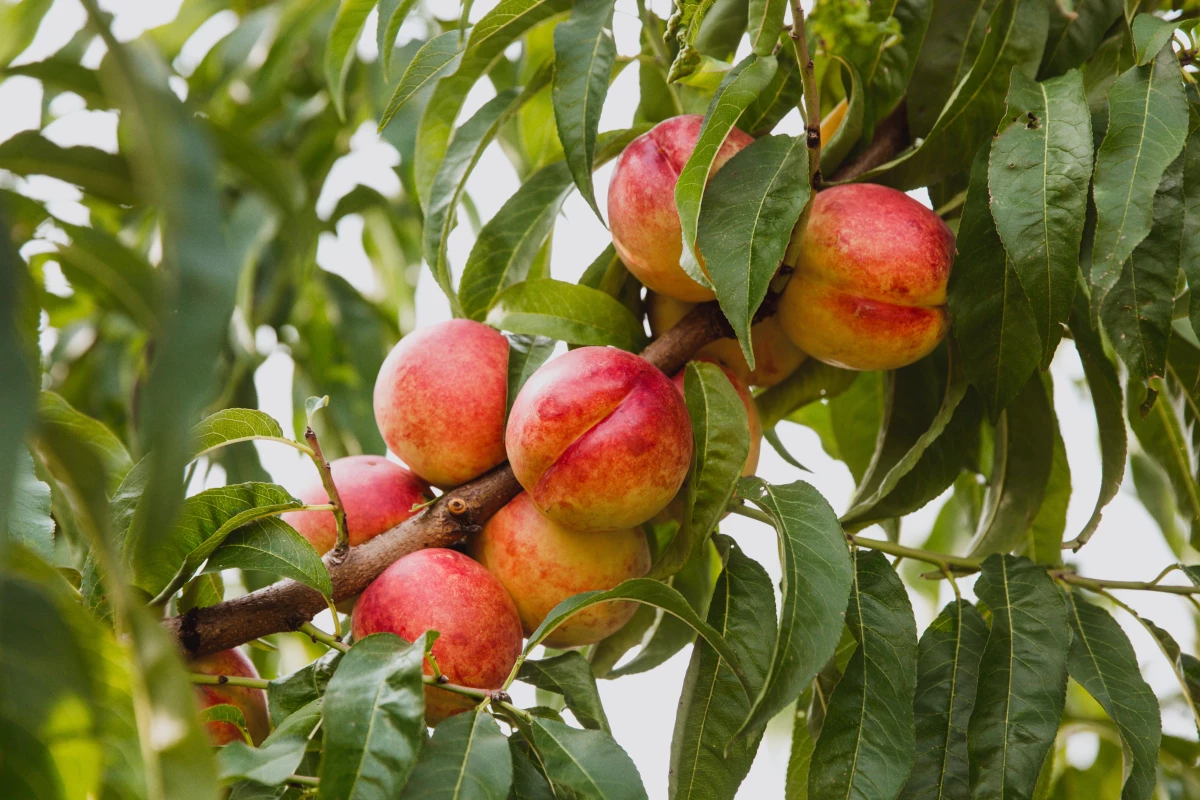
Farmers may soon have a more efficient method for determining the ripeness of fruit without damaging their crops. Researchers at Universitat Rovira i Virgili in Spain have developed a new technique that analyzes the leaves of fruit trees instead of the fruit itself. This innovative approach allows farmers to assess ripeness without reducing their yields, which is often a concern when harvesting.
The team tested this technique over a period of 11 weeks on 12 nectarine trees within a commercial orchard. The current iteration of this technology employs two spectrometers that conduct near-infrared and mid-infrared scans of both the top and underside of leaves located next to the fruit. The way these leaves absorb or reflect light from the spectrometers provides reliable indicators of the fruit’s ripeness.
According to Dr. Daniel Schorn, a member of the research team, “The leaves undergo physiological and biochemical changes as the fruit ripens, due to the direct connection between the metabolism of the leaves and that of the fruit. These changes are reflected in their spectral fingerprint.” This correlation allows for a more accurate assessment of specific fruit characteristics, such as weight and firmness.
While the technique has shown particular promise in measuring fruit weight and firmness, it is less precise in determining other ripeness-related properties, including sugar content, pH levels, and acidity. Researchers recognize that further development of the system could enhance these measurements.
Traditionally, farmers have had to pick and analyze pieces of fruit to gauge ripeness, a practice that can diminish the market value of the fruit due to potential bruising or marks left on the skin. The new leaf-scanning method aims to eliminate this issue by potentially enabling assessments in the field using portable scanners. This would allow farmers to evaluate the ripeness of entire crops based on representative samples, leading to more selective harvesting.
The researchers envision a future where farmers can identify ripe fruits on individual trees, allowing them to leave unripe fruits to mature further without compromising their harvest. These findings are detailed in a paper recently published in the journal ACS Agricultural Science & Technology.
As the agricultural industry continues to seek innovative solutions to enhance productivity and sustainability, this leaf-scanning technology represents a significant advancement in fruit farming practices.

Robinhood Stock Surges 2.5% in Early Trading on March 17

Israel Intensifies Strikes as Global Energy Crisis Looms

CALV Offers Class on Communication Skills for Real Estate Professionals

Historic Bideford Pub Reopens as The Patch Wine Bar & Kitchen

Oscar Night Celebrations: Winners, Guests, and Exclusive After-Parties

Samsung Galaxy Watch 9 Set for Larger Battery Boost, Report Reveals

Kibble vs. Fresh Dog Food: What’s Best for Your Dog’s Health?

Acclaimed San Francisco Pizzeria Del Popolo to Close in May

‘Invincible’ Season 4 Launches on Prime Video with Epic Action

ALMA Discovers Companion Orbiting Giant Red Star π 1 Gruis

Doctoral Candidate Trivanni Yadav Advances Battery Research at UTulsa

Global Air Forces Ranked by Annual Defense Budgets in 2025

Rev. Bry Shields to Retire as McGill-Toolen President in 2026

Mass Production of F-35 Fighter Jet Drives Down Costs

Tucson Celebrates Life and Remembrance at 36th Annual All Souls Procession

Gold Investment Surge: Top Mutual Funds and ETF Alternatives

DirecTV to Launch AI-Driven Ads with User Likenesses in 2026

Paul Giamatti Reveals Villainous Role in Star Trek: Starfleet Academy
-
 Science9 months ago
ALMA Discovers Companion Orbiting Giant Red Star π 1 Gruis
-
 Science8 months ago
Doctoral Candidate Trivanni Yadav Advances Battery Research at UTulsa
-
 World10 months ago
Global Air Forces Ranked by Annual Defense Budgets in 2025
-
 Lifestyle10 months ago
Rev. Bry Shields to Retire as McGill-Toolen President in 2026
-
 World10 months ago
Mass Production of F-35 Fighter Jet Drives Down Costs
-
 Lifestyle9 months ago
Tucson Celebrates Life and Remembrance at 36th Annual All Souls Procession
-
 Business10 months ago
Gold Investment Surge: Top Mutual Funds and ETF Alternatives
-
 Top Stories10 months ago
DirecTV to Launch AI-Driven Ads with User Likenesses in 2026
-
 Entertainment10 months ago
Paul Giamatti Reveals Villainous Role in Star Trek: Starfleet Academy
-

 Top Stories10 months ago
New ‘Star Trek: Voyager’ Game Demo Released, Players Test Limits
-

 Lifestyle8 months ago
Maumee’s Shop With a Hero Event Delivers Joy to Local Children
-

 Lifestyle8 months ago
Cape May Shines as New Jersey’s Only Entry on Beach Town List