
Science
Explore the Night Sky: Best Targets for New Telescope Owners

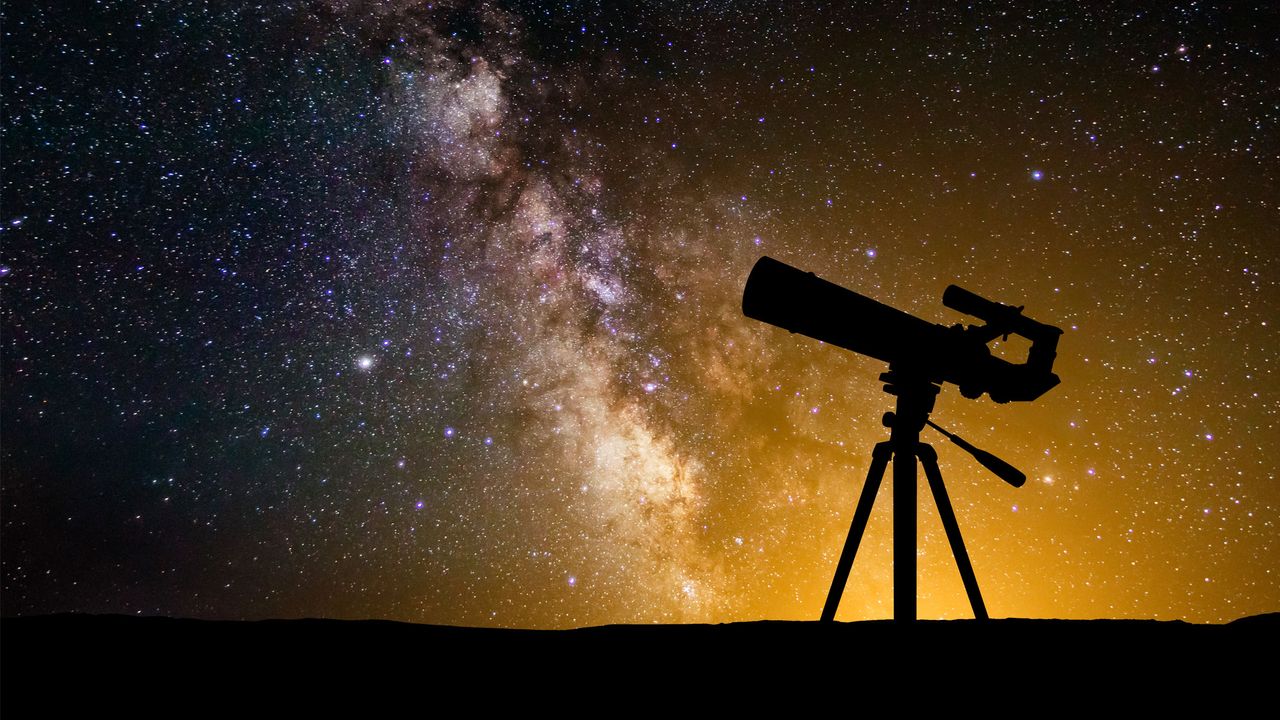
For those who have received a telescope as a gift during the festive season of Christmas 2025, the upcoming nights present an exciting opportunity for stargazing. The waxing crescent moon, along with the prominent visibility of Jupiter in the evening sky, offers new telescope owners a chance to explore celestial wonders. Additionally, the first week of January 2026 will feature the Wolf Supermoon, enhancing the stargazing experience.
Setting Up Your Telescope
Before delving into the night sky, it is crucial to ensure that your telescope is properly set up. Assemble it during daylight hours, following the instructions provided in the box. Level the tripod and familiarize yourself with the various knobs and levers. Align the finder scope using a distant object, such as a tree, ensuring that what you see in the finder and eyepiece matches. This step is vital for a successful stargazing session.
Setting up your telescope in daylight allows it to cool down before nightfall. A cooler telescope will yield sharper images, making your first observations more enjoyable.
Targeting the Moon
A crescent moon is an ideal first target for new telescope owners. During the last week of December 2025, the moon will transition from a thick crescent visible in the southwest on Christmas Day to a half-lit first quarter by December 27. This makes it easy to locate once darkness falls.
Most beginner telescopes come with two eyepieces: a 10mm and a 25mm. It is advisable to start with the 25mm eyepiece, which offers a wide field of view for locating objects. Once you have the moon centered, adjust the focus until it appears sharp. Observing the terminator—the line dividing light and shadow—will reveal craters and mountains. Switching to the 10mm eyepiece will enhance the detail seen on the lunar surface.
It is best to observe the moon before it reaches the first quarter phase, as shadows become shorter as the moon waxes. Although a full moon can be bright and flat, it may still provide a unique experience when viewed during moonrise.
Navigating the Night Sky
The winter night sky is rich with iconic constellations and deep-sky objects. Familiarity with constellations is essential, as they provide a framework for locating celestial objects. In late December and early January, constellations such as Orion, Taurus, Auriga, and Gemini dominate the southeastern sky.
For those in the Northern Hemisphere, locating Orion’s Belt and tracing it to bright Capella in Auriga and the Pleiades open cluster (M45) in Taurus can serve as a roadmap. Meanwhile, observers in the Southern Hemisphere will find Orion inverted in the northeast, with bright stars like Sirius and Canopus visible low in the south.
Once familiar with these constellations, using your telescope to explore clusters or nebulae within them becomes easier.
Observing Planets
Identifying planets is straightforward; unlike stars, they do not twinkle due to their larger disk-like appearance. The current season offers excellent views of Jupiter and Saturn. Jupiter will reach opposition on January 10, 2026, making it particularly bright and large in the night sky.
To observe Jupiter, look east in the early evening for the brightest “star” that is not twinkling, located near the twins of Gemini, Castor and Pollux. Start with the 25mm eyepiece, then switch to the 10mm to observe cloud bands and possibly up to four of its moons: Ganymede, Callisto, Europa, and Io.
Saturn, while lower and fainter than Jupiter, can be seen shortly after sunset in the southwestern sky. Even a modest telescope will reveal its iconic rings. With steady atmospheric conditions, you may even spot Titan, Saturn’s largest moon.
Noteworthy Targets for New Telescope Users
The winter sky in the Northern Hemisphere offers many classic sights ideal for beginners, including:
– **Orion Nebula (M42)** in Orion
– **Pleiades (M45)** open cluster in Taurus
– **Double Cluster (NGC 869 and NGC 884)** in Perseus
– **Beehive Cluster (M44)** in Cancer
– **Crab Nebula (M1)** in Taurus
– **Andromeda Galaxy (M31)** in Andromeda
For those in the Southern Hemisphere, prime targets include:
– **Carina Nebula (NGC 3372)**
– **Southern Pleiades (IC 2602)**
– **Large Magellanic Cloud (LMC)** and **Small Magellanic Cloud (SMC)**
– **Omega Centauri (NGC 5139)**
Continuing Your Astronomical Journey
Having successfully used your telescope for the first time, you have glimpsed the moon’s features, observed Jupiter, and identified a handful of star clusters and nebulae. This marks a remarkable beginning in your astronomical journey. It is advisable to take your time and gradually expand your knowledge and experience.
Utilize clear nights, particularly the dark, moonless evenings between the last quarter moon and the new moon. What may initially appear as an overwhelming expanse of stars will eventually transform into a familiar landscape as you continue to observe regularly through your telescope.

Robinhood Stock Surges 2.5% in Early Trading on March 17

Israel Intensifies Strikes as Global Energy Crisis Looms

CALV Offers Class on Communication Skills for Real Estate Professionals

Historic Bideford Pub Reopens as The Patch Wine Bar & Kitchen

Oscar Night Celebrations: Winners, Guests, and Exclusive After-Parties

Samsung Galaxy Watch 9 Set for Larger Battery Boost, Report Reveals

Kibble vs. Fresh Dog Food: What’s Best for Your Dog’s Health?

Acclaimed San Francisco Pizzeria Del Popolo to Close in May

‘Invincible’ Season 4 Launches on Prime Video with Epic Action

ALMA Discovers Companion Orbiting Giant Red Star π 1 Gruis

Doctoral Candidate Trivanni Yadav Advances Battery Research at UTulsa

Global Air Forces Ranked by Annual Defense Budgets in 2025

Rev. Bry Shields to Retire as McGill-Toolen President in 2026

Mass Production of F-35 Fighter Jet Drives Down Costs

Tucson Celebrates Life and Remembrance at 36th Annual All Souls Procession

Gold Investment Surge: Top Mutual Funds and ETF Alternatives

DirecTV to Launch AI-Driven Ads with User Likenesses in 2026

Paul Giamatti Reveals Villainous Role in Star Trek: Starfleet Academy
-
 Science9 months ago
ALMA Discovers Companion Orbiting Giant Red Star π 1 Gruis
-
 Science8 months ago
Doctoral Candidate Trivanni Yadav Advances Battery Research at UTulsa
-
 World10 months ago
Global Air Forces Ranked by Annual Defense Budgets in 2025
-
 Lifestyle10 months ago
Rev. Bry Shields to Retire as McGill-Toolen President in 2026
-
 World10 months ago
Mass Production of F-35 Fighter Jet Drives Down Costs
-
 Lifestyle9 months ago
Tucson Celebrates Life and Remembrance at 36th Annual All Souls Procession
-
 Business10 months ago
Gold Investment Surge: Top Mutual Funds and ETF Alternatives
-
 Top Stories10 months ago
DirecTV to Launch AI-Driven Ads with User Likenesses in 2026
-
 Entertainment10 months ago
Paul Giamatti Reveals Villainous Role in Star Trek: Starfleet Academy
-

 Lifestyle8 months ago
Maumee’s Shop With a Hero Event Delivers Joy to Local Children
-

 Top Stories10 months ago
New ‘Star Trek: Voyager’ Game Demo Released, Players Test Limits
-

 Lifestyle8 months ago
Cape May Shines as New Jersey’s Only Entry on Beach Town List