
Science
Elon Musk Announces Neuralink’s Automated Surgery Plans for 2026

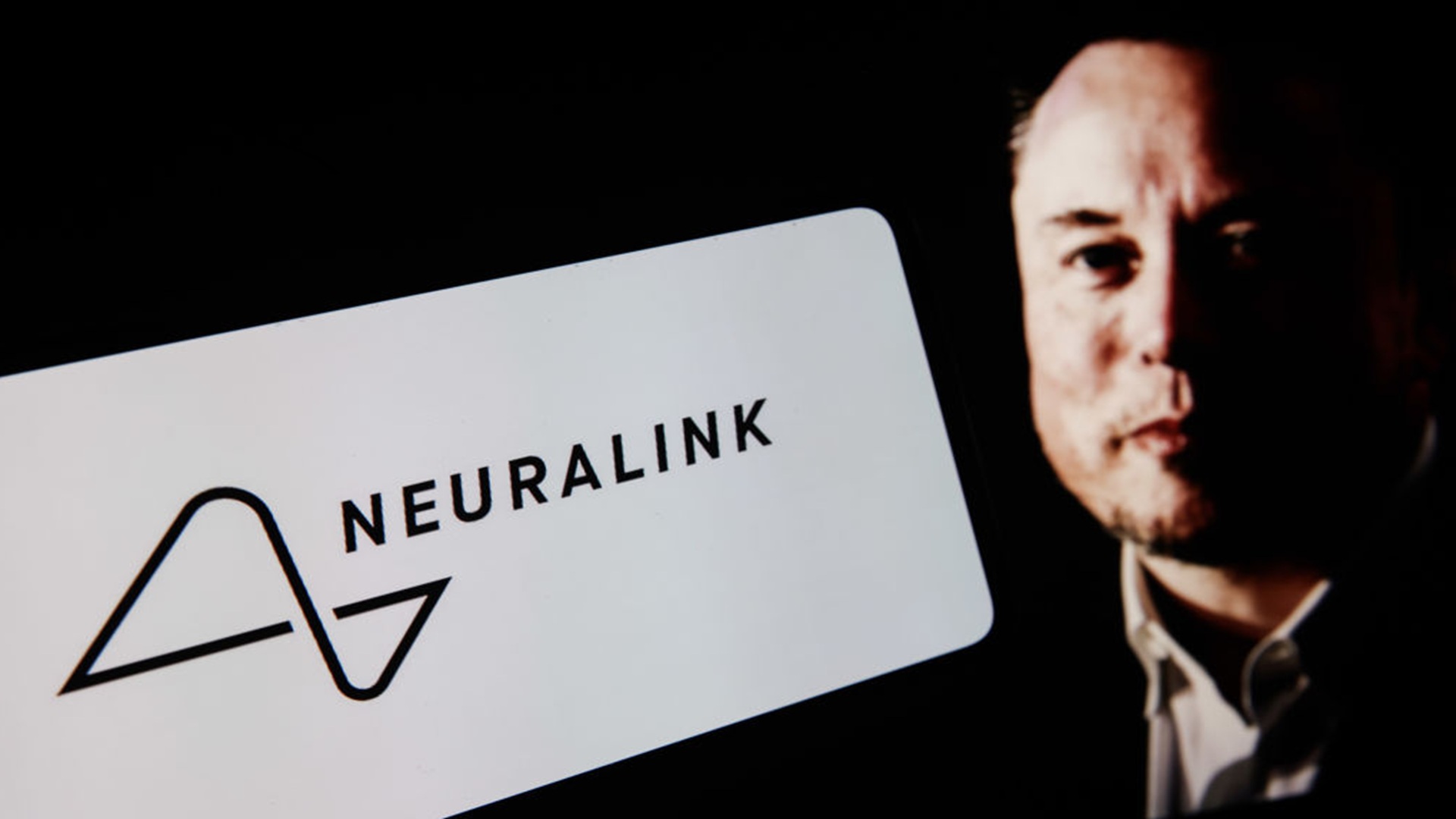
Elon Musk has revealed that his brain implant company, Neuralink, will commence “high-volume production” of its brain-computer interface devices in 2026. This announcement, shared on social media platform X, also highlighted a shift towards fully automated surgical procedures designed to implant these devices. The technology aims to assist individuals with conditions like spinal cord injuries by allowing direct interaction with computers.
Neuralink’s journey began with human trials initiated in 2024 after overcoming safety concerns raised by the U.S. Food and Drug Administration (FDA). Initially, the FDA rejected Neuralink’s application in 2022, but following revisions, the company progressed to trials. So far, 12 participants with severe paralysis have received the implants, enabling them to control digital and physical tools using thought alone.
Innovations in Surgical Procedures
The planned automated surgical procedure represents a significant advancement for Neuralink. The device’s threads will be inserted through the dura mater, a protective membrane around the brain, without the necessity of removing it. This method promises to streamline the surgical process and increase the number of procedures that can be performed.
Musk’s broader ambitions for 2026 include various technological advancements across his companies. In June 2023, Neuralink secured $650 million in funding, which will support its expansion plans. The company is also working on the Blindsight implant, aimed at restoring vision for individuals who are completely blind, with its first patient trial slated for 2026.
Advancements Across Musk’s Ventures
In addition to Neuralink, Musk’s other ventures are gearing up for significant milestones. SpaceX is preparing to launch its upgraded Starship V3 spacecraft, featuring the new Raptor V3 engine, in 2026. This vehicle will conduct propellant transfer tests in orbit, paving the way for future missions to the Moon and Mars. Furthermore, SpaceX plans to deploy its Starlink V3 satellites to enhance internet connectivity.
Musk’s Boring Company is also set to unveil the first section of the Nashville Loop, an underground transit system designed to connect downtown Nashville with the convention center and Nashville International Airport. The project aims to alleviate surface traffic congestion and provide zero-emission transportation, with an expected travel time of around eight minutes.
Tesla is planning a substantial ramp-up in production for 2026, which includes the launch of Cybercab production in April, alongside mass production of the Tesla Semi and Optimus Gen 3 humanoid robots. The company is also set to introduce an unsupervised mode for its Full Self-Driving feature while expanding its energy storage operations with the Megapack 3 and Megablock systems.
In the realm of artificial intelligence, Musk’s startup xAI is expanding its Colossus supercomputer cluster in Memphis, Tennessee. The recent acquisition of a third building aims to enhance training capacity to nearly two gigawatts. Additionally, Musk’s social media platform X is considering raising creator payouts, potentially surpassing YouTube in an effort to retain original content creators.
These initiatives collectively underscore Musk’s strategy to advance multiple technology fronts simultaneously, positioning 2026 as a pivotal year for his various enterprises. As Neuralink moves towards high-volume production and automated surgeries, the implications for healthcare and technology could be profound, paving the way for innovations that change the landscape of human-computer interaction.

Robinhood Stock Surges 2.5% in Early Trading on March 17

Israel Intensifies Strikes as Global Energy Crisis Looms

CALV Offers Class on Communication Skills for Real Estate Professionals

Historic Bideford Pub Reopens as The Patch Wine Bar & Kitchen

Oscar Night Celebrations: Winners, Guests, and Exclusive After-Parties

Samsung Galaxy Watch 9 Set for Larger Battery Boost, Report Reveals

Kibble vs. Fresh Dog Food: What’s Best for Your Dog’s Health?

Acclaimed San Francisco Pizzeria Del Popolo to Close in May

‘Invincible’ Season 4 Launches on Prime Video with Epic Action

ALMA Discovers Companion Orbiting Giant Red Star π 1 Gruis

Doctoral Candidate Trivanni Yadav Advances Battery Research at UTulsa

Global Air Forces Ranked by Annual Defense Budgets in 2025

Rev. Bry Shields to Retire as McGill-Toolen President in 2026

Mass Production of F-35 Fighter Jet Drives Down Costs

Tucson Celebrates Life and Remembrance at 36th Annual All Souls Procession

Gold Investment Surge: Top Mutual Funds and ETF Alternatives

DirecTV to Launch AI-Driven Ads with User Likenesses in 2026

Paul Giamatti Reveals Villainous Role in Star Trek: Starfleet Academy
-
 Science9 months ago
ALMA Discovers Companion Orbiting Giant Red Star π 1 Gruis
-
 Science8 months ago
Doctoral Candidate Trivanni Yadav Advances Battery Research at UTulsa
-
 World10 months ago
Global Air Forces Ranked by Annual Defense Budgets in 2025
-
 Lifestyle10 months ago
Rev. Bry Shields to Retire as McGill-Toolen President in 2026
-
 World10 months ago
Mass Production of F-35 Fighter Jet Drives Down Costs
-
 Lifestyle9 months ago
Tucson Celebrates Life and Remembrance at 36th Annual All Souls Procession
-
 Business10 months ago
Gold Investment Surge: Top Mutual Funds and ETF Alternatives
-
 Top Stories10 months ago
DirecTV to Launch AI-Driven Ads with User Likenesses in 2026
-
 Entertainment10 months ago
Paul Giamatti Reveals Villainous Role in Star Trek: Starfleet Academy
-

 Lifestyle8 months ago
Maumee’s Shop With a Hero Event Delivers Joy to Local Children
-

 Top Stories10 months ago
New ‘Star Trek: Voyager’ Game Demo Released, Players Test Limits
-

 Lifestyle8 months ago
Cape May Shines as New Jersey’s Only Entry on Beach Town List