
Science
Dogs Learn New Words Like Toddlers, Study Reveals Remarkable Skills

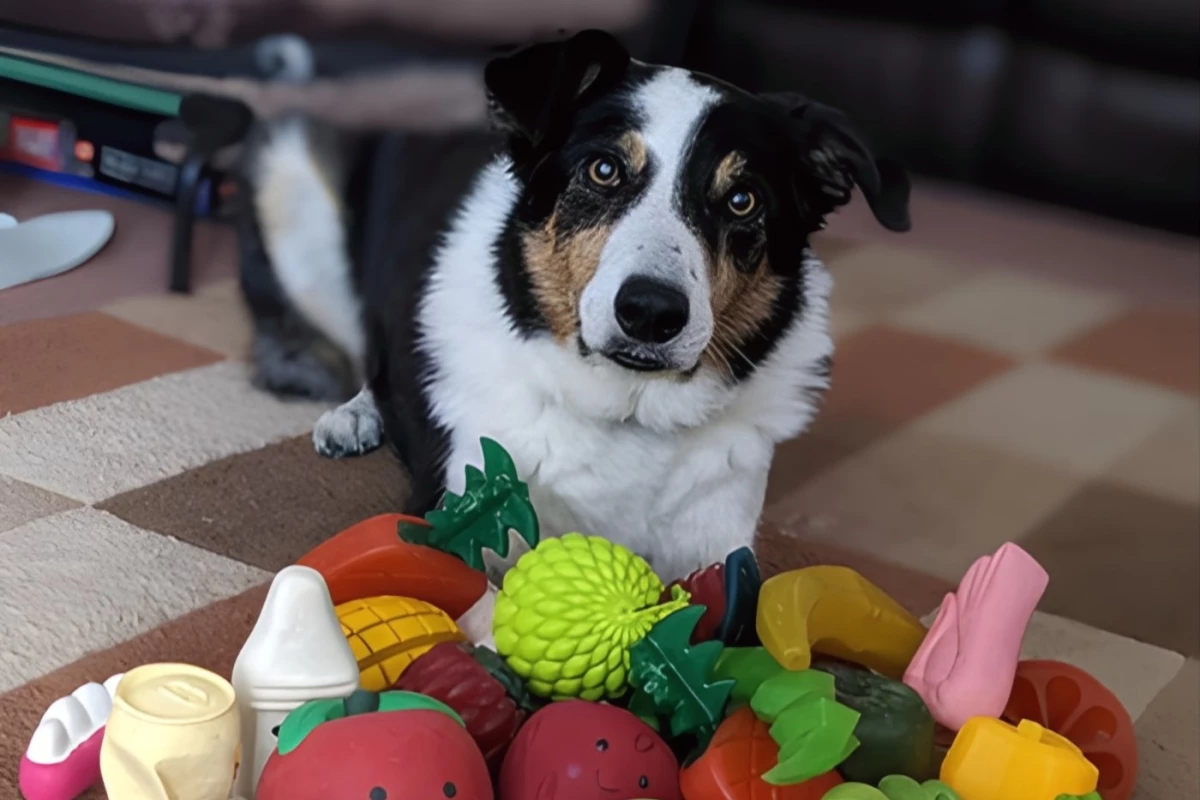
A recent study from Eötvös Loránd University in Budapest has revealed that certain dogs, classified as Gifted Word Learners (GWL), can acquire new vocabulary by listening to human conversations. This remarkable ability mirrors language development in human toddlers, particularly those around 18 months old.
The research team, led by Shany Dror, conducted a series of experiments to observe how these dogs learn new words without direct interaction. Previous studies had established that GWL dogs could identify and categorize toys by their functions, but this latest finding extends their capabilities even further.
In the first experiment, the researchers introduced two new toys to ten GWL dogs during play sessions, repeatedly using their names. The dogs quickly learned the names. In a subsequent phase, the same toys were mentioned in conversation between the owners and another person, without addressing the dogs directly. Remarkably, seven out of ten dogs successfully retrieved the toys by name when asked.
The dogs exhibited retention of this knowledge for at least two weeks, indicating genuine learning rather than mere memorization. Dror commented on the significance of these findings, stating, “Our findings show that the socio-cognitive processes enabling word learning from overheard speech are not uniquely human.”
To further explore this ability, the researchers designed a second experiment. Eight GWL dogs played with toys without any names assigned. Later, the toys were placed in a bucket, and names were introduced while the dogs could not see them. This test examined the concept of temporal discontinuity, which refers to the passage of time between an item’s introduction and its naming. The results were impressive; five out of eight dogs successfully completed the task, suggesting they too possess this cognitive skill.
In contrast, when the team repeated these tests with dogs not recognized as GWLs, they found no meaningful correlation between overhearing and learning. Dror emphasized the importance of these results, noting, “These dogs provide an exceptional model for exploring some of the cognitive abilities that enabled humans to develop language.”
This study is part of the ongoing Genius Dog Challenge project, which investigates the language processing capabilities of GWL dogs. Researchers encourage pet owners who suspect their dogs might be GWLs to reach out via social media platforms such as Facebook and Instagram.
The implications of this research extend beyond canine intelligence. It offers insights into the cognitive processes shared between humans and animals, particularly in the realm of language acquisition. As pet owners may reconsider what their dogs might understand during daily conversations, it might be wise to moderate discussions around sensitive topics when furry companions are nearby.

Robinhood Stock Surges 2.5% in Early Trading on March 17

Israel Intensifies Strikes as Global Energy Crisis Looms

CALV Offers Class on Communication Skills for Real Estate Professionals

Historic Bideford Pub Reopens as The Patch Wine Bar & Kitchen

Oscar Night Celebrations: Winners, Guests, and Exclusive After-Parties

Samsung Galaxy Watch 9 Set for Larger Battery Boost, Report Reveals

Kibble vs. Fresh Dog Food: What’s Best for Your Dog’s Health?

Acclaimed San Francisco Pizzeria Del Popolo to Close in May

‘Invincible’ Season 4 Launches on Prime Video with Epic Action

ALMA Discovers Companion Orbiting Giant Red Star π 1 Gruis

Doctoral Candidate Trivanni Yadav Advances Battery Research at UTulsa

Global Air Forces Ranked by Annual Defense Budgets in 2025

Rev. Bry Shields to Retire as McGill-Toolen President in 2026

Mass Production of F-35 Fighter Jet Drives Down Costs

Tucson Celebrates Life and Remembrance at 36th Annual All Souls Procession

Gold Investment Surge: Top Mutual Funds and ETF Alternatives

DirecTV to Launch AI-Driven Ads with User Likenesses in 2026

Paul Giamatti Reveals Villainous Role in Star Trek: Starfleet Academy
-
 Science9 months ago
ALMA Discovers Companion Orbiting Giant Red Star π 1 Gruis
-
 Science8 months ago
Doctoral Candidate Trivanni Yadav Advances Battery Research at UTulsa
-
 World10 months ago
Global Air Forces Ranked by Annual Defense Budgets in 2025
-
 Lifestyle10 months ago
Rev. Bry Shields to Retire as McGill-Toolen President in 2026
-
 World10 months ago
Mass Production of F-35 Fighter Jet Drives Down Costs
-
 Lifestyle9 months ago
Tucson Celebrates Life and Remembrance at 36th Annual All Souls Procession
-
 Business10 months ago
Gold Investment Surge: Top Mutual Funds and ETF Alternatives
-
 Top Stories10 months ago
DirecTV to Launch AI-Driven Ads with User Likenesses in 2026
-
 Entertainment10 months ago
Paul Giamatti Reveals Villainous Role in Star Trek: Starfleet Academy
-

 Lifestyle8 months ago
Maumee’s Shop With a Hero Event Delivers Joy to Local Children
-

 Top Stories10 months ago
New ‘Star Trek: Voyager’ Game Demo Released, Players Test Limits
-

 Lifestyle8 months ago
Cape May Shines as New Jersey’s Only Entry on Beach Town List