
Science
Researchers Discover Challenges in Using Tardigrade Protein for Space Radiation Protection

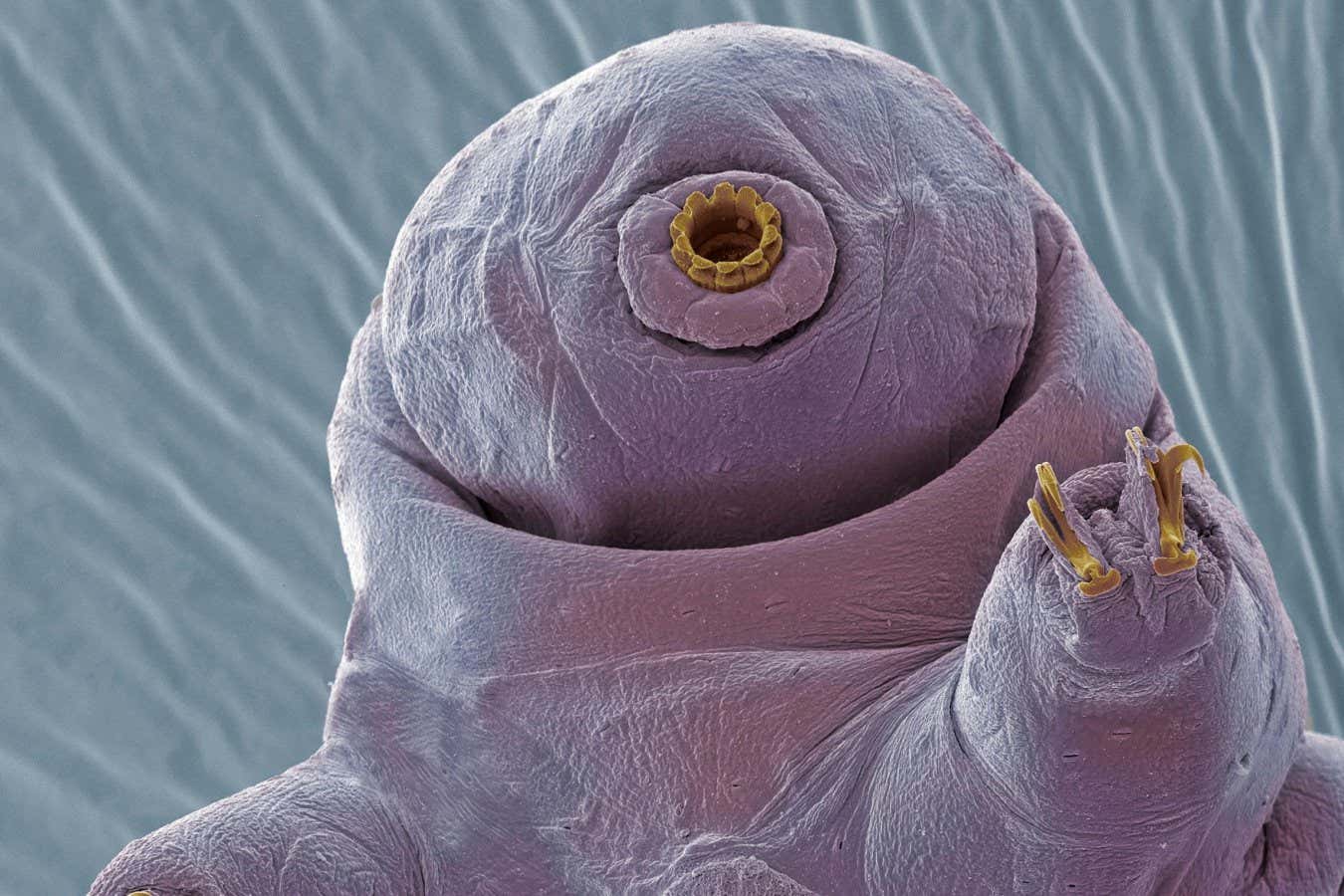
Research on the potential use of a protein from tardigrades to protect astronauts from cosmic radiation has revealed significant challenges. A team led by Corey Nislow at the University of British Columbia found that while the protein, known as Dsup (damage suppressor), provides considerable protection against various mutation-inducing agents, it also poses risks to cellular health.
Tardigrades, tiny creatures renowned for their resilience to extreme environments, have captured scientific interest due to their ability to survive harsh conditions, including radiation and the vacuum of space. In 2016, researchers identified Dsup as a critical factor in their survival capabilities. When human cells were genetically engineered to produce this protein, they demonstrated increased resistance to radiation without observable negative effects. This sparked the idea of using Dsup to shield astronauts from harmful cosmic rays during space missions.
However, Nislow’s recent studies on yeast cells modified to produce Dsup illuminated a more complex picture. While Dsup can effectively protect DNA by enveloping it, high concentrations of the protein can be detrimental to cell viability. His team discovered that excessive levels of Dsup could be fatal, and even lower levels hampered cell growth. As Nislow explained, “There’s a cost for every benefit that we’ve seen.”
In exploring how Dsup functions, researchers noted that its protective mechanism interferes with essential cellular processes. The protein’s presence can inhibit the access of other vital proteins needed for DNA replication and repair, leading to potential cellular damage.
James Byrne from the University of Iowa emphasized the need for a targeted approach. His research considers whether Dsup could aid healthy cells during radiation therapy for cancer. He asserted that continuous production of Dsup in all human cells could adversely affect health, but temporary production during critical periods might yield benefits.
Other scientists are also investigating Dsup’s potential. Simon Galas from the University of Montpellier pointed out that low levels of Dsup have been shown to extend the lifespan of nematode worms by protecting against oxidative stress. He acknowledged that further research is necessary to fully understand the protein’s effects.
In parallel, Jessica Tyler at Weill Cornell Medicine has also conducted experiments with yeast modified to produce Dsup. Her findings indicate that lower concentrations than those tested by Nislow appear to have beneficial effects without hindering growth. Tyler commented, “I do not agree that the protection provided by Dsup comes at a significant cost,” while also agreeing on the importance of maintaining appropriate levels of the protein.
The quest for effective methods to harness Dsup’s protective qualities continues, with Nislow expressing optimism about advancements in delivery systems. “There’s so much money and attention on delivery systems,” he stated. “It’s a problem that so many people in pharma are motivated to solve.”
As researchers delve deeper into the complexities of Dsup, the potential for its application in protecting astronauts and other organisms from radiation remains a tantalizing prospect, albeit one that requires careful consideration of the trade-offs involved.

Robinhood Stock Surges 2.5% in Early Trading on March 17

Israel Intensifies Strikes as Global Energy Crisis Looms

CALV Offers Class on Communication Skills for Real Estate Professionals

Historic Bideford Pub Reopens as The Patch Wine Bar & Kitchen

Oscar Night Celebrations: Winners, Guests, and Exclusive After-Parties

Samsung Galaxy Watch 9 Set for Larger Battery Boost, Report Reveals

Kibble vs. Fresh Dog Food: What’s Best for Your Dog’s Health?

Acclaimed San Francisco Pizzeria Del Popolo to Close in May

‘Invincible’ Season 4 Launches on Prime Video with Epic Action

ALMA Discovers Companion Orbiting Giant Red Star π 1 Gruis

Doctoral Candidate Trivanni Yadav Advances Battery Research at UTulsa

Global Air Forces Ranked by Annual Defense Budgets in 2025

Rev. Bry Shields to Retire as McGill-Toolen President in 2026

Mass Production of F-35 Fighter Jet Drives Down Costs

Tucson Celebrates Life and Remembrance at 36th Annual All Souls Procession

Gold Investment Surge: Top Mutual Funds and ETF Alternatives

DirecTV to Launch AI-Driven Ads with User Likenesses in 2026

Paul Giamatti Reveals Villainous Role in Star Trek: Starfleet Academy
-
 Science9 months ago
ALMA Discovers Companion Orbiting Giant Red Star π 1 Gruis
-
 Science8 months ago
Doctoral Candidate Trivanni Yadav Advances Battery Research at UTulsa
-
 World10 months ago
Global Air Forces Ranked by Annual Defense Budgets in 2025
-
 Lifestyle9 months ago
Rev. Bry Shields to Retire as McGill-Toolen President in 2026
-
 World10 months ago
Mass Production of F-35 Fighter Jet Drives Down Costs
-
 Lifestyle9 months ago
Tucson Celebrates Life and Remembrance at 36th Annual All Souls Procession
-
 Business10 months ago
Gold Investment Surge: Top Mutual Funds and ETF Alternatives
-
 Top Stories10 months ago
DirecTV to Launch AI-Driven Ads with User Likenesses in 2026
-
 Entertainment10 months ago
Paul Giamatti Reveals Villainous Role in Star Trek: Starfleet Academy
-

 Top Stories10 months ago
New ‘Star Trek: Voyager’ Game Demo Released, Players Test Limits
-

 Lifestyle8 months ago
Maumee’s Shop With a Hero Event Delivers Joy to Local Children
-

 Lifestyle7 months ago
Cape May Shines as New Jersey’s Only Entry on Beach Town List