
Entertainment
“Gory Chimpanzee Thriller ‘Primate’ Fails to Deliver Depth”

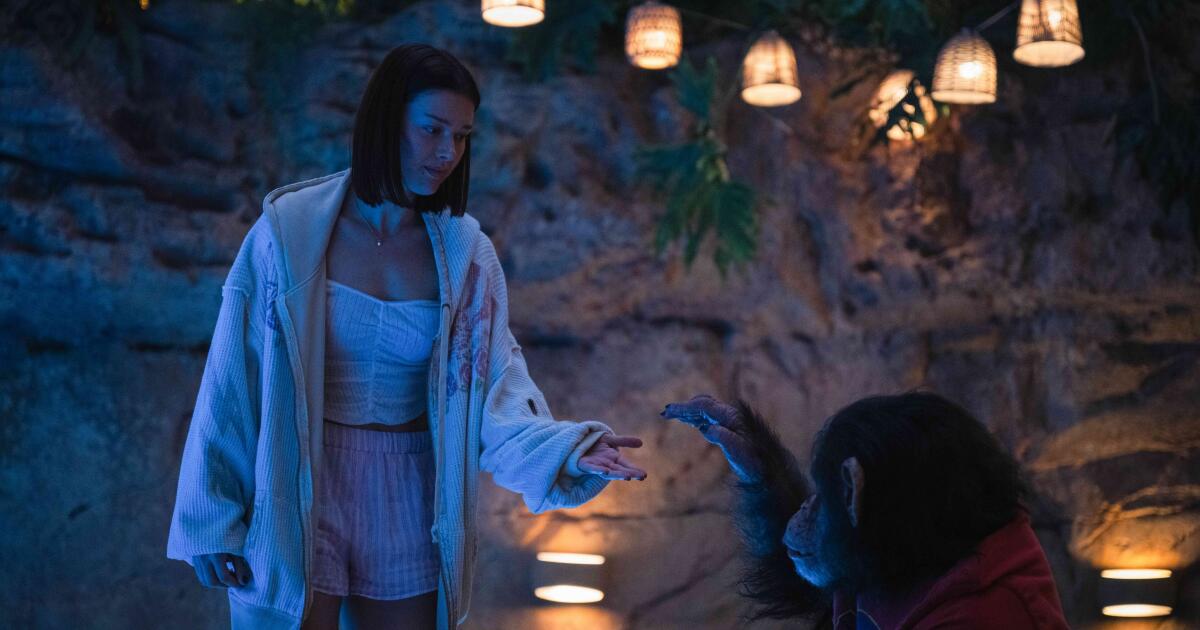
The new horror film Primate, directed by Johannes Roberts, has generated buzz for its graphic depictions of violence but ultimately falls short on narrative substance. Set in a cliffside estate in Oahu, the film presents a simple premise: a group of young adults faces a deadly threat from a rabid pet chimpanzee. Despite its intense moments, the film’s lack of depth and character development leaves viewers feeling underwhelmed.
The plot revolves around Lucy (played by Johnny Sequoyah), who returns home with her best friend Kate (played by Victoria Wyant) and a classmate, Hannah (played by Jess Alexander). Their vacation turns into a nightmare when the family’s pet chimp, Ben (performed by Miguel Torres Umba), begins terrorizing them. The film gives a brief backstory about Lucy’s family, including the loss of her mother, a primatologist, which could have added emotional weight to the film but is largely overshadowed by the gore.
As the story unfolds, it becomes clear that the film’s primary focus is on the graphic killings rather than character development or a coherent narrative. The initial kill sets a gruesome tone that had audiences reacting with excitement, yet the pacing quickly drags as the characters engage in repetitive hiding and fleeing from Ben. Despite having a runtime of less than an hour and a half, the film feels much longer due to its drawn-out sequences.
The dialogue lacks sophistication, mirroring the primitive behavior of its characters. The screenplay offers moments of humor, particularly with the interactions between Ben and the human characters. However, these moments do not compensate for the overall lack of depth. The film’s attempts at humor may resonate with audiences looking for a lighthearted take on horror, but it fails to deliver a meaningful commentary on human-animal relationships or the darker aspects of pet ownership.
While the performances, particularly that of Troy Kotsur as Lucy’s father, are commendable, the film does not fully utilize the actors’ talents. Kotsur’s portrayal adds a layer of relatability, yet it quickly devolves when his character resorts to violence against Ben. The film presents a misguided view of the relationship between humans and primates, attributing Ben’s aggression solely to rabies, rather than exploring the complexities of chimpanzee behavior.
The film’s absurdity peaks with scenes that suggest the characters are more concerned with their smartphones than with their survival. This portrayal raises questions about modern society’s reliance on technology, but any potential social commentary is lost in the chaotic narrative. The film’s attempt to draw parallels between human and chimpanzee behavior is superficial at best, referencing the shared DNA of 98.4% without delving into the implications of such a connection.
Despite the film’s shortcomings, it does offer a few standout moments. The performances of Jess Alexander and Charlie Mann bring a certain energy to the film, even if their characters are ultimately disposable. The deaths, while gruesome, provide the shock value that some horror enthusiasts crave, but they cannot mask the film’s overall lack of substance.
In summary, Primate might entertain viewers seeking a straightforward horror experience laden with gore, but it fails to offer a compelling narrative or emotional engagement. As the film concludes, audiences may find themselves reflecting not on the thrills of the experience but rather on the missed opportunities for deeper storytelling. With a release date of March 15, 2024, it remains to be seen how well it will resonate with broader audiences beyond the initial shock factor.

Susquehanna Raises ConocoPhillips Price Target to $121 Amid Analyst Activity

US Firms Urged to Collaborate with China for Tech Competitiveness

Citigroup Reaffirms Sell Rating on Werner Enterprises Shares

Trump Official Exposed for Lies About Epstein Ties Amid Scandal

Cartoon Reflects Societal Struggles in Modern Rat Race

Discover 2026’s Best Vegetable Varieties for Thriving Gardens

MTA Reveals Snow Clearing Strategies as NYC Faces Winter Storm

Tensions Rise in Anti-ICE Movement Over Whistle Tactics

Esteemed Astronomer Donald York, Co-Founder of Sloan Survey, Dies at 81

ALMA Discovers Companion Orbiting Giant Red Star π 1 Gruis

Doctoral Candidate Trivanni Yadav Advances Battery Research at UTulsa

Global Air Forces Ranked by Annual Defense Budgets in 2025

New ‘Star Trek: Voyager’ Game Demo Released, Players Test Limits

Mass Production of F-35 Fighter Jet Drives Down Costs

NASCAR Faces Fan Backlash as Steve Phelps’ Texts Surface

Gold Investment Surge: Top Mutual Funds and ETF Alternatives

DirecTV to Launch AI-Driven Ads with User Likenesses in 2026

SEVENTEEN’s Mingyu Faces Backlash Over Alcohol Incident at Concert
-
 Science3 months ago
ALMA Discovers Companion Orbiting Giant Red Star π 1 Gruis
-
 Science3 months ago
Doctoral Candidate Trivanni Yadav Advances Battery Research at UTulsa
-
 World4 months ago
Global Air Forces Ranked by Annual Defense Budgets in 2025
-
 Top Stories4 months ago
New ‘Star Trek: Voyager’ Game Demo Released, Players Test Limits
-
 World4 months ago
Mass Production of F-35 Fighter Jet Drives Down Costs
-
 Sports3 months ago
NASCAR Faces Fan Backlash as Steve Phelps’ Texts Surface
-
 Business4 months ago
Gold Investment Surge: Top Mutual Funds and ETF Alternatives
-
 Top Stories4 months ago
DirecTV to Launch AI-Driven Ads with User Likenesses in 2026
-
 Politics4 months ago
SEVENTEEN’s Mingyu Faces Backlash Over Alcohol Incident at Concert
-

 Science4 months ago
Time Crystals Revolutionize Quantum Computing Potential
-

 Entertainment4 months ago
Freeport Art Gallery Transforms Waste into Creative Masterpieces
-

 Science4 months ago
Remembering David E. Brest: A Life Dedicated to Nature and Family