
Health
Texas A&M Researchers Develop Nanoflowers to Boost Stem Cell Energy

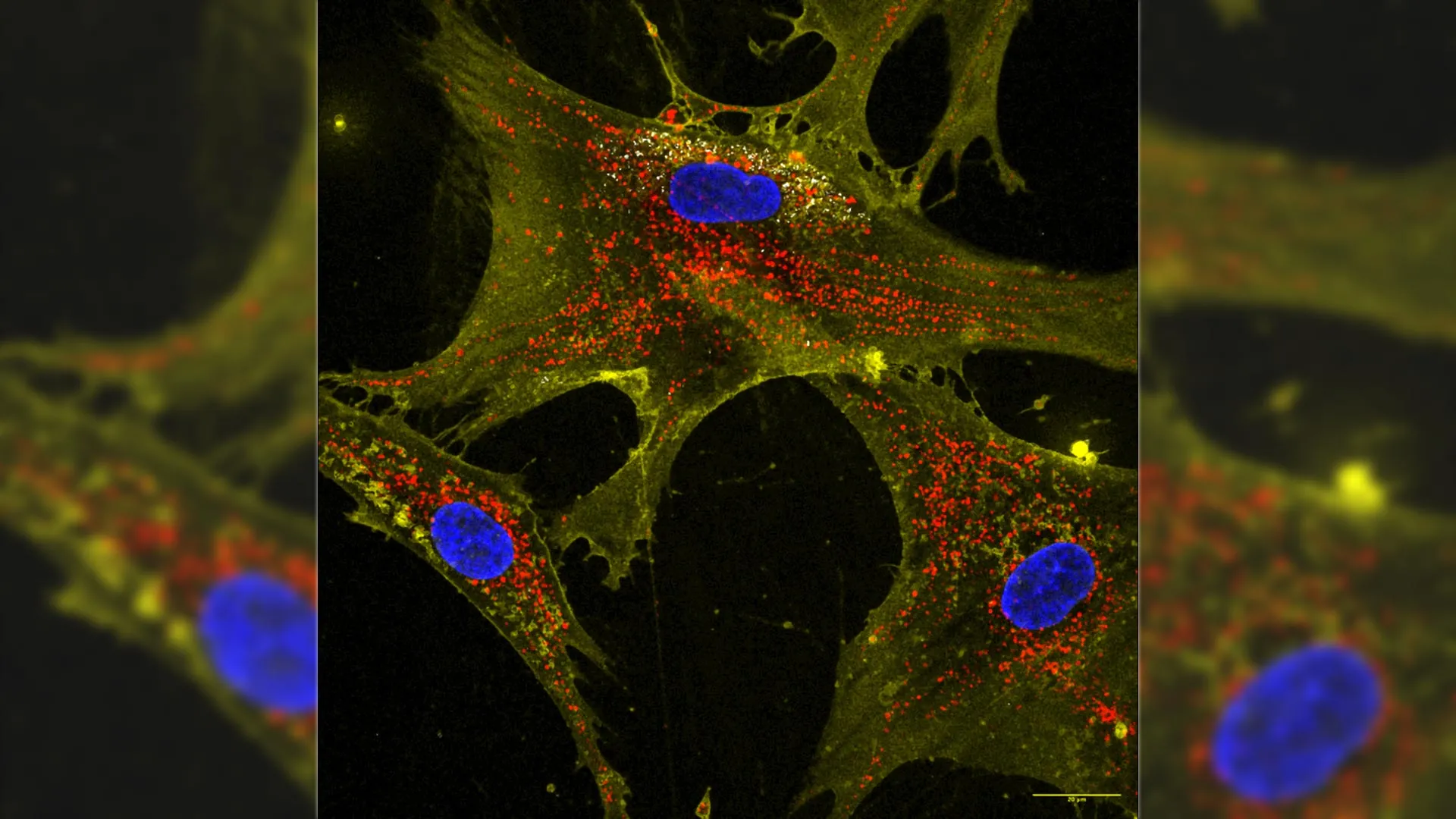
Biomedical researchers at Texas A&M University have made a significant breakthrough in enhancing stem cell functionality. They discovered that microscopic particles known as nanoflowers can double the production of mitochondria in stem cells. This advancement allows the energized stem cells to share their excess mitochondria with weakened cells, potentially revitalizing them and enhancing their energy production.
The research, published on November 27, 2025, in the Proceedings of the National Academy of Sciences, highlights a novel approach to combat the decline in cellular energy associated with aging and degenerative diseases. Dr. Akhilesh K. Gaharwar, a professor of biomedical engineering, and Ph.D. student John Soukar led the study, illustrating how their technique could address various health conditions linked to mitochondrial decline.
Aging and damage from diseases such as Alzheimer’s significantly reduce the number of mitochondria within cells, leading to decreased energy levels and functionality. The research team aimed to tackle this problem by creating a method that allows healthy stem cells to act as mitochondria donors, thereby restoring vitality to adjacent damaged cells.
Nanoflowers Enhance Mitochondrial Production
The innovative technique involves exposing stem cells to the nanoflower particles, which are composed of molybdenum disulfide. These particles enable the stem cells to produce two to four times more mitochondria than untreated cells. Once these enhanced stem cells come into contact with damaged or aging cells, they transfer the surplus mitochondria, effectively rejuvenating the recipient cells.
According to Gaharwar, “We have trained healthy cells to share their spare batteries with weaker ones.” This dynamic process not only boosts energy levels but also enhances the resilience of previously damaged cells. Notably, these cells demonstrated improved resistance to harmful treatments, such as chemotherapy, following mitochondrial supplementation.
The research team emphasized that while cells naturally exchange small amounts of mitochondria, the nanoflower-treated stem cells can transfer significantly larger quantities. Soukar remarked, “It’s like giving an old electronic a new battery pack,” highlighting the efficient energy restoration achieved through this innovative approach.
Promising Future for Mitochondrial Therapies
Previous methods to increase mitochondrial numbers within cells often require repetitive treatments due to their temporary effects. In contrast, the larger nanoparticles used in this study remain within the cell longer, continuously stimulating mitochondrial production. This suggests that therapies utilizing this nanoflower technology may only need to be administered once a month, enhancing patient compliance and reducing treatment frequency.
Gaharwar expressed optimism about the implications of their findings, stating, “If we can safely boost this natural power-sharing system, it could one day help slow or even reverse some effects of cellular aging.” The versatility of this technique opens the door to potential applications across various tissues in the body, targeting conditions such as cardiomyopathy and muscular dystrophy.
The project received funding and support from multiple organizations, including the National Institutes of Health, the Welch Foundation, the Department of Defense, and the Cancer Prevention and Research Institute of Texas. Additional contributions came from Texas A&M’s President’s Excellence Fund and the Texas A&M Health Science Center Seedling Grant. Key collaborators in the research included Texas A&M researchers Dr. Irtisha Singh, Dr. Vishal Gohil, and Dr. Feng Zhao.
As research progresses, the team anticipates further exploration into the use of nanoflowers in stem cell treatments, paving the way for innovative therapies that could transform the landscape of regenerative medicine.

Robinhood Stock Surges 2.5% in Early Trading on March 17

Israel Intensifies Strikes as Global Energy Crisis Looms

CALV Offers Class on Communication Skills for Real Estate Professionals

Historic Bideford Pub Reopens as The Patch Wine Bar & Kitchen

Oscar Night Celebrations: Winners, Guests, and Exclusive After-Parties

Samsung Galaxy Watch 9 Set for Larger Battery Boost, Report Reveals

Kibble vs. Fresh Dog Food: What’s Best for Your Dog’s Health?

Acclaimed San Francisco Pizzeria Del Popolo to Close in May

‘Invincible’ Season 4 Launches on Prime Video with Epic Action

ALMA Discovers Companion Orbiting Giant Red Star π 1 Gruis

Doctoral Candidate Trivanni Yadav Advances Battery Research at UTulsa

Rev. Bry Shields to Retire as McGill-Toolen President in 2026

Global Air Forces Ranked by Annual Defense Budgets in 2025

Tucson Celebrates Life and Remembrance at 36th Annual All Souls Procession

Mass Production of F-35 Fighter Jet Drives Down Costs

Gold Investment Surge: Top Mutual Funds and ETF Alternatives

Maumee’s Shop With a Hero Event Delivers Joy to Local Children

DirecTV to Launch AI-Driven Ads with User Likenesses in 2026
-
 Science9 months ago
ALMA Discovers Companion Orbiting Giant Red Star π 1 Gruis
-
 Science9 months ago
Doctoral Candidate Trivanni Yadav Advances Battery Research at UTulsa
-
 Lifestyle10 months ago
Rev. Bry Shields to Retire as McGill-Toolen President in 2026
-
 World10 months ago
Global Air Forces Ranked by Annual Defense Budgets in 2025
-
 Lifestyle10 months ago
Tucson Celebrates Life and Remembrance at 36th Annual All Souls Procession
-
 World10 months ago
Mass Production of F-35 Fighter Jet Drives Down Costs
-
 Business10 months ago
Gold Investment Surge: Top Mutual Funds and ETF Alternatives
-
 Lifestyle8 months ago
Maumee’s Shop With a Hero Event Delivers Joy to Local Children
-
 Top Stories10 months ago
DirecTV to Launch AI-Driven Ads with User Likenesses in 2026
-

 Sports8 months ago
Lawrence Launches Winterfest Skating Rink and Hot Chocolate Chalet
-

 Lifestyle8 months ago
Cape May Shines as New Jersey’s Only Entry on Beach Town List
-

 Entertainment10 months ago
Paul Giamatti Reveals Villainous Role in Star Trek: Starfleet Academy