
Lifestyle
Four New Witness Stones to Honor Enslaved Lives in New Paltz

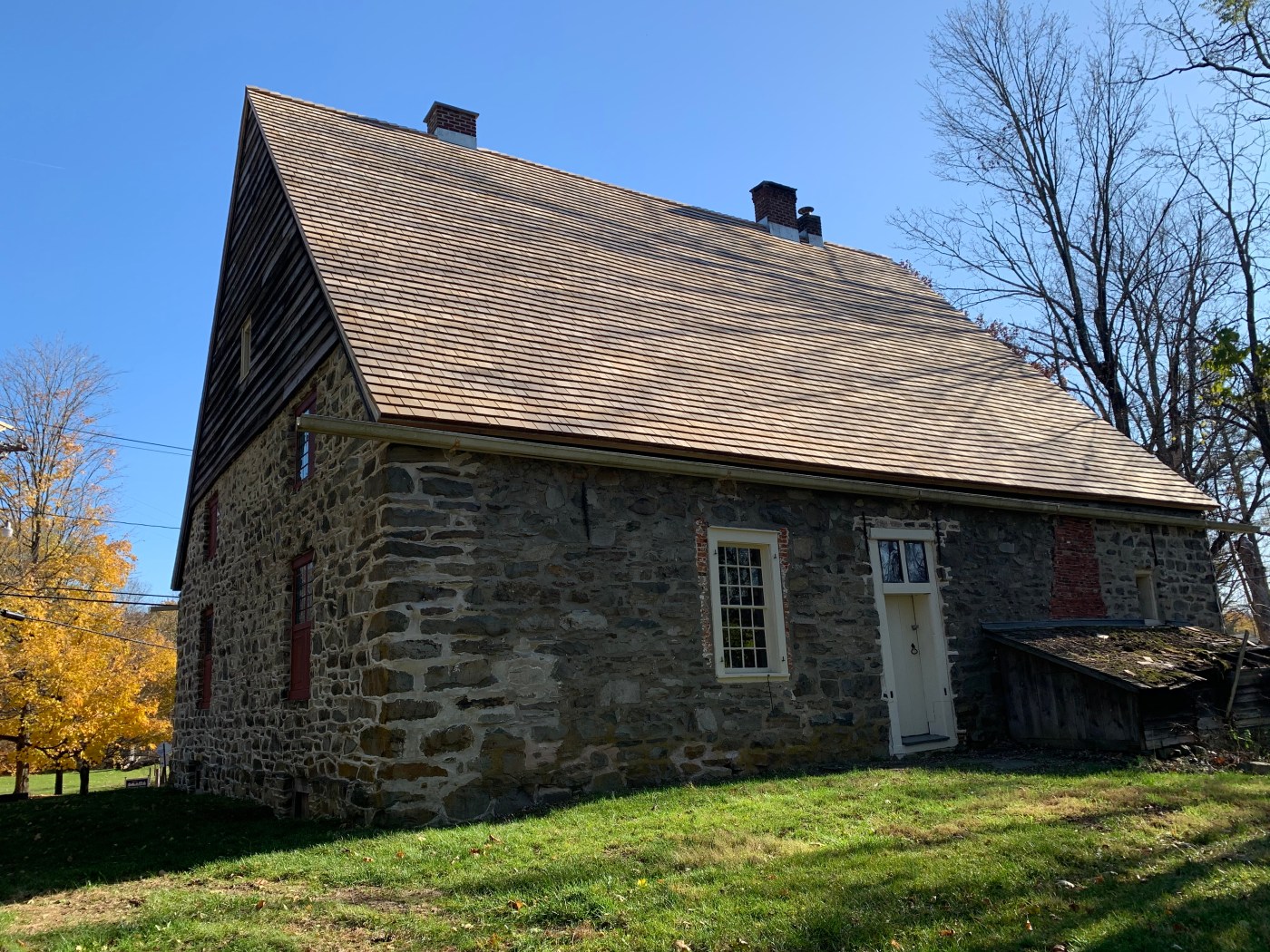
Four new witness stones will be dedicated at Historic Huguenot Street in New Paltz, New York, on June 19 as part of a ceremony commemorating Juneteenth. These stones will honor the legacies of four individuals—James, Molly, Gerritt, and Hendrick—who were enslaved by the Hasbrouck family, early settlers in the region. The Hasbroucks were among the original French Protestant Huguenots who established the settlement in 1677.
Ulster County Historian Eddie Moran announced the dedication during a press conference. He emphasized that the stones aim to recognize the lives and contributions of these individuals, who were enslaved by Jean Hasbrouck, the patriarch of the family. The stones will be placed at the site of the historic Hasbrouck house, which remains a prominent feature of the area and is included in the public tours offered by Historic Huguenot Street.
Restoring History through Witness Stones
The installation of these new stones will increase the total number of witness stones at Historic Huguenot Street to eight. This initiative is a collaboration among Historic Huguenot Street, the Margaret Wade Lewis Center for Black History and Culture, and the Witness Stones Project. The project aims to “restore the history and honor the humanity of enslaved African people,” according to Moran.
Research into the lives of James, Molly, Gerritt, and Hendrick involved examining historical documents, including a 1703 census that listed nine enslaved African individuals in New Paltz. This census was conducted shortly after the arrival of Betty, the first recorded African woman enslaved in the area by the Deyo family. Moran noted that there were likely more enslaved individuals whose records have yet to be uncovered.
The historical records reveal the harsh realities faced by these individuals. The first significant reference to James, Molly, Gerritt, and Hendrick came on August 26, 1712, when Jean Hasbrouck bequeathed these individuals to his children. This stipulation included a distressing provision regarding Molly, which stated that if she had children, her first daughter would be separated from her at the age of one and given to her brother, Jacob Hasbrouck.
“It’s one of the most horrifying examples of dehumanization and family separation we see in Ulster County,” Moran stated.
Moran expressed the emotional weight of this separation, remarking on the profound impact it would have on a mother and her child. “Let’s say she had a kid. She only had a year with the child,” he added.
Gerritt’s Agency and the Impact on the Community
Further documents indicate that Gerritt was mentioned in records from 1714, which detailed a rumor of a potential attack on the Esopus Native American community. Moran explained how Gerritt, despite his enslaved status, played a crucial role in alerting local leaders about the threat, thus demonstrating agency in a situation where his humanity was denied by law.
“Here you have a man whose humanity is denied by the law, making a choice that impacts everyone around him,” Moran said. The aftermath of this incident involved negotiations between European settlers and the Esopus people, with the latter having the authority to determine Gerritt’s punishment.
The last reference to Gerritt in the records remains unclear, leaving historians with limited information about his fate. In 1720, Jacob Hasbrouck drafted a will mentioning James and Hendrick, but subsequent revisions failed to include specific names of enslaved individuals.
Despite the challenges of piecing together their histories, the dedication of the stones represents a significant step toward acknowledging the contributions and struggles of enslaved people in New Paltz. Moran noted that the ongoing witness stones program faces the daunting task of recognizing the thousands of individuals who were enslaved by the region’s European settlers.
“We can’t all once put in witness stones for everyone,” he explained. “So far, we’ve been honing in on the earliest people enslaved by each of the original Huguenot families.”
The ceremony will take place during the Juneteenth Jubilee event organized by the Margaret Wade Lewis Center. Moran plans to deliver a talk later in the spring that further explores the lives of Molly, Gerritt, James, and Hendrick.
Juneteenth, which became a national holiday in 2021, commemorates the emancipation of enslaved individuals in the United States. It marks the day in 1865 when federal troops freed over 50,000 slaves in Texas, despite the legal end of slavery occurring with the Emancipation Proclamation in 1863.
As the dedication draws near, the commitment to uncover and honor the stories of enslaved individuals continues to resonate within the New Paltz community and beyond.

Robinhood Stock Surges 2.5% in Early Trading on March 17

Israel Intensifies Strikes as Global Energy Crisis Looms

CALV Offers Class on Communication Skills for Real Estate Professionals

Historic Bideford Pub Reopens as The Patch Wine Bar & Kitchen

Oscar Night Celebrations: Winners, Guests, and Exclusive After-Parties

Samsung Galaxy Watch 9 Set for Larger Battery Boost, Report Reveals

Kibble vs. Fresh Dog Food: What’s Best for Your Dog’s Health?

Acclaimed San Francisco Pizzeria Del Popolo to Close in May

‘Invincible’ Season 4 Launches on Prime Video with Epic Action

ALMA Discovers Companion Orbiting Giant Red Star π 1 Gruis

Doctoral Candidate Trivanni Yadav Advances Battery Research at UTulsa

Global Air Forces Ranked by Annual Defense Budgets in 2025

Rev. Bry Shields to Retire as McGill-Toolen President in 2026

Mass Production of F-35 Fighter Jet Drives Down Costs

DirecTV to Launch AI-Driven Ads with User Likenesses in 2026

Gold Investment Surge: Top Mutual Funds and ETF Alternatives

Tucson Celebrates Life and Remembrance at 36th Annual All Souls Procession

New ‘Star Trek: Voyager’ Game Demo Released, Players Test Limits
-
 Science8 months ago
ALMA Discovers Companion Orbiting Giant Red Star π 1 Gruis
-
 Science8 months ago
Doctoral Candidate Trivanni Yadav Advances Battery Research at UTulsa
-
 World9 months ago
Global Air Forces Ranked by Annual Defense Budgets in 2025
-
 Lifestyle9 months ago
Rev. Bry Shields to Retire as McGill-Toolen President in 2026
-
 World9 months ago
Mass Production of F-35 Fighter Jet Drives Down Costs
-
 Top Stories9 months ago
DirecTV to Launch AI-Driven Ads with User Likenesses in 2026
-
 Business9 months ago
Gold Investment Surge: Top Mutual Funds and ETF Alternatives
-
 Lifestyle8 months ago
Tucson Celebrates Life and Remembrance at 36th Annual All Souls Procession
-
 Top Stories9 months ago
New ‘Star Trek: Voyager’ Game Demo Released, Players Test Limits
-

 Entertainment9 months ago
Paul Giamatti Reveals Villainous Role in Star Trek: Starfleet Academy
-
 Entertainment9 months ago
Freeport Art Gallery Transforms Waste into Creative Masterpieces
-

 Science9 months ago
NTSB Report Reveals Hull Damage Caused Titan Submersible Implosion