
Politics
Inland Empire Warehouses May Transform into ICE Detention Centers

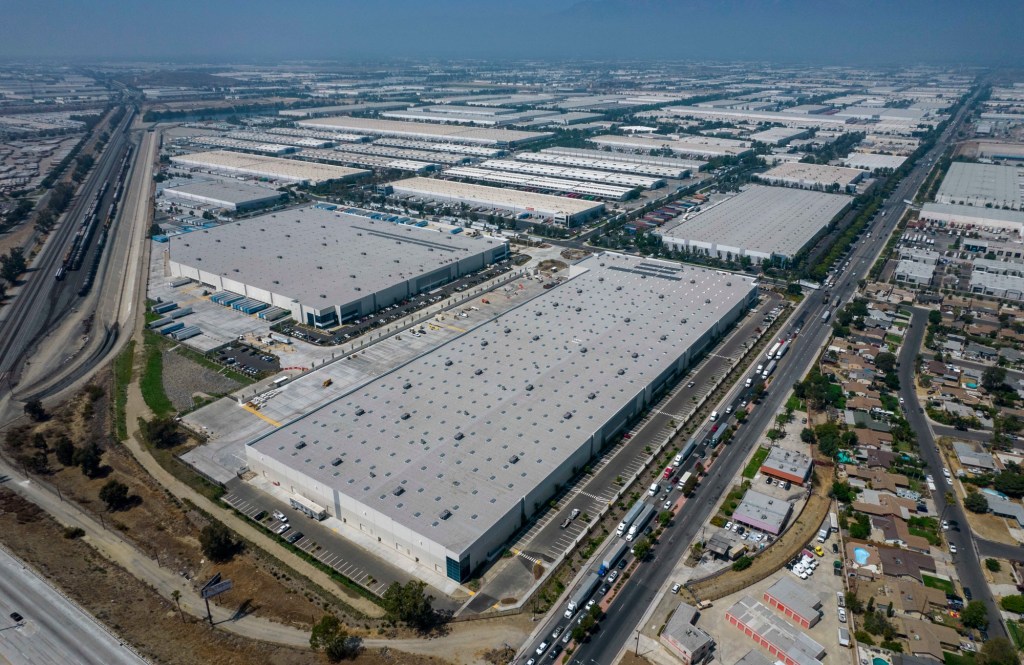
Concerns are rising in Riverside and San Bernardino counties over reports that the U.S. government plans to convert warehouses into immigration detention centers. According to The Washington Post, the U.S. Customs and Immigration Enforcement (ICE) agency is considering a significant investment of **$38.3 billion** to transform warehouses across **22 states** into facilities capable of holding **up to 10,000 detainees** at a time. This development could have profound implications for the local communities that are home to a substantial immigrant population.
Eddie Torres, policy director for the Inland Coalition for Immigrant Justice, expressed deep concern about the potential impact on the region. With an estimated **1 million immigrants** residing in the Inland Empire, the logistics industry dominates the area, raising fears that ICE might target the numerous vacant warehouses. Torres highlighted the region’s proximity to the border, stating, “We have a lot of empty warehouses,” and warned that ICE “will target warehouses here.”
Residents of Moreno Valley, which has a foreign-born population of around **25%** among its **216,000 residents**, are also apprehensive. Mayor Ulises Cabrera voiced his opposition, emphasizing the community’s shared concerns regarding the transformation of warehouses into detention centers. Despite the growing anxiety, ICE representatives have not responded to requests for comments regarding these plans.
Rumors about the use of Inland warehouses as detention centers remain unconfirmed. Spokespeople from cities such as Fontana, Ontario, Perris, and San Bernardino have stated they are unaware of any such initiatives in their jurisdictions. The same applies to unincorporated areas of Riverside and San Bernardino counties, as well as the land near the former March Air Force Base.
The Washington Post reported on **February 13, 2024**, that ICE’s plans include establishing **16 short-term detention centers** and expanding overall capacity to **92,000 beds** nationwide. This initiative aims to consolidate detainees into large-scale holding facilities instead of dispersing them across various centers with available beds.
Activists are concerned that the expansion of detention centers will exacerbate existing issues related to the treatment of detainees. Reports indicate that overcrowding, inadequate medical care, and claims of physical and mental abuse are prevalent in current ICE facilities. Representative Raul Ruiz, a Democrat from Palm Desert, described his recent visit to the Adelanto detention center as “essentially a prison.”
Many residents, particularly within the Latino community, are already experiencing heightened anxiety regarding immigration enforcement. Luz Gallegos, executive director of TODEC Legal Center, pointed out that the potential conversion of warehouses into detention centers would increase fear and uncertainty among families. “These facilities do not just detain individuals. They create ripple effects. Workers disappear from job sites. Families lose income overnight. Local economies suffer,” she stated in an email.
While most warehouses lack essential amenities such as restrooms and kitchens to accommodate human beings, it remains unclear whether there are regulatory mechanisms in place to enforce necessary upgrades. For instance, if the federal government were to convert a warehouse in unincorporated Riverside County, local development rules would not apply, according to county spokesperson Felisa Cardona.
With Democrats controlling all statewide offices in California and holding a legislative supermajority, any plans by ICE to establish warehouses in the state are likely to face significant opposition. Diana Crofts-Pelayo, from Governor Gavin Newsom’s office, commented on the broader implications, stating, “There are some serious human and economic consequences behind these actions.” She criticized the federal government for attempting to bypass state and local processes and urged consideration for community concerns.
As local leaders, including Torres and Cabrera, monitor developments closely, the Inland Coalition for Immigrant Justice remains vigilant for federal paperwork indicating imminent plans. Cabrera firmly stated his opposition to any warehouse conversion in Moreno Valley or the surrounding area for immigration detention purposes. “I would stand up against it, and I’m sure the community is against it as well,” he affirmed.
The debate over the future of these warehouses reflects wider national tensions surrounding immigration policy and enforcement, highlighting the need for ongoing dialogue and consideration of human rights in the face of administrative decisions. As discussions unfold, the communities of Riverside and San Bernardino counties continue to grapple with the potential ramifications of these proposed plans.

Robinhood Stock Surges 2.5% in Early Trading on March 17

Israel Intensifies Strikes as Global Energy Crisis Looms

CALV Offers Class on Communication Skills for Real Estate Professionals

Historic Bideford Pub Reopens as The Patch Wine Bar & Kitchen

Oscar Night Celebrations: Winners, Guests, and Exclusive After-Parties

Samsung Galaxy Watch 9 Set for Larger Battery Boost, Report Reveals

Kibble vs. Fresh Dog Food: What’s Best for Your Dog’s Health?

Acclaimed San Francisco Pizzeria Del Popolo to Close in May

‘Invincible’ Season 4 Launches on Prime Video with Epic Action

ALMA Discovers Companion Orbiting Giant Red Star π 1 Gruis

Doctoral Candidate Trivanni Yadav Advances Battery Research at UTulsa

Global Air Forces Ranked by Annual Defense Budgets in 2025

Mass Production of F-35 Fighter Jet Drives Down Costs

Gold Investment Surge: Top Mutual Funds and ETF Alternatives

DirecTV to Launch AI-Driven Ads with User Likenesses in 2026

New ‘Star Trek: Voyager’ Game Demo Released, Players Test Limits

Paul Giamatti Reveals Villainous Role in Star Trek: Starfleet Academy

Freeport Art Gallery Transforms Waste into Creative Masterpieces
-
 Science6 months ago
ALMA Discovers Companion Orbiting Giant Red Star π 1 Gruis
-
 Science6 months ago
Doctoral Candidate Trivanni Yadav Advances Battery Research at UTulsa
-
 World7 months ago
Global Air Forces Ranked by Annual Defense Budgets in 2025
-
 World7 months ago
Mass Production of F-35 Fighter Jet Drives Down Costs
-
 Business7 months ago
Gold Investment Surge: Top Mutual Funds and ETF Alternatives
-
 Top Stories7 months ago
DirecTV to Launch AI-Driven Ads with User Likenesses in 2026
-
 Top Stories7 months ago
New ‘Star Trek: Voyager’ Game Demo Released, Players Test Limits
-
 Entertainment7 months ago
Paul Giamatti Reveals Villainous Role in Star Trek: Starfleet Academy
-
 Entertainment7 months ago
Freeport Art Gallery Transforms Waste into Creative Masterpieces
-

 Science7 months ago
NTSB Report Reveals Hull Damage Caused Titan Submersible Implosion
-

 Lifestyle7 months ago
Rev. Bry Shields to Retire as McGill-Toolen President in 2026
-

 Entertainment7 months ago
Fast & Furious Coaster Hits the Track at Universal Studios