
Science
Ancient Arrow Points Reveal Craftsmanship in Prehistoric Argentina

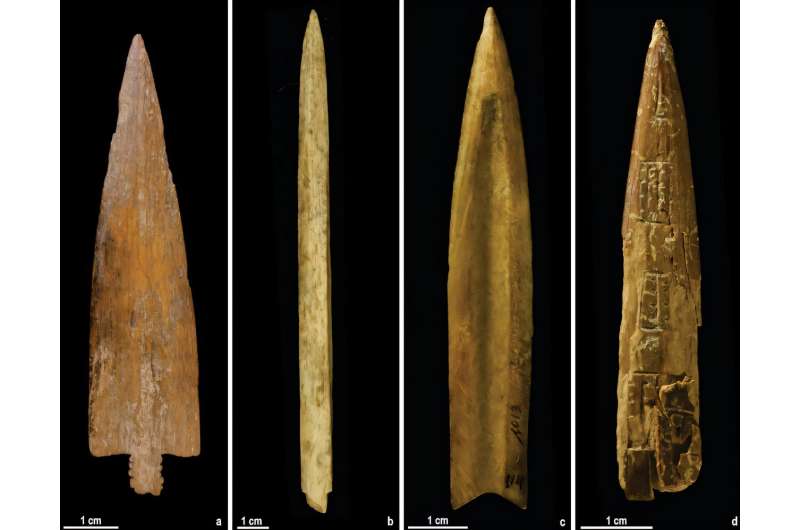
New research has uncovered significant insights into the organized craft production of bone arrow points by prehistoric communities in Argentina’s Sierras de Córdoba. A study led by Dr. Matías Medina and his colleagues, Sebastián Pastor and Gisela Sario, published in the International Journal of Osteoarchaeology, provides a detailed analysis of the manufacturing techniques used during the Late Prehispanic Period, which spans approximately from 1220 to 330 cal BP.
For many years, knowledge regarding the use of bone as a raw material among these ancient communities remained limited. The research marks a pivotal moment in understanding how these groups organized their craft production and daily lives. The findings illustrate the complexity and importance of bone tools, particularly arrow points, in the material culture of these societies.
Understanding the Late Prehistoric Period
The Late Prehistoric Period in the Sierras de Córdoba was characterized by a mix of hunting, gathering, and farming, enabling communities to maintain high mobility and adapt their lifestyles to seasonal changes. Although archaeological evidence was sparse, the significance of bone tools, particularly arrow points, had not been thoroughly explored until now.
Dr. Medina noted that publications focusing on bone technology have been scarce, especially in South America. Previous studies primarily provided simple descriptions of bone assemblages as chronological markers, often neglecting the manufacturing techniques that yield insights into weaponry and tool production. “The manufacturing techniques used to produce bone arrow points in the Sierras de Córdoba have never been analyzed in depth,” he explained.
Analysis of Bone Arrow Points
To bridge this knowledge gap, the study examined 117 bone artifacts sourced from the Museo Arqueológico Numba Charava in Argentina. These items were collected from various sites in the southern Punilla Valley throughout the 20th century, resulting in some pieces lacking precise provenance. The primary material identified was the bones of the guanaco, which were hunted for food. Other animal bones, such as those from the pampas deer, were less common.
The crafting process involved splitting the long bones of the guanaco lengthwise to create workable blanks, which were then flattened and shaped into arrowheads. Some points featured barbs and decorative elements, enhancing their aesthetic appeal. Notably, only three decorated bone arrow points have been documented in archaeological literature, with designs consisting mainly of lines and small triangles.
Dr. Medina posits that these arrow points were likely used for warfare rather than hunting. The incised decorations may have served to express social identity and cultural affiliation, particularly in the context of conflict.
The research sheds light on how communities in the Southern Punilla Valley organized their tool-making practices. Each arrow point was unique, highlighting the standardization of production techniques that were likely passed down through generations within nuclear families. This reinforces the notion that the nuclear family was a central social unit for food and tool production during the Late Prehispanic Period.
Dr. Medina emphasizes the need for further comparisons with neighboring regions, such as the Low Paraná and Uruguay River floodplains, to deepen the understanding of bone technology not only in Córdoba but across broader territories. These areas, located over 500 km away, developed complex bone technologies adapted to local resources, including aquatic environments.
The implications of this research extend beyond the Sierras de Córdoba, offering vital perspectives on prehistoric societies and their technological innovations. The study encourages ongoing exploration of the craftsmanship and cultural significance of bone tools in ancient communities, paving the way for future inquiries into this rich aspect of human history.

Robinhood Stock Surges 2.5% in Early Trading on March 17

Israel Intensifies Strikes as Global Energy Crisis Looms

CALV Offers Class on Communication Skills for Real Estate Professionals

Historic Bideford Pub Reopens as The Patch Wine Bar & Kitchen

Oscar Night Celebrations: Winners, Guests, and Exclusive After-Parties

Samsung Galaxy Watch 9 Set for Larger Battery Boost, Report Reveals

Kibble vs. Fresh Dog Food: What’s Best for Your Dog’s Health?

Acclaimed San Francisco Pizzeria Del Popolo to Close in May

‘Invincible’ Season 4 Launches on Prime Video with Epic Action

ALMA Discovers Companion Orbiting Giant Red Star π 1 Gruis

Doctoral Candidate Trivanni Yadav Advances Battery Research at UTulsa

Global Air Forces Ranked by Annual Defense Budgets in 2025

Rev. Bry Shields to Retire as McGill-Toolen President in 2026

Mass Production of F-35 Fighter Jet Drives Down Costs

Tucson Celebrates Life and Remembrance at 36th Annual All Souls Procession

Gold Investment Surge: Top Mutual Funds and ETF Alternatives

DirecTV to Launch AI-Driven Ads with User Likenesses in 2026

Paul Giamatti Reveals Villainous Role in Star Trek: Starfleet Academy
-
 Science9 months ago
ALMA Discovers Companion Orbiting Giant Red Star π 1 Gruis
-
 Science9 months ago
Doctoral Candidate Trivanni Yadav Advances Battery Research at UTulsa
-
 World10 months ago
Global Air Forces Ranked by Annual Defense Budgets in 2025
-
 Lifestyle10 months ago
Rev. Bry Shields to Retire as McGill-Toolen President in 2026
-
 World10 months ago
Mass Production of F-35 Fighter Jet Drives Down Costs
-
 Lifestyle9 months ago
Tucson Celebrates Life and Remembrance at 36th Annual All Souls Procession
-
 Business10 months ago
Gold Investment Surge: Top Mutual Funds and ETF Alternatives
-
 Top Stories10 months ago
DirecTV to Launch AI-Driven Ads with User Likenesses in 2026
-
 Entertainment10 months ago
Paul Giamatti Reveals Villainous Role in Star Trek: Starfleet Academy
-

 Lifestyle8 months ago
Maumee’s Shop With a Hero Event Delivers Joy to Local Children
-

 Top Stories10 months ago
New ‘Star Trek: Voyager’ Game Demo Released, Players Test Limits
-

 Lifestyle8 months ago
Cape May Shines as New Jersey’s Only Entry on Beach Town List