
Science
China’s Chang’e-6 Mission Provides Insights into Moon’s Mysteries

China achieved a historic milestone in June 2024 with the successful completion of the Chang’e-6 mission, marking the first lunar sample-return in history. The mission brought back 1,935.3 grams (approximately 4.25 pounds) of lunar regolith and rock from the far side of the Moon. This unprecedented collection is already yielding valuable insights into the Moon’s composition and geological history, revealing significant differences between its two hemispheres.
As various space agencies, including NASA and the European Space Agency (ESA), along with commercial partners, plan to establish lunar bases, these findings are particularly timely. The South Pole-Aitken Basin is a focal point for future missions due to its numerous permanently shadowed regions (PSRs) that are believed to contain substantial water ice reserves.
Investigating Geological Evolution
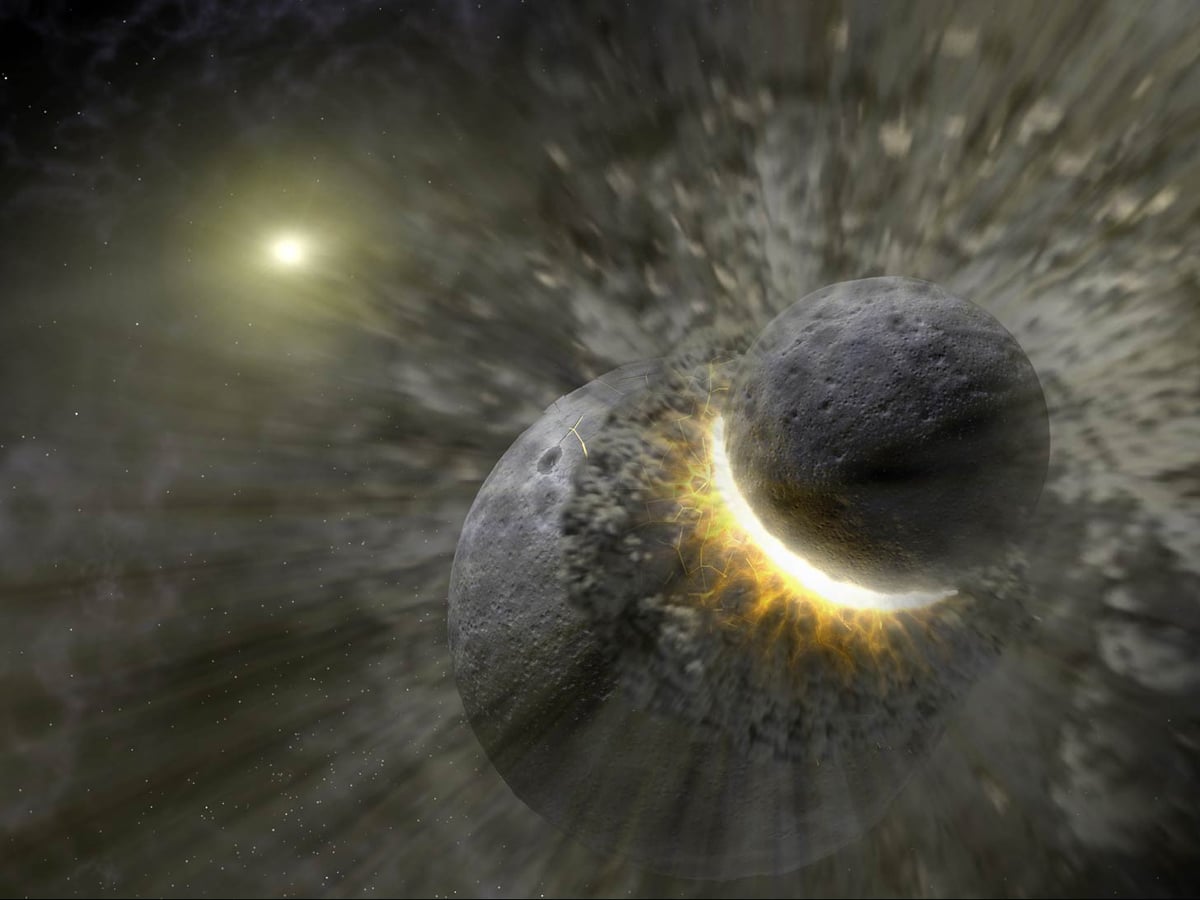
The analysis of the Chang’e-6 samples is shedding light on several unresolved questions about the Moon’s geological evolution. One significant inquiry relates to how past impacts, such as the cataclysmic event that formed the South Pole-Aitken Basin approximately 4.25 billion years ago, influenced the Moon’s interior and surface landscape.
Researchers from the Institute of Geology and Geophysics (IGG) at the Chinese Academy of Sciences (CAS) have conducted in-depth analyses of basalt samples collected by the Chang’e-6 lander. Their research indicates that the major impact event not only sculpted the Moon’s surface but also heated materials deep within it, resulting in the loss of certain volatile elements during the process.
Utilizing high-precision isotope analysis, the scientists identified variations in isotope ratios and documented the traces left by the impact. This isotopic data serves as a “fingerprint” to measure the temperature and pressure conditions resulting from such impacts, revealing how they have shaped the lunar crust and mantle over eons.
Key Differences Between Hemispheres
Another noteworthy discovery is the contrast between the Chang’e-6 samples and those gathered by Apollo astronauts from the near side of the Moon. The basaltic samples from the far side contain a significantly higher concentration of the heavier potassium-41 isotope.
To uncover the reasons behind this discrepancy, the research team evaluated various factors including cosmic rays, volcanic activity, and impactor deposition. Their findings confirmed that an early large-scale impact altered the potassium isotope composition in the deep lunar mantle. This event led to extreme conditions that caused the loss of the lighter potassium-39 isotope while enriching the heavier potassium-41 isotope.
The research further suggests that the loss of volatile elements may have suppressed volcanic activity on the Moon’s far side. These results contribute to a growing body of evidence indicating that large impacts have played a crucial role in the geological evolution of the Moon and highlight significant differences in the development of its near and far sides over billions of years.
The latest findings not only advance our understanding of the Moon’s history but also underscore the vital contributions of Chinese missions and scientists in unraveling the complexities of how the Moon and Earth have co-evolved.

Robinhood Stock Surges 2.5% in Early Trading on March 17

Israel Intensifies Strikes as Global Energy Crisis Looms

CALV Offers Class on Communication Skills for Real Estate Professionals

Historic Bideford Pub Reopens as The Patch Wine Bar & Kitchen

Oscar Night Celebrations: Winners, Guests, and Exclusive After-Parties

Samsung Galaxy Watch 9 Set for Larger Battery Boost, Report Reveals

Kibble vs. Fresh Dog Food: What’s Best for Your Dog’s Health?

Acclaimed San Francisco Pizzeria Del Popolo to Close in May

‘Invincible’ Season 4 Launches on Prime Video with Epic Action

ALMA Discovers Companion Orbiting Giant Red Star π 1 Gruis

Doctoral Candidate Trivanni Yadav Advances Battery Research at UTulsa

Global Air Forces Ranked by Annual Defense Budgets in 2025

Rev. Bry Shields to Retire as McGill-Toolen President in 2026

Mass Production of F-35 Fighter Jet Drives Down Costs

Tucson Celebrates Life and Remembrance at 36th Annual All Souls Procession

Gold Investment Surge: Top Mutual Funds and ETF Alternatives

DirecTV to Launch AI-Driven Ads with User Likenesses in 2026

Paul Giamatti Reveals Villainous Role in Star Trek: Starfleet Academy
-
 Science9 months ago
ALMA Discovers Companion Orbiting Giant Red Star π 1 Gruis
-
 Science8 months ago
Doctoral Candidate Trivanni Yadav Advances Battery Research at UTulsa
-
 World10 months ago
Global Air Forces Ranked by Annual Defense Budgets in 2025
-
 Lifestyle10 months ago
Rev. Bry Shields to Retire as McGill-Toolen President in 2026
-
 World10 months ago
Mass Production of F-35 Fighter Jet Drives Down Costs
-
 Lifestyle9 months ago
Tucson Celebrates Life and Remembrance at 36th Annual All Souls Procession
-
 Business10 months ago
Gold Investment Surge: Top Mutual Funds and ETF Alternatives
-
 Top Stories10 months ago
DirecTV to Launch AI-Driven Ads with User Likenesses in 2026
-
 Entertainment10 months ago
Paul Giamatti Reveals Villainous Role in Star Trek: Starfleet Academy
-

 Top Stories10 months ago
New ‘Star Trek: Voyager’ Game Demo Released, Players Test Limits
-

 Lifestyle8 months ago
Maumee’s Shop With a Hero Event Delivers Joy to Local Children
-

 Lifestyle7 months ago
Cape May Shines as New Jersey’s Only Entry on Beach Town List