
Science
Esteemed Astronomer Donald York, Co-Founder of Sloan Survey, Dies at 81

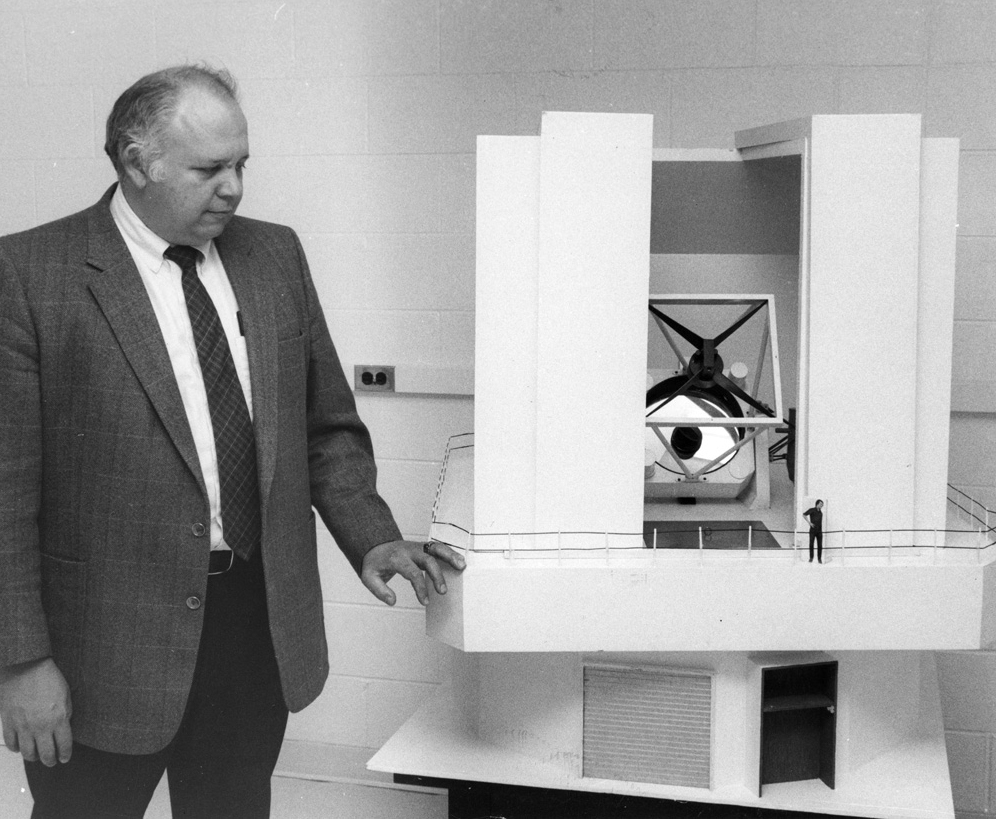
Renowned astronomer Donald G. York, who played a pivotal role in the advancement of astronomical research as a co-founder of the Sloan Digital Sky Survey, passed away on December 26, 2023, at the age of 81. York died from complications of chronic diseases at his home in Ann Arbor, Michigan, as confirmed by his wife, Anna York.
York’s contributions to astronomy extend far beyond the scope of a single project. He was a prominent figure at the University of Chicago, where he served as a professor and significantly influenced the field through several key innovations. His vision led to the creation of the Sloan Digital Sky Survey, a groundbreaking initiative that produced a comprehensive three-dimensional map of a substantial portion of the night sky.
Innovations and Contributions to Astronomy
Born in 1944 in Shelbyville, Illinois, York faced early challenges, including the loss of his father, which prompted his family to relocate to Terre Haute, Indiana. After completing high school, he earned a bachelor’s degree in physics from the Massachusetts Institute of Technology in 1966 and subsequently obtained a Ph.D. in astronomy from the University of Chicago in 1971. His career began at Princeton University, where he collaborated with notable astronomer Lyman Spitzer on the NASA satellite known as Copernicus.
York’s groundbreaking work on Copernicus marked him as the first researcher to identify deuterium, an isotope of hydrogen, in cosmic clouds. This discovery had lasting implications for understanding dark matter and dark energy, key components in the universe’s expansion. His wife remarked on the significance of this finding, highlighting how it helped resolve critical questions in cosmology.
In 1982, he joined the faculty at the University of Chicago, where he continued to shape the future of astronomical research. He was instrumental in establishing the Apache Point Observatory in New Mexico, which served as a base for the telescope that would eventually facilitate the Sloan Digital Sky Survey.
The survey, initiated in 1998, revolutionized astronomical research by collecting extensive data from a singular telescope. This collaboration has produced insights that have influenced over 12,000 scientific papers, making previously difficult data accessible to researchers worldwide.
A Legacy of Collaboration and Public Engagement
Many in the field regarded York not just as a scientist but as a leader capable of uniting diverse teams. Edward “Rocky” Kolb, a professor of astronomy and astrophysics at the University of Chicago, noted York’s talent for managing large collaborations, stating, “York was adept at herding the cats and keeping people on task.”
In addition to his scientific endeavors, York was dedicated to enhancing education and technology access in public schools. He co-founded the Chicago Public Schools/University of Chicago Internet Project in 1996, aiming to bridge the digital divide for students in local schools. Shaz Rasul, who worked closely with York, praised his commitment to equity in education, emphasizing his belief in the transformative power of technology for young people.
York published approximately 600 peer-reviewed papers during his career, garnering over 100,000 citations. He also co-edited the book “The Astronomy Revolution: 400 Years of Exploring the Cosmos,” further contributing to the field’s literature.
York’s retirement from the University of Chicago occurred about a decade ago, yet his impact on both astronomy and education continues to resonate. He was known for his love of the outdoors and was a devoted member of local churches in the Hyde Park community.
He is survived by his wife, four children—Sean, Maurice, Chandler, and Jeremy—six grandchildren, and a sister, Diana Wortham. A memorial service is scheduled for June 13 at the Hyde Park Union Church in Chicago.
York’s legacy as a visionary astronomer and an advocate for public education serves as an inspiration for future generations in both fields.

MTA Reveals Snow Clearing Strategies as NYC Faces Winter Storm

Tensions Rise in Anti-ICE Movement Over Whistle Tactics

Esteemed Astronomer Donald York, Co-Founder of Sloan Survey, Dies at 81

Buffalo Bills Assess 2025 Free Agency Moves as New Season Approaches

Two CT Men Charged in $3M Online Gambling Fraud Scheme

Trump Proposes Name Change for Dulles Airport to Unlock Funds

DBV Technologies Receives “Moderate Buy” Consensus Rating from Analysts

Netflix Launches Highly Rated Crime Thriller ‘Hell or High Water’

Microsoft Launches Dark Mode for SharePoint Admins—Now Available!

ALMA Discovers Companion Orbiting Giant Red Star π 1 Gruis

Doctoral Candidate Trivanni Yadav Advances Battery Research at UTulsa

Global Air Forces Ranked by Annual Defense Budgets in 2025

New ‘Star Trek: Voyager’ Game Demo Released, Players Test Limits

Mass Production of F-35 Fighter Jet Drives Down Costs

NASCAR Faces Fan Backlash as Steve Phelps’ Texts Surface

Gold Investment Surge: Top Mutual Funds and ETF Alternatives

DirecTV to Launch AI-Driven Ads with User Likenesses in 2026

SEVENTEEN’s Mingyu Faces Backlash Over Alcohol Incident at Concert
-
 Science3 months ago
ALMA Discovers Companion Orbiting Giant Red Star π 1 Gruis
-
 Science3 months ago
Doctoral Candidate Trivanni Yadav Advances Battery Research at UTulsa
-
 World4 months ago
Global Air Forces Ranked by Annual Defense Budgets in 2025
-
 Top Stories4 months ago
New ‘Star Trek: Voyager’ Game Demo Released, Players Test Limits
-
 World4 months ago
Mass Production of F-35 Fighter Jet Drives Down Costs
-
 Sports3 months ago
NASCAR Faces Fan Backlash as Steve Phelps’ Texts Surface
-
 Business4 months ago
Gold Investment Surge: Top Mutual Funds and ETF Alternatives
-
 Top Stories4 months ago
DirecTV to Launch AI-Driven Ads with User Likenesses in 2026
-
 Politics4 months ago
SEVENTEEN’s Mingyu Faces Backlash Over Alcohol Incident at Concert
-

 Science4 months ago
Time Crystals Revolutionize Quantum Computing Potential
-

 Entertainment4 months ago
Freeport Art Gallery Transforms Waste into Creative Masterpieces
-
 Science4 months ago
Remembering David E. Brest: A Life Dedicated to Nature and Family