
Science
Exploring Exo-Geoscience: Insights into Rocky Exoplanets

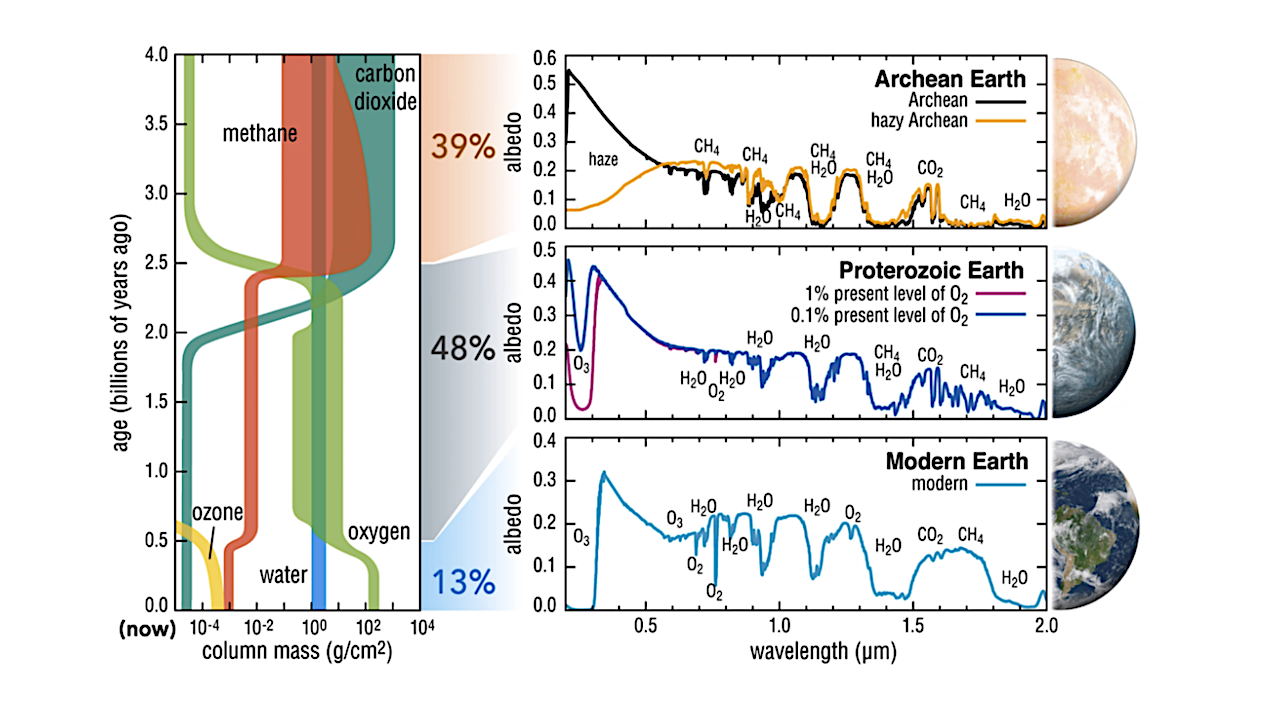
Recent advancements in the field of exo-geoscience have unlocked new perspectives on the geological and geophysical processes influencing the habitability of rocky exoplanets. This emerging discipline examines critical factors such as planetary interiors, tectonic activity, and atmospheric evolution, shaping our understanding of long-term climate stability and the potential for life beyond Earth.
Exo-geoscience integrates various scientific domains, exploring how different planetary characteristics contribute to habitability. Key elements under investigation include the role of continental coverage, volatile cycling, and magnetic fields. Insights drawn from comparisons with Earth and other planets in the Solar System reveal a wide range of planetary conditions, underscoring the rarity of environments conducive to life.
Understanding Planetary and Biological Evolution
The study of contingency and convergence in planetary evolution offers valuable insights into the distribution of life across the universe. Researchers emphasize the need for robust models that link internal planetary dynamics to observable atmospheric and surface signatures. This approach not only aids in the interpretation of diverse exoplanetary conditions but also refines strategies for detecting potential life forms beyond our Solar System.
A significant resource in this research is the NASA Exoplanet Archive, which has documented a total of 6,065 confirmed exoplanets and identified 7,687 candidates awaiting validation. Among the confirmed exoplanets, 1,446 possess radii of less than two Earth radii, with masses ranging from 0.5 to 10 Earth masses and estimated densities between 3,000 and 6,000 kg/m³. This extensive database is instrumental for empirical and statistical studies of exoplanets, providing a clearer picture of the conditions that may have existed in Earth’s past.
Research teams are also focusing on laboratory measurements of planetary properties under varied conditions. Such experiments are crucial for understanding how diverse planetary environments can affect the potential for life. Preliminary simulations, including high-contrast spectra of Earth-like exoplanets orbiting Sun-like stars, have shown promise in identifying key habitability indicators such as water vapor and atmospheric biosignatures, including ozone and methane.
Future Directions in Exo-Geoscience
As the field of exo-geoscience continues to evolve, the importance of interdisciplinary collaboration becomes increasingly apparent. The research team, including experts such as Tilman Spohn, Akli Roberge, and others, is working to publish findings in the upcoming issue of Space Science Reviews. This publication will contribute to the topical collection titled “The Geoscience of Exoplanets: Going Beyond Habitability.”
The exploration of rocky exoplanets not only enhances our understanding of potential life-supporting environments but also offers new avenues for investigating the history of our own planet. As more exoplanets are discovered, the possibilities for uncovering diverse biospheric pathways expand, shedding light on the intricate connections between geological processes and biological evolution throughout the cosmos.
This ongoing research underscores the significance of exo-geoscience in shaping our understanding of life beyond Earth, offering new frameworks for interpreting the vast diversity of exoplanets and refining methodologies for future explorations.

Robinhood Stock Surges 2.5% in Early Trading on March 17

Israel Intensifies Strikes as Global Energy Crisis Looms

CALV Offers Class on Communication Skills for Real Estate Professionals

Historic Bideford Pub Reopens as The Patch Wine Bar & Kitchen

Oscar Night Celebrations: Winners, Guests, and Exclusive After-Parties

Samsung Galaxy Watch 9 Set for Larger Battery Boost, Report Reveals

Kibble vs. Fresh Dog Food: What’s Best for Your Dog’s Health?

Acclaimed San Francisco Pizzeria Del Popolo to Close in May

‘Invincible’ Season 4 Launches on Prime Video with Epic Action

ALMA Discovers Companion Orbiting Giant Red Star π 1 Gruis

Doctoral Candidate Trivanni Yadav Advances Battery Research at UTulsa

Global Air Forces Ranked by Annual Defense Budgets in 2025

Rev. Bry Shields to Retire as McGill-Toolen President in 2026

Mass Production of F-35 Fighter Jet Drives Down Costs

Tucson Celebrates Life and Remembrance at 36th Annual All Souls Procession

Gold Investment Surge: Top Mutual Funds and ETF Alternatives

DirecTV to Launch AI-Driven Ads with User Likenesses in 2026

Paul Giamatti Reveals Villainous Role in Star Trek: Starfleet Academy
-
 Science9 months ago
ALMA Discovers Companion Orbiting Giant Red Star π 1 Gruis
-
 Science8 months ago
Doctoral Candidate Trivanni Yadav Advances Battery Research at UTulsa
-
 World10 months ago
Global Air Forces Ranked by Annual Defense Budgets in 2025
-
 Lifestyle10 months ago
Rev. Bry Shields to Retire as McGill-Toolen President in 2026
-
 World10 months ago
Mass Production of F-35 Fighter Jet Drives Down Costs
-
 Lifestyle9 months ago
Tucson Celebrates Life and Remembrance at 36th Annual All Souls Procession
-
 Business10 months ago
Gold Investment Surge: Top Mutual Funds and ETF Alternatives
-
 Top Stories10 months ago
DirecTV to Launch AI-Driven Ads with User Likenesses in 2026
-
 Entertainment10 months ago
Paul Giamatti Reveals Villainous Role in Star Trek: Starfleet Academy
-

 Top Stories10 months ago
New ‘Star Trek: Voyager’ Game Demo Released, Players Test Limits
-

 Lifestyle8 months ago
Maumee’s Shop With a Hero Event Delivers Joy to Local Children
-

 Lifestyle7 months ago
Cape May Shines as New Jersey’s Only Entry on Beach Town List