
Science
Indonesia Transforms Toll Roads into Emergency Runways for Jets

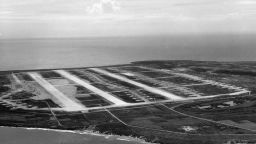
Indonesia is implementing an innovative strategy to enhance its national defense by converting toll roads into emergency runways for military aircraft. This initiative aims to provide the country with the equivalent of multiple aircraft carriers, significantly bolstering its air force capabilities across the vast archipelago.
On March 15, 2024, during a demonstration in Lampung province, an Indonesian Air Force F-16 fighter jet and a Super Tucano attack plane successfully landed and took off from a toll road. Marshal Tonny Harjono, chief of staff of the Indonesian air forces, expressed his vision for this project, stating that he hopes to establish at least one usable section of toll road in each of Indonesia’s 39 provinces, although no specific timeline has been provided.
Donny Ermawan Taufanto, the Deputy Defense Minister, remarked on the significance of this achievement, describing it as a pivotal moment in strengthening Indonesia’s universal defense system.
Strategic Benefits of Roadway Runways
The concept of using highways as military landing strips is not new. Countries such as the United States, Finland, and Sweden have successfully implemented similar strategies. Analysts emphasize the practicality of this approach, particularly for Indonesia, which is the world’s largest archipelago, comprising more than 6,000 inhabited islands spread over an east-west distance of approximately 3,100 miles (5,000 kilometers).
Utilizing existing toll roads as emergency runways is not only economical but also strategically sound. Collin Koh, a research fellow at the S. Rajaratnam School of International Studies in Singapore, explained that aircraft carriers are expensive to build and maintain, often costing billions of dollars. “An aircraft carrier doesn’t seem that attractive as a cost-effective platform,” Koh stated. “Having numerous toll roads earmarked as emergency military runways across the archipelago makes more strategic and operational sense.”
The flexibility of multiple roadways also reduces the risk associated with a single point of failure. Koh noted that if one runway is compromised, others remain available for military operations, thereby enhancing operational readiness.
Operational Readiness and Pilot Training
The Indonesian Air Force plans to designate sections of toll roads that are approximately 3,000 meters long (almost two miles) as suitable for military aircraft landings and takeoffs. Although the toll roads are narrower than standard airport runways, measuring about 24 meters (79 feet) in width compared to 45 to 60 meters, Indonesian pilots are trained to operate under these challenging conditions.
In light of the ongoing geopolitical tensions in the South China Sea, where Indonesia has had disputes with China, the move to utilize toll roads for military purposes is notable. However, officials have clarified that this initiative is not intended to provoke any specific nation but rather to enhance Indonesia’s overall defense capabilities.
As the Indonesian Air Force continues to refine this approach, the successful demonstration in Lampung marks an important step towards integrating civilian infrastructure into national security efforts. The combination of enhanced military readiness and cost-effective solutions positions Indonesia to better respond to potential threats while maintaining the primary function of its toll roads as vital transportation networks.

Robinhood Stock Surges 2.5% in Early Trading on March 17

Israel Intensifies Strikes as Global Energy Crisis Looms

CALV Offers Class on Communication Skills for Real Estate Professionals

Historic Bideford Pub Reopens as The Patch Wine Bar & Kitchen

Oscar Night Celebrations: Winners, Guests, and Exclusive After-Parties

Samsung Galaxy Watch 9 Set for Larger Battery Boost, Report Reveals

Kibble vs. Fresh Dog Food: What’s Best for Your Dog’s Health?

Acclaimed San Francisco Pizzeria Del Popolo to Close in May

‘Invincible’ Season 4 Launches on Prime Video with Epic Action

ALMA Discovers Companion Orbiting Giant Red Star π 1 Gruis

Doctoral Candidate Trivanni Yadav Advances Battery Research at UTulsa

Global Air Forces Ranked by Annual Defense Budgets in 2025

Rev. Bry Shields to Retire as McGill-Toolen President in 2026

Mass Production of F-35 Fighter Jet Drives Down Costs

Tucson Celebrates Life and Remembrance at 36th Annual All Souls Procession

Gold Investment Surge: Top Mutual Funds and ETF Alternatives

DirecTV to Launch AI-Driven Ads with User Likenesses in 2026

Paul Giamatti Reveals Villainous Role in Star Trek: Starfleet Academy
-
 Science9 months ago
ALMA Discovers Companion Orbiting Giant Red Star π 1 Gruis
-
 Science8 months ago
Doctoral Candidate Trivanni Yadav Advances Battery Research at UTulsa
-
 World10 months ago
Global Air Forces Ranked by Annual Defense Budgets in 2025
-
 Lifestyle9 months ago
Rev. Bry Shields to Retire as McGill-Toolen President in 2026
-
 World10 months ago
Mass Production of F-35 Fighter Jet Drives Down Costs
-
 Lifestyle9 months ago
Tucson Celebrates Life and Remembrance at 36th Annual All Souls Procession
-
 Business10 months ago
Gold Investment Surge: Top Mutual Funds and ETF Alternatives
-
 Top Stories10 months ago
DirecTV to Launch AI-Driven Ads with User Likenesses in 2026
-
 Entertainment10 months ago
Paul Giamatti Reveals Villainous Role in Star Trek: Starfleet Academy
-

 Top Stories10 months ago
New ‘Star Trek: Voyager’ Game Demo Released, Players Test Limits
-

 Lifestyle8 months ago
Maumee’s Shop With a Hero Event Delivers Joy to Local Children
-

 Lifestyle7 months ago
Cape May Shines as New Jersey’s Only Entry on Beach Town List