
Science
Interstellar Comet 3I/ATLAS Unveils Secrets During Close Pass

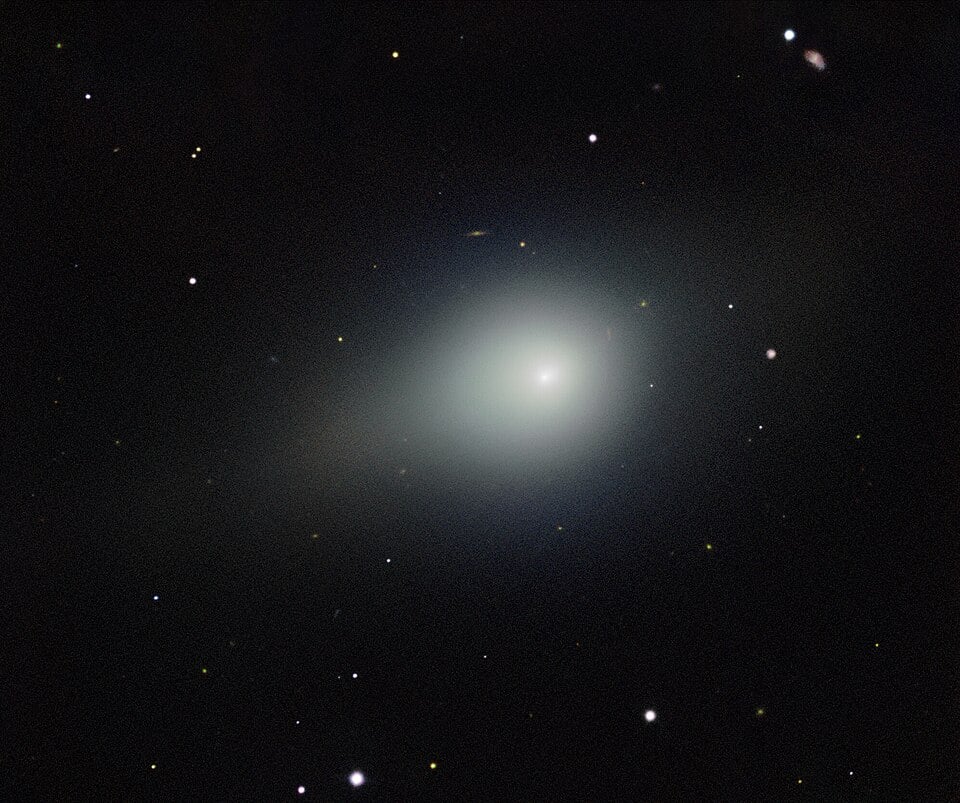
When the interstellar comet 3I/ATLAS passed close to the Sun on October 30, 2025, it became only the third confirmed visitor from interstellar space to be detected. This comet presented a unique opportunity for scientists, as it arrived just in time for detailed observation. Unlike its predecessors, ‘Oumuamua’ and 2I/Borisov, which were shrouded in mystery during their flybys, 3I/ATLAS offered a wealth of data for researchers.
Among the instruments observing 3I/ATLAS was the Solar and Heliosphere Observatory (SOHO), which has been monitoring the Sun from its position 1.5 million kilometres from Earth for nearly three decades. Notably, SOHO includes the SWAN (Sun-Watcher using Active Pixels and Image Processing) camera, designed to detect ultraviolet light emitted by hydrogen atoms rather than solar activity. Just nine days after the comet reached its closest approach, SWAN detected a distinctive hydrogen glow surrounding it.
This glow resulted from water molecules being released from the comet’s nucleus when sunlight struck, splitting the molecules and releasing hydrogen atoms that glow in ultraviolet light. By analyzing this glow, astronomers were able to calculate the rate at which 3I/ATLAS produced water. On November 6, when the comet was at a distance of 1.4 astronomical units from the Sun, it was found to be emitting water at an astonishing rate of 3.17 × 1029 molecules per second. To visualize this, the comet’s water output is comparable to filling an Olympic swimming pool every few seconds.
Significant Observations and Findings
The timing of these observations was crucial. Most studies of 3I/ATLAS occurred before perihelion, when the comet was heating up. In contrast, the SWAN observations captured the subsequent decline in activity as the comet moved away from the Sun. Over the following weeks, the water production rate decreased significantly, dropping to between 10 and 20 trillion trillion molecules per second by early December, approximately 40 days after perihelion.
This decline follows a recognized pattern observed in Solar System comets. As a comet travels farther from the Sun, the reduced heat results in less ice sublimating from its nucleus, leading to decreased activity. The behavior of 3I/ATLAS suggests that, despite its journey through interstellar space for potentially millions of years, it has retained characteristics similar to those icy bodies that formed in our Solar System’s early history.
The methodology employed to measure water production has proven to be remarkably accurate. Developed over the past two decades and refined through observations of over 90 different comet apparitions, the technique combines SWAN’s hydrogen measurements with daily solar ultraviolet output and adjustments for the Sun’s rotation. This meticulous process is essential, as the fluorescence rate of hydrogen depends on the Sun’s ultraviolet emissions.
Implications for Understanding Cometary Formation
The findings regarding 3I/ATLAS extend beyond mere curiosity about an individual comet. Formed in a planetary system around another star, possibly billions of years ago, this comet offers insights into the conditions of its original stellar neighborhood. By studying its composition and behavior, scientists can draw comparisons to the formation of our own Solar System and gain a deeper understanding of the diversity of planetary systems across the galaxy.
Additionally, the substantial water production raises intriguing questions about the size and surface activity of the comet’s nucleus. Observations from the Hubble Space Telescope indicate that the nucleus of 3I/ATLAS measures between 440 meters and 5.6 kilometres in diameter. If water is sublimating directly from its surface, a significant portion—potentially around 20 percent—must be active, which is considerably higher than the typical activity levels of 3 to 5 percent observed in most Solar System comets.
As 3I/ATLAS continues on its journey away from our Solar System, it embarks on a path that will take it millennia before it approaches another star. Thanks to the observations from SWAN and other instruments, scientists have captured a detailed snapshot of this interstellar messenger during its fleeting visit to our cosmic neighborhood.

Robinhood Stock Surges 2.5% in Early Trading on March 17

Israel Intensifies Strikes as Global Energy Crisis Looms

CALV Offers Class on Communication Skills for Real Estate Professionals

Historic Bideford Pub Reopens as The Patch Wine Bar & Kitchen

Oscar Night Celebrations: Winners, Guests, and Exclusive After-Parties

Samsung Galaxy Watch 9 Set for Larger Battery Boost, Report Reveals

Kibble vs. Fresh Dog Food: What’s Best for Your Dog’s Health?

Acclaimed San Francisco Pizzeria Del Popolo to Close in May

‘Invincible’ Season 4 Launches on Prime Video with Epic Action

ALMA Discovers Companion Orbiting Giant Red Star π 1 Gruis

Doctoral Candidate Trivanni Yadav Advances Battery Research at UTulsa

Global Air Forces Ranked by Annual Defense Budgets in 2025

Rev. Bry Shields to Retire as McGill-Toolen President in 2026

Mass Production of F-35 Fighter Jet Drives Down Costs

Tucson Celebrates Life and Remembrance at 36th Annual All Souls Procession

Gold Investment Surge: Top Mutual Funds and ETF Alternatives

DirecTV to Launch AI-Driven Ads with User Likenesses in 2026

Paul Giamatti Reveals Villainous Role in Star Trek: Starfleet Academy
-
 Science9 months ago
ALMA Discovers Companion Orbiting Giant Red Star π 1 Gruis
-
 Science8 months ago
Doctoral Candidate Trivanni Yadav Advances Battery Research at UTulsa
-
 World10 months ago
Global Air Forces Ranked by Annual Defense Budgets in 2025
-
 Lifestyle10 months ago
Rev. Bry Shields to Retire as McGill-Toolen President in 2026
-
 World10 months ago
Mass Production of F-35 Fighter Jet Drives Down Costs
-
 Lifestyle9 months ago
Tucson Celebrates Life and Remembrance at 36th Annual All Souls Procession
-
 Business10 months ago
Gold Investment Surge: Top Mutual Funds and ETF Alternatives
-
 Top Stories10 months ago
DirecTV to Launch AI-Driven Ads with User Likenesses in 2026
-
 Entertainment10 months ago
Paul Giamatti Reveals Villainous Role in Star Trek: Starfleet Academy
-

 Lifestyle8 months ago
Maumee’s Shop With a Hero Event Delivers Joy to Local Children
-

 Top Stories10 months ago
New ‘Star Trek: Voyager’ Game Demo Released, Players Test Limits
-

 Lifestyle8 months ago
Cape May Shines as New Jersey’s Only Entry on Beach Town List