
Science
Leading Physicist Steven R. White to Speak at UGA Lecture Series

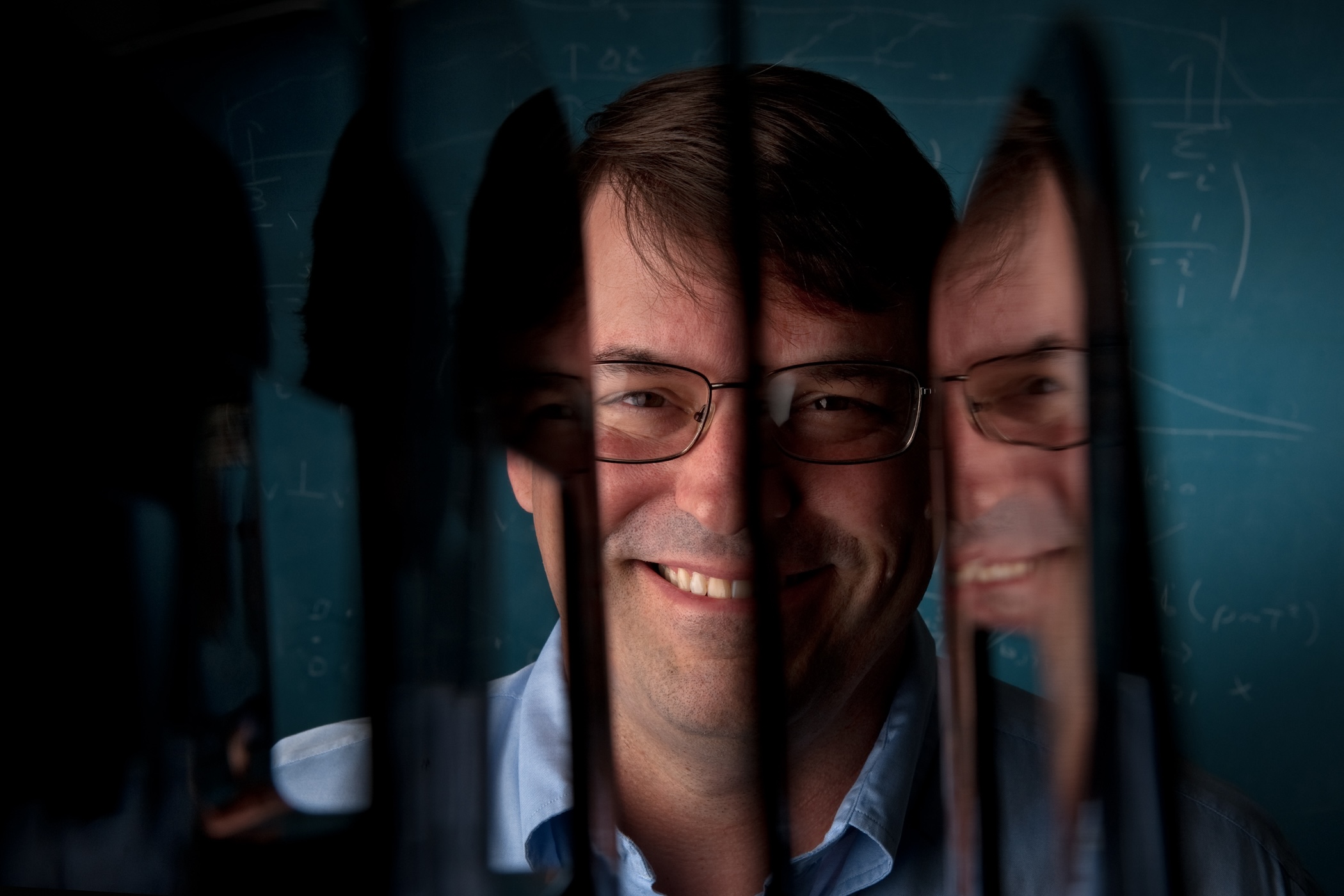
Steven R. White, a distinguished physicist and professor at the University of California, Irvine, is set to deliver the 2026 Chhabra-Landau Lecture at the University of Georgia on February 26, 2026. The lecture will take place at 14:55 in the Physics Building, room 202, and is open to the public at no charge. Following the event, attendees are invited to a light reception.
The lecture is organized by UGA’s Center for Simulational Physics and is part of the esteemed Provost’s Seminar Series. This series features prominent figures from the National Academies of Sciences, Engineering and Medicine and the American Academy of Arts and Sciences, showcasing significant advancements in scientific research. “I’m excited that Dr. White’s presentation is not only a part of the highly regarded Provost’s Seminar Series but also the Chhabra-Landau Lecture Series on computer simulations,” said Phillip Stancil, head of the department of physics and astronomy at UGA.
Steven R. White is renowned for his contributions to condensed matter physics, particularly in simulating quantum systems. His research focuses on entities such as atoms and electrons, whose behaviors adhere to quantum mechanics principles. White is credited with inventing the Density Matrix Renormalization Group, a groundbreaking method for simulating quantum systems across various physics and chemistry domains, as well as the first tensor network algorithm. His accolades include the prestigious Aneesur Rahman Prize in Computational Physics, awarded by the American Physical Society, and memberships in both the American Academy of Arts and Sciences and the National Academy of Sciences.
White’s lecture, titled “Combining Monte Carlo and Tensor Networks to Beat the Quantum Exponential,” aims to introduce attendees to the basics of Monte Carlo simulations and tensor networks. He will also discuss two distinct problems where these approaches have been successfully integrated, leading to significant scientific advancements.
For further information regarding the lecture, interested parties may contact Phillip Stancil at the University of Georgia. This event promises to enhance the understanding of computational methods in physics, a field that continues to evolve rapidly.

Robinhood Stock Surges 2.5% in Early Trading on March 17

Israel Intensifies Strikes as Global Energy Crisis Looms

CALV Offers Class on Communication Skills for Real Estate Professionals

Historic Bideford Pub Reopens as The Patch Wine Bar & Kitchen

Oscar Night Celebrations: Winners, Guests, and Exclusive After-Parties

Samsung Galaxy Watch 9 Set for Larger Battery Boost, Report Reveals

Kibble vs. Fresh Dog Food: What’s Best for Your Dog’s Health?

Acclaimed San Francisco Pizzeria Del Popolo to Close in May

‘Invincible’ Season 4 Launches on Prime Video with Epic Action

ALMA Discovers Companion Orbiting Giant Red Star π 1 Gruis

Doctoral Candidate Trivanni Yadav Advances Battery Research at UTulsa

Global Air Forces Ranked by Annual Defense Budgets in 2025

Rev. Bry Shields to Retire as McGill-Toolen President in 2026

Mass Production of F-35 Fighter Jet Drives Down Costs

Tucson Celebrates Life and Remembrance at 36th Annual All Souls Procession

Gold Investment Surge: Top Mutual Funds and ETF Alternatives

DirecTV to Launch AI-Driven Ads with User Likenesses in 2026

Paul Giamatti Reveals Villainous Role in Star Trek: Starfleet Academy
-
 Science9 months ago
ALMA Discovers Companion Orbiting Giant Red Star π 1 Gruis
-
 Science8 months ago
Doctoral Candidate Trivanni Yadav Advances Battery Research at UTulsa
-
 World10 months ago
Global Air Forces Ranked by Annual Defense Budgets in 2025
-
 Lifestyle9 months ago
Rev. Bry Shields to Retire as McGill-Toolen President in 2026
-
 World10 months ago
Mass Production of F-35 Fighter Jet Drives Down Costs
-
 Lifestyle9 months ago
Tucson Celebrates Life and Remembrance at 36th Annual All Souls Procession
-
 Business10 months ago
Gold Investment Surge: Top Mutual Funds and ETF Alternatives
-
 Top Stories10 months ago
DirecTV to Launch AI-Driven Ads with User Likenesses in 2026
-
 Entertainment10 months ago
Paul Giamatti Reveals Villainous Role in Star Trek: Starfleet Academy
-

 Top Stories10 months ago
New ‘Star Trek: Voyager’ Game Demo Released, Players Test Limits
-

 Lifestyle8 months ago
Maumee’s Shop With a Hero Event Delivers Joy to Local Children
-

 Lifestyle7 months ago
Cape May Shines as New Jersey’s Only Entry on Beach Town List