
Science
NASA’s StarBurst Instrument Advances After Rigorous Testing Regimen

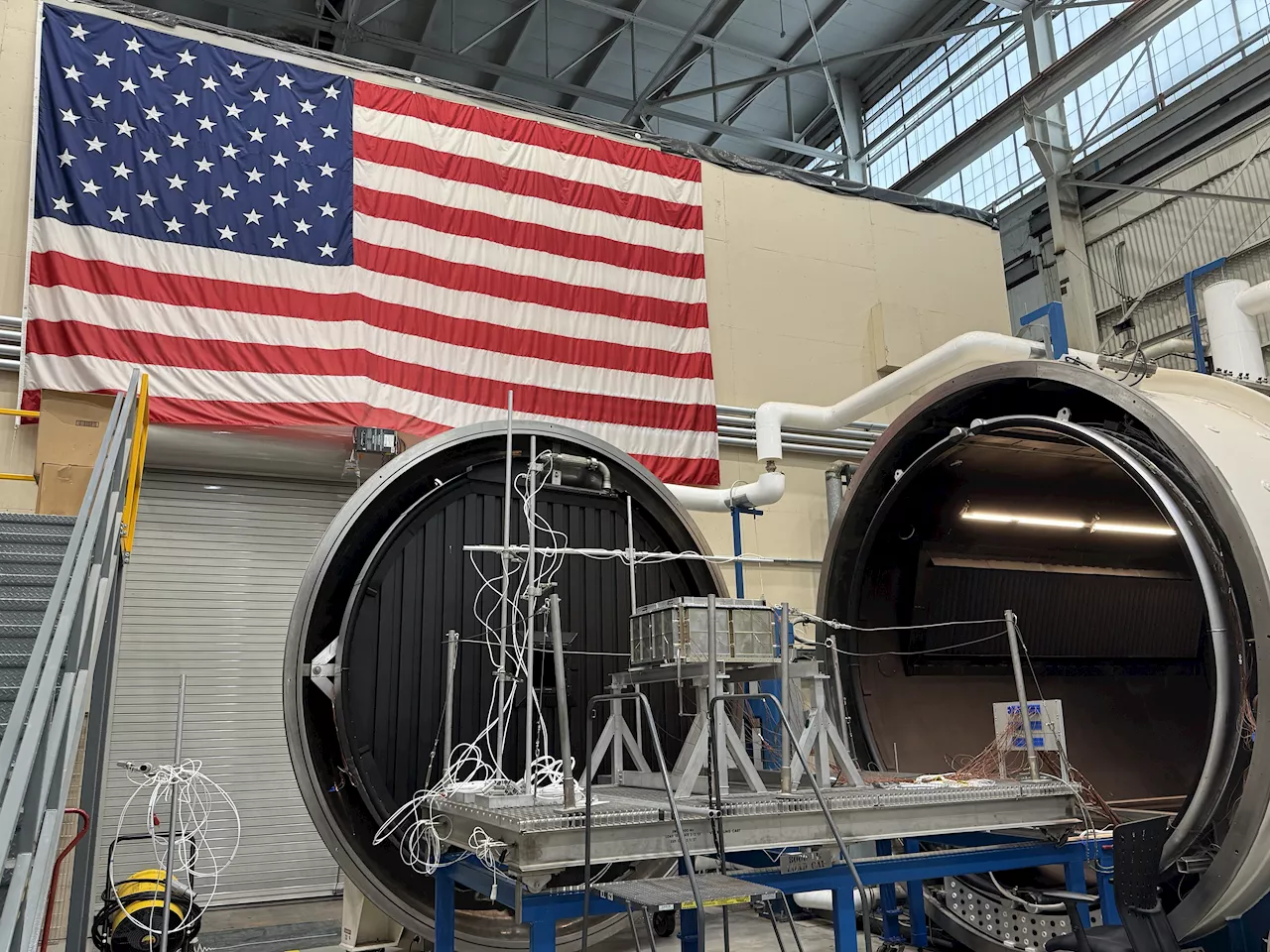
NASA’s StarBurst instrument is progressing towards its launch readiness following a series of intense testing procedures. The small satellite has successfully completed thermal vacuum and vibration tests at NASA’s Marshall Space Flight Center in Huntsville, Alabama. It is now set for instrument calibration after being integrated with its spacecraft bus at the University of Toronto’s Space Flight Laboratory.
Designed to detect the initial emissions of short gamma-ray bursts, StarBurst plays a crucial role in understanding neutron star mergers—events that produce some of the universe’s most powerful explosions. These cosmic phenomena are also linked to the formation of heavy metals like gold and platinum, which are essential to understanding the building blocks of Earth and the universe. To date, only one event has been observed both in gravitational waves and gamma rays, underscoring the significance of StarBurst’s mission.
Testing Details and Future Plans
StarBurst arrived at Marshall in March 2025, where it underwent extensive thermal testing in a vacuum chamber. The testing included a continuous 24-hour thermal assessment over 18 days. Technicians utilized radioactive material during the tests to enable the instrument to detect gamma-ray signals effectively. The rigorous evaluations were designed to simulate the extreme temperatures StarBurst will experience in space.
In addition to thermal testing, engineers completed a “bake-out” procedure, which involved applying extreme heat in a vacuum to eliminate unwanted gases. “NASA’s StarBurst mission is ready for its next stage of assembly and is one step closer to flight,” stated Daniel Kocevski, principal investigator at NASA Marshall. He emphasized that the testing has validated engineering models and enhanced understanding of StarBurst’s expected operations in space.
Further assessments included a “vibe test,” where the instrument was secured to a shaker table to replicate the vibrations and turbulence it will encounter during launch. Following these tests, the StarBurst instrument was shipped to Toronto for integration with the spacecraft bus, which took place in early September 2025.
Collaboration and Future Launch Plans
The StarBurst project is a collaborative effort involving NASA’s Marshall Space Flight Center, the U.S. Naval Research Laboratory, the University of Alabama Huntsville, the Universities Space Research Association, and the University of Toronto Institute for Aerospace Studies Space Flight Laboratory. The mission was selected as part of NASA’s Astrophysics Pioneers program, aimed at developing lower-cost, smaller missions that still deliver valuable astrophysical science.
StarBurst is scheduled for additional calibration, vibration, and thermal vacuum testing in spring 2026, with plans to have it launch-ready by June of that year. NASA anticipates launching the satellite as early as 2027, coinciding with the next series of observations from the Laser Interferometer Gravitational Wave Observatory. This timing aims to maximize the chances of detecting gamma-ray bursts that occur alongside gravitational wave events.
By advancing the understanding of neutron star mergers, the StarBurst mission holds the potential to unlock significant insights into the universe’s most energetic occurrences, furthering our knowledge of cosmic evolution and the origins of heavy elements.

Robinhood Stock Surges 2.5% in Early Trading on March 17

Israel Intensifies Strikes as Global Energy Crisis Looms

CALV Offers Class on Communication Skills for Real Estate Professionals

Historic Bideford Pub Reopens as The Patch Wine Bar & Kitchen

Oscar Night Celebrations: Winners, Guests, and Exclusive After-Parties

Samsung Galaxy Watch 9 Set for Larger Battery Boost, Report Reveals

Kibble vs. Fresh Dog Food: What’s Best for Your Dog’s Health?

Acclaimed San Francisco Pizzeria Del Popolo to Close in May

‘Invincible’ Season 4 Launches on Prime Video with Epic Action

ALMA Discovers Companion Orbiting Giant Red Star π 1 Gruis

Doctoral Candidate Trivanni Yadav Advances Battery Research at UTulsa

Global Air Forces Ranked by Annual Defense Budgets in 2025

Rev. Bry Shields to Retire as McGill-Toolen President in 2026

Mass Production of F-35 Fighter Jet Drives Down Costs

Tucson Celebrates Life and Remembrance at 36th Annual All Souls Procession

Gold Investment Surge: Top Mutual Funds and ETF Alternatives

DirecTV to Launch AI-Driven Ads with User Likenesses in 2026

Paul Giamatti Reveals Villainous Role in Star Trek: Starfleet Academy
-
 Science9 months ago
ALMA Discovers Companion Orbiting Giant Red Star π 1 Gruis
-
 Science8 months ago
Doctoral Candidate Trivanni Yadav Advances Battery Research at UTulsa
-
 World10 months ago
Global Air Forces Ranked by Annual Defense Budgets in 2025
-
 Lifestyle10 months ago
Rev. Bry Shields to Retire as McGill-Toolen President in 2026
-
 World10 months ago
Mass Production of F-35 Fighter Jet Drives Down Costs
-
 Lifestyle9 months ago
Tucson Celebrates Life and Remembrance at 36th Annual All Souls Procession
-
 Business10 months ago
Gold Investment Surge: Top Mutual Funds and ETF Alternatives
-
 Top Stories10 months ago
DirecTV to Launch AI-Driven Ads with User Likenesses in 2026
-
 Entertainment10 months ago
Paul Giamatti Reveals Villainous Role in Star Trek: Starfleet Academy
-

 Lifestyle8 months ago
Maumee’s Shop With a Hero Event Delivers Joy to Local Children
-

 Top Stories10 months ago
New ‘Star Trek: Voyager’ Game Demo Released, Players Test Limits
-

 Lifestyle8 months ago
Cape May Shines as New Jersey’s Only Entry on Beach Town List