
Science
New Insights Uncovered from Easter Island’s Stone Statue Quarry

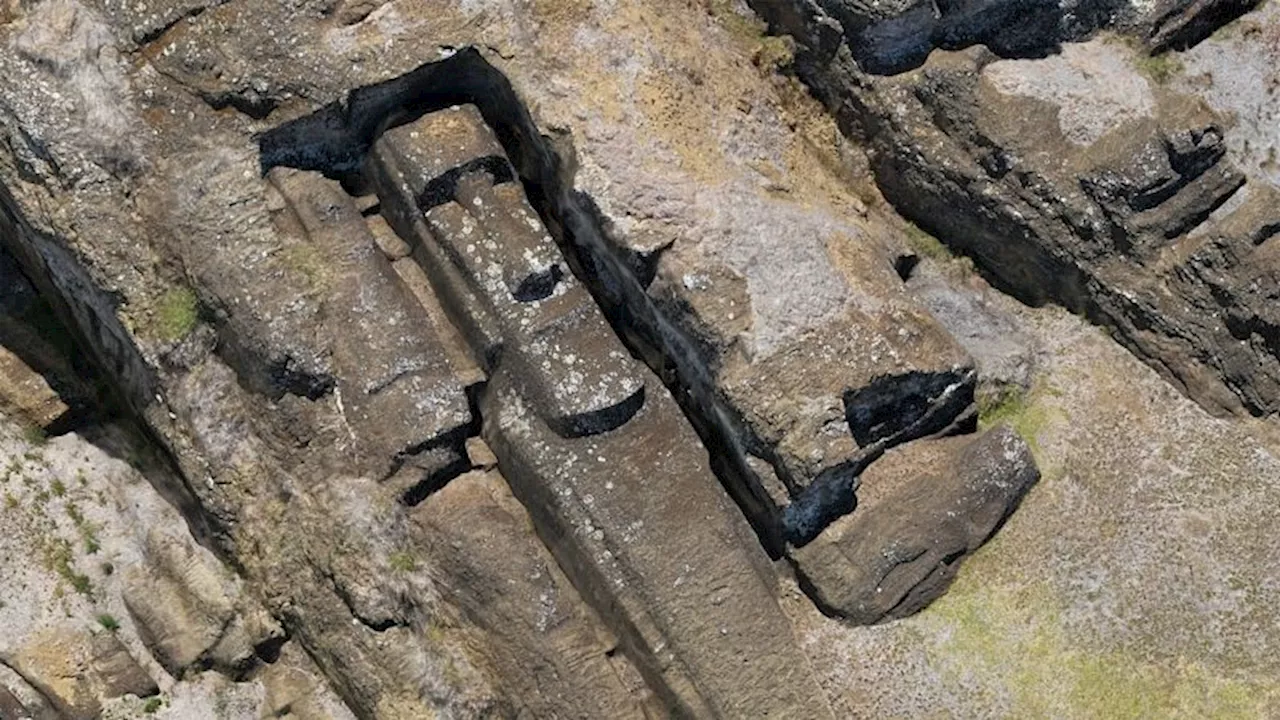
Archaeologists have made significant strides in understanding the construction of the enigmatic stone statues on Easter Island, known as Rapa Nui. A recent study unveiled a high-resolution 3D model of the Rano Raraku quarry, revealing crucial insights into the production methods and societal organization of the Polynesian inhabitants who created these iconic moai.
The research highlights that the monumental statues, which dot the landscape of the remote island, were likely produced by individual clan groups rather than a centralized workforce. This finding challenges previous assumptions about the social structure of Rapa Nui, suggesting a society organized around smaller, independent family units.
According to the study published in the journal PLOS One, researchers utilized over 11,000 drone images to construct the first comprehensive model of the quarry. The analysis identified 30 distinct sites of activity, indicating multiple independent work areas. Carl Lipo, a professor at Binghamton University’s department of anthropology, noted, “The sheer scale seemed to demand centralized coordination. The presence of monuments became circular evidence for hierarchy. Monuments meant chiefs because chiefs built monuments.”
The model showcases 426 moai in various stages of completion, showcasing the scale of production from the 13th to 17th centuries. The average moai measures about 4 meters tall and weighs around 12.5 tons, with some figures exceeding 20 tons. Notably, the unfinished statue known as Te Tokanga stands at an impressive 21 meters and would have weighed approximately 270 tons if completed.
Researchers found that artisans primarily quarried and carved the statues while lying down, employing techniques that defined facial details before outlining the heads and bodies. The findings imply that production was decentralized, with each clan managing its own quarrying and carving processes. Lipo emphasized, “This means the entire production chain — from first cutting into bedrock to final statue details — stayed within individual zones.”
These revelations add to ongoing debates about the societal structure of Easter Island. While Jared Diamond’s influential book, “Collapse: How Societies Choose to Fail or Succeed,” posited that exploitation of resources led to societal collapse, recent studies indicate a more nuanced understanding. The latest research supports a view of Rapa Nui as a sustainable society that adapted to its challenges, rather than one driven to ecological disaster by powerful chiefs.
In this context, Lipo commented, “The traditional story assumes that powerful chiefs drove unsustainable monument-building. But if monument production were decentralized, with autonomous communities making independent decisions, there would be no central authority to drive the island over an ecological cliff.”
While the study offers innovative insights, its conclusions have sparked discussion among experts. Helene Martinsson-Wallin, a professor at Uppsala University, noted that the idea of clan-based systems on Rapa Nui has been recognized for over a century. She pointed out that the research does not present dramatically new conclusions but highlights the need for further examination of social structures in the area.
Christopher Stevenson, an archaeologist at Virginia Commonwealth University, acknowledged the innovative approach taken by the research team. He emphasized the importance of evaluating their hypothesis regarding decentralized production but noted that additional data is required to substantiate their claims.
Easter Island’s history as a site of complex societal development continues to intrigue scholars and the public alike. The latest findings contribute to an evolving understanding of how the Polynesian inhabitants managed resources and constructed their remarkable stone statues, shedding light on their legacy in one of the most isolated regions of the world.

Robinhood Stock Surges 2.5% in Early Trading on March 17

Israel Intensifies Strikes as Global Energy Crisis Looms

CALV Offers Class on Communication Skills for Real Estate Professionals

Historic Bideford Pub Reopens as The Patch Wine Bar & Kitchen

Oscar Night Celebrations: Winners, Guests, and Exclusive After-Parties

Samsung Galaxy Watch 9 Set for Larger Battery Boost, Report Reveals

Kibble vs. Fresh Dog Food: What’s Best for Your Dog’s Health?

Acclaimed San Francisco Pizzeria Del Popolo to Close in May

‘Invincible’ Season 4 Launches on Prime Video with Epic Action

ALMA Discovers Companion Orbiting Giant Red Star π 1 Gruis

Doctoral Candidate Trivanni Yadav Advances Battery Research at UTulsa

Global Air Forces Ranked by Annual Defense Budgets in 2025

Rev. Bry Shields to Retire as McGill-Toolen President in 2026

Mass Production of F-35 Fighter Jet Drives Down Costs

Tucson Celebrates Life and Remembrance at 36th Annual All Souls Procession

Gold Investment Surge: Top Mutual Funds and ETF Alternatives

DirecTV to Launch AI-Driven Ads with User Likenesses in 2026

Paul Giamatti Reveals Villainous Role in Star Trek: Starfleet Academy
-
 Science9 months ago
ALMA Discovers Companion Orbiting Giant Red Star π 1 Gruis
-
 Science9 months ago
Doctoral Candidate Trivanni Yadav Advances Battery Research at UTulsa
-
 World10 months ago
Global Air Forces Ranked by Annual Defense Budgets in 2025
-
 Lifestyle10 months ago
Rev. Bry Shields to Retire as McGill-Toolen President in 2026
-
 World10 months ago
Mass Production of F-35 Fighter Jet Drives Down Costs
-
 Lifestyle9 months ago
Tucson Celebrates Life and Remembrance at 36th Annual All Souls Procession
-
 Business10 months ago
Gold Investment Surge: Top Mutual Funds and ETF Alternatives
-
 Top Stories10 months ago
DirecTV to Launch AI-Driven Ads with User Likenesses in 2026
-
 Entertainment10 months ago
Paul Giamatti Reveals Villainous Role in Star Trek: Starfleet Academy
-

 Lifestyle8 months ago
Maumee’s Shop With a Hero Event Delivers Joy to Local Children
-

 Top Stories10 months ago
New ‘Star Trek: Voyager’ Game Demo Released, Players Test Limits
-

 Lifestyle8 months ago
Cape May Shines as New Jersey’s Only Entry on Beach Town List