
Science
New Machine Learning Method Enhances RFI Mitigation in SETI Surveys

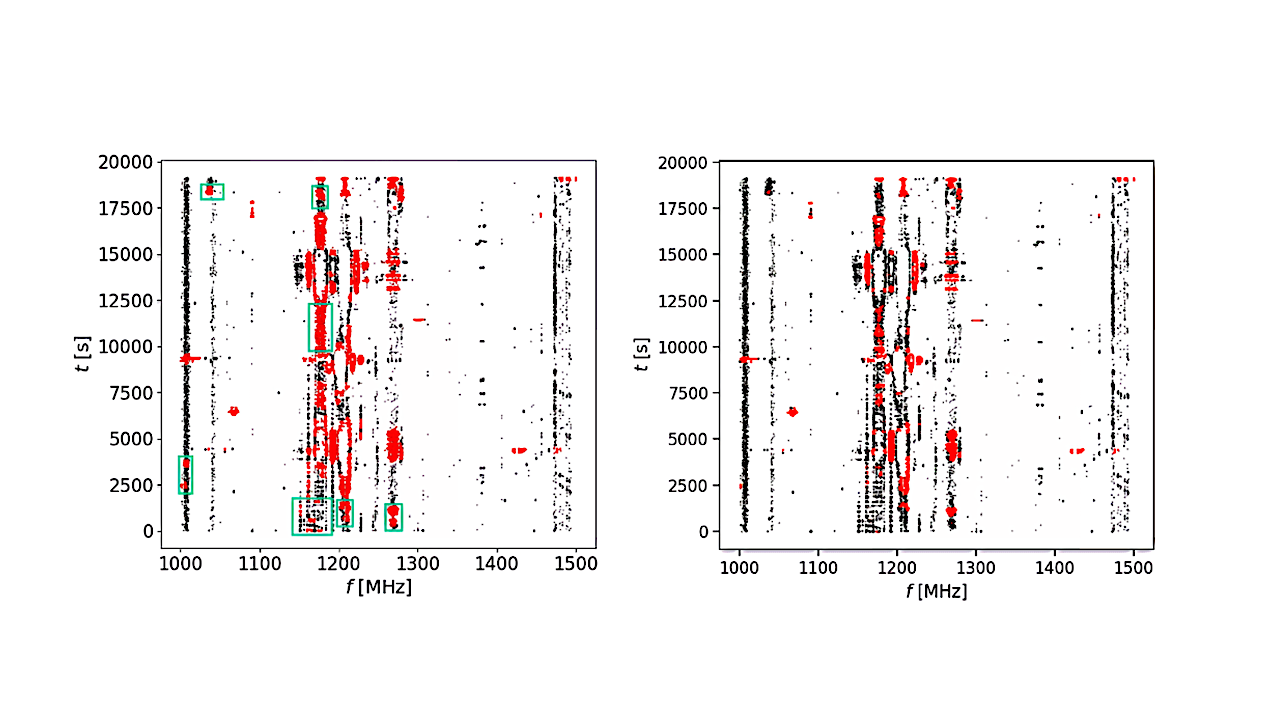
The search for extraterrestrial intelligence (SETI) has received a significant boost with the introduction of an improved machine learning approach aimed at mitigating radio frequency interference (RFI) in archival data. Researchers from various institutions have applied the Density-Based Spatial Clustering of Applications with Noise (DBSCAN) algorithm to enhance the analysis of data collected by the Five-hundred-meter Aperture Spherical radio Telescope (FAST). This advancement addresses a crucial challenge in SETI efforts, particularly in detecting technosignatures from potential extraterrestrial sources.
RFI poses a substantial barrier in the analysis of radio signals, especially in highly sensitive surveys. Initial mitigation efforts typically focus on the removal of persistent and drifting narrowband RFI. However, residual interference often remains, complicating the identification of genuine signals. The team’s research, which utilizes FAST-SETI commensal survey archival data from July 2019, demonstrates significant improvements in both the effectiveness and efficiency of RFI mitigation.
By employing the DBSCAN algorithm, the researchers successfully identified and eliminated 36,977 residual RFIs, which accounts for approximately 77.87% of the interference, within a mere 1.678 seconds. This method showcases a 7.44% higher removal rate compared to earlier machine learning techniques, alongside a 24.85% reduction in execution time. These results not only affirm the efficacy of the new approach but also highlight its potential for further applications in the field of astrobiology.
The study, accepted for publication in The Astronomical Journal, outlines the promising implications of improved RFI mitigation strategies in the search for extraterrestrial life. The researchers also reported finding candidate signals that align with previous studies. After detailed analysis, one candidate signal was retained for further investigation, indicating the potential for exciting discoveries in the ongoing quest for technosignatures.
As the search for extraterrestrial intelligence continues to evolve, the application of advanced machine learning techniques such as DBSCAN may significantly enhance the ability to filter out unwanted noise. This could lead to more accurate identifications of signals that warrant further examination, ultimately contributing to our understanding of the universe and the potential for life beyond Earth.
This research was conducted by a collaborative team, including prominent figures such as Li-Li Zhao, Xiao-Hang Luan, Zhen-Zhao Tao, and Dan Werthimer. The findings are detailed in their comprehensive study, which spans 14 pages and includes 2 tables and 8 figures. The full research can be accessed on arXiv, under the reference arXiv:2512.15809.
As the scientific community continues to push the boundaries of technology and exploration, advancements like these play a vital role in the ongoing search for signs of life beyond our planet.

Robinhood Stock Surges 2.5% in Early Trading on March 17

Israel Intensifies Strikes as Global Energy Crisis Looms

CALV Offers Class on Communication Skills for Real Estate Professionals

Historic Bideford Pub Reopens as The Patch Wine Bar & Kitchen

Oscar Night Celebrations: Winners, Guests, and Exclusive After-Parties

Samsung Galaxy Watch 9 Set for Larger Battery Boost, Report Reveals

Kibble vs. Fresh Dog Food: What’s Best for Your Dog’s Health?

Acclaimed San Francisco Pizzeria Del Popolo to Close in May

‘Invincible’ Season 4 Launches on Prime Video with Epic Action

ALMA Discovers Companion Orbiting Giant Red Star π 1 Gruis

Doctoral Candidate Trivanni Yadav Advances Battery Research at UTulsa

Global Air Forces Ranked by Annual Defense Budgets in 2025

Rev. Bry Shields to Retire as McGill-Toolen President in 2026

Mass Production of F-35 Fighter Jet Drives Down Costs

Tucson Celebrates Life and Remembrance at 36th Annual All Souls Procession

Gold Investment Surge: Top Mutual Funds and ETF Alternatives

DirecTV to Launch AI-Driven Ads with User Likenesses in 2026

Paul Giamatti Reveals Villainous Role in Star Trek: Starfleet Academy
-
 Science9 months ago
ALMA Discovers Companion Orbiting Giant Red Star π 1 Gruis
-
 Science8 months ago
Doctoral Candidate Trivanni Yadav Advances Battery Research at UTulsa
-
 World10 months ago
Global Air Forces Ranked by Annual Defense Budgets in 2025
-
 Lifestyle10 months ago
Rev. Bry Shields to Retire as McGill-Toolen President in 2026
-
 World10 months ago
Mass Production of F-35 Fighter Jet Drives Down Costs
-
 Lifestyle9 months ago
Tucson Celebrates Life and Remembrance at 36th Annual All Souls Procession
-
 Business10 months ago
Gold Investment Surge: Top Mutual Funds and ETF Alternatives
-
 Top Stories10 months ago
DirecTV to Launch AI-Driven Ads with User Likenesses in 2026
-
 Entertainment10 months ago
Paul Giamatti Reveals Villainous Role in Star Trek: Starfleet Academy
-

 Lifestyle8 months ago
Maumee’s Shop With a Hero Event Delivers Joy to Local Children
-

 Top Stories10 months ago
New ‘Star Trek: Voyager’ Game Demo Released, Players Test Limits
-

 Lifestyle8 months ago
Cape May Shines as New Jersey’s Only Entry on Beach Town List