
Science
New Technology Transforms Metal Heat Treatment into Carbon-Free Process

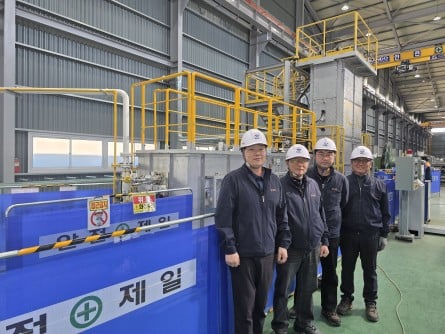
Researchers at the Korea Institute of Energy Research (KIER), led by Dr. Hookyung Lee, have developed an innovative electrified heat treatment technology aimed at replacing fossil fuels with electricity in the production of galvanized steel strips. This breakthrough is particularly significant for the automobile and household appliance industries, where metal heat treatment processes are essential. The new technology is set to play a crucial role in reducing carbon emissions across energy-intensive industries like steelmaking, thereby supporting South Korea’s national greenhouse gas reduction targets for 2035.
The South Korean government has intensified its focus on decarbonizing industrial processes, including electrification, to achieve a reduction of up to 31% in industrial sector emissions from 2018 levels. This ambitious goal was outlined during the 5th Plenary Meeting of the Presidential Committee on Carbon Neutrality and Green Growth in November 2025. Industries, particularly steel, are facing increasing pressure to adopt electrified heating technologies as part of their commitment to sustainability.
Traditional methods of producing galvanized steel strips involve a continuous galvanizing line (CGL) process. In this process, steel plates are coated by passing through a molten zinc bath, followed by an annealing step. Typically, heat for the annealing furnace comes from burning fossil fuels like natural gas, resulting in substantial emissions of greenhouse gases, including carbon dioxide and nitrogen oxides. In fact, emissions from the steel sector, including zinc manufacturing, contribute to approximately 15% of South Korea’s total national emissions.
To mitigate these environmental impacts, Dr. Lee and his team have developed a “carbon-free annealing system.” This system operates entirely on electricity, replacing traditional burners with electric heating elements in the annealing process. Initial tests closely resembling commercial production conditions demonstrated an impressive reduction of carbon dioxide and nitrogen oxide emissions by over 98% compared to conventional methods.
The innovative design of the new system retains essential features of traditional furnaces while integrating electric heating technology. The research team maintained the refractory structure and steel-strip conveying mechanism, but installed electric heating elements on both the upper and lower sections of the furnace. This design allows for rapid and uniform heating through high-temperature radiant heat, significantly minimizing heat loss.
When tested with steel strips measuring 0.49 millimeters thick at 750°C, the carbon-free system produced results comparable to those achieved with conventional heating methods, maintaining the same color, microstructure, and mechanical properties. Notably, the system eliminates the need for fuel and air supply systems, thereby reducing capital investment costs and decreasing the installation footprint by approximately 40%.
Additionally, when powered by renewable energy sources such as wind and solar, this system can facilitate a truly carbon-free heat treatment process. This capability positions it as a highly effective solution for addressing global environmental regulations, including the Carbon Border Adjustment Mechanism (CBAM), which imposes a carbon price on imported products produced outside the EU.
Dr. Lee emphasized the significance of this development, stating, “This demonstration is the world’s first case to show that carbon-free heating can be achieved simply by replacing burners with electric heating elements.” He also expressed intentions to advance the technology into an AI-based design and operation system. This future system will automatically recommend optimal configurations for heating elements based on various factors, including steel strip dimensions and conveyor speed.
The results of this groundbreaking research were published in September 2025 in the reputable journal Applied Thermal Engineering. This study received support from Korea’s Ministry of Trade, Industry and Energy, and the demonstration was conducted in collaboration with Samwoo Eco Co., Ltd., showcasing the potential for commercial-scale applications in both domestic and international markets.
The advancements in electrified heating technology herald a significant step towards sustainable industrial practices, paving the way for a future with reduced carbon emissions and increased efficiency in metal heat treatment processes.

Robinhood Stock Surges 2.5% in Early Trading on March 17

Israel Intensifies Strikes as Global Energy Crisis Looms

CALV Offers Class on Communication Skills for Real Estate Professionals

Historic Bideford Pub Reopens as The Patch Wine Bar & Kitchen

Oscar Night Celebrations: Winners, Guests, and Exclusive After-Parties

Samsung Galaxy Watch 9 Set for Larger Battery Boost, Report Reveals

Kibble vs. Fresh Dog Food: What’s Best for Your Dog’s Health?

Acclaimed San Francisco Pizzeria Del Popolo to Close in May

‘Invincible’ Season 4 Launches on Prime Video with Epic Action

ALMA Discovers Companion Orbiting Giant Red Star π 1 Gruis

Doctoral Candidate Trivanni Yadav Advances Battery Research at UTulsa

Global Air Forces Ranked by Annual Defense Budgets in 2025

Rev. Bry Shields to Retire as McGill-Toolen President in 2026

Mass Production of F-35 Fighter Jet Drives Down Costs

Tucson Celebrates Life and Remembrance at 36th Annual All Souls Procession

Gold Investment Surge: Top Mutual Funds and ETF Alternatives

DirecTV to Launch AI-Driven Ads with User Likenesses in 2026

Paul Giamatti Reveals Villainous Role in Star Trek: Starfleet Academy
-
 Science9 months ago
ALMA Discovers Companion Orbiting Giant Red Star π 1 Gruis
-
 Science8 months ago
Doctoral Candidate Trivanni Yadav Advances Battery Research at UTulsa
-
 World10 months ago
Global Air Forces Ranked by Annual Defense Budgets in 2025
-
 Lifestyle10 months ago
Rev. Bry Shields to Retire as McGill-Toolen President in 2026
-
 World10 months ago
Mass Production of F-35 Fighter Jet Drives Down Costs
-
 Lifestyle9 months ago
Tucson Celebrates Life and Remembrance at 36th Annual All Souls Procession
-
 Business10 months ago
Gold Investment Surge: Top Mutual Funds and ETF Alternatives
-
 Top Stories10 months ago
DirecTV to Launch AI-Driven Ads with User Likenesses in 2026
-
 Entertainment10 months ago
Paul Giamatti Reveals Villainous Role in Star Trek: Starfleet Academy
-

 Lifestyle8 months ago
Maumee’s Shop With a Hero Event Delivers Joy to Local Children
-

 Top Stories10 months ago
New ‘Star Trek: Voyager’ Game Demo Released, Players Test Limits
-

 Lifestyle8 months ago
Cape May Shines as New Jersey’s Only Entry on Beach Town List