
Science
New Theory Proposes Space as a Viscous Fluid, Not Empty Void

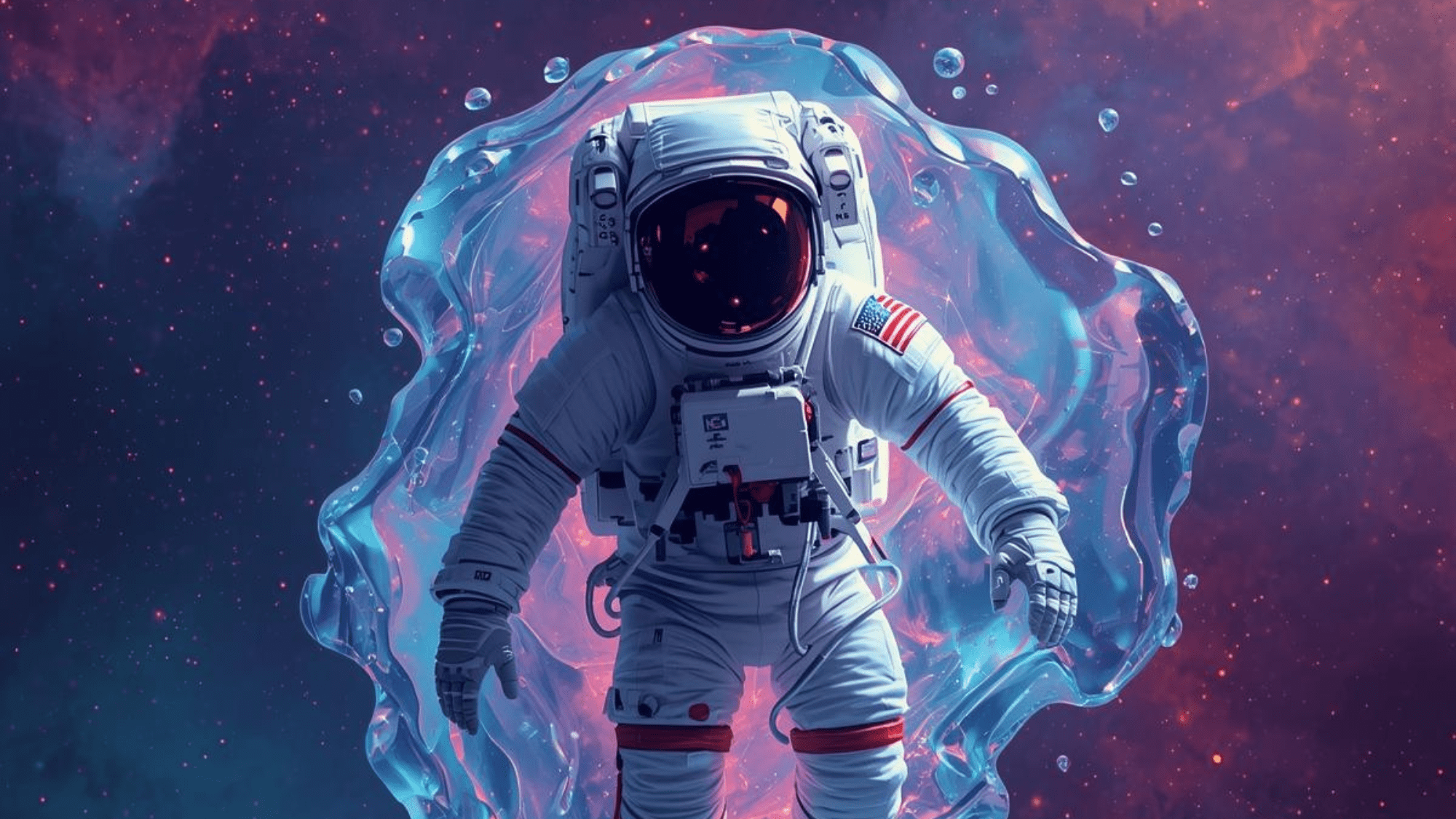
Recent research suggests that the vast expanses of space may not be the empty void previously imagined, but rather a viscous fluid. This theory, proposed by Muhammad Ghulam Khuwajah Khan from the Indian Institute of Technology in Jodhpur, indicates that the universe could be filled with an invisible substance that behaves like thick fluid. The concept is outlined in a new paper that is currently awaiting peer review.
Khan’s hypothesis aims to address inconsistencies within the widely accepted Lambda Cold Dark Matter model. This model posits that dark energy is a constant force responsible for the accelerating expansion of the universe. However, observations from the Dark Energy Spectroscopic Instrument in Arizona and the Dark Energy Survey in Chile suggest that dark energy may be weakening over time, conflicting with the model’s predictions.
Khan introduces the idea of “spatial phonons,” which are tension waves that traverse this viscous medium. In his model, space possesses viscosity, allowing it to carry these vibrations. This results in an uneven expansion of the universe, as the phonons create a gentle pushback against the force of dark energy. Incorporating this theoretical resistance into existing calculations could clarify the discrepancies identified in recent astronomical surveys.
This innovative theory does not discard established concepts, such as the Big Bang or unobserved dark matter and dark energy. Instead, it suggests a unifying framework that adds depth to our understanding of cosmic dynamics. By envisioning space as a fluid medium, Khan’s work aims to provide a clearer picture of the universe’s behavior.
While the notion may seem speculative, it invites curiosity about the fundamental nature of the cosmos. As scientific inquiry continues, Khan’s theory presents an intriguing possibility that the universe could be more complex than previously thought, akin to a space filled with a thick, syrupy substance.
As researchers delve deeper into this topic, the implications of Khan’s work could reshape our understanding of the universe and its underlying mechanisms. Further studies will be essential to validate or challenge this hypothesis, but for now, it offers a fresh perspective on the nature of space itself.

Robinhood Stock Surges 2.5% in Early Trading on March 17

Israel Intensifies Strikes as Global Energy Crisis Looms

CALV Offers Class on Communication Skills for Real Estate Professionals

Historic Bideford Pub Reopens as The Patch Wine Bar & Kitchen

Oscar Night Celebrations: Winners, Guests, and Exclusive After-Parties

Samsung Galaxy Watch 9 Set for Larger Battery Boost, Report Reveals

Kibble vs. Fresh Dog Food: What’s Best for Your Dog’s Health?

Acclaimed San Francisco Pizzeria Del Popolo to Close in May

‘Invincible’ Season 4 Launches on Prime Video with Epic Action

ALMA Discovers Companion Orbiting Giant Red Star π 1 Gruis

Doctoral Candidate Trivanni Yadav Advances Battery Research at UTulsa

Global Air Forces Ranked by Annual Defense Budgets in 2025

Rev. Bry Shields to Retire as McGill-Toolen President in 2026

Mass Production of F-35 Fighter Jet Drives Down Costs

Tucson Celebrates Life and Remembrance at 36th Annual All Souls Procession

Gold Investment Surge: Top Mutual Funds and ETF Alternatives

DirecTV to Launch AI-Driven Ads with User Likenesses in 2026

Paul Giamatti Reveals Villainous Role in Star Trek: Starfleet Academy
-
 Science9 months ago
ALMA Discovers Companion Orbiting Giant Red Star π 1 Gruis
-
 Science8 months ago
Doctoral Candidate Trivanni Yadav Advances Battery Research at UTulsa
-
 World10 months ago
Global Air Forces Ranked by Annual Defense Budgets in 2025
-
 Lifestyle10 months ago
Rev. Bry Shields to Retire as McGill-Toolen President in 2026
-
 World10 months ago
Mass Production of F-35 Fighter Jet Drives Down Costs
-
 Lifestyle9 months ago
Tucson Celebrates Life and Remembrance at 36th Annual All Souls Procession
-
 Business10 months ago
Gold Investment Surge: Top Mutual Funds and ETF Alternatives
-
 Top Stories10 months ago
DirecTV to Launch AI-Driven Ads with User Likenesses in 2026
-
 Entertainment10 months ago
Paul Giamatti Reveals Villainous Role in Star Trek: Starfleet Academy
-

 Lifestyle8 months ago
Maumee’s Shop With a Hero Event Delivers Joy to Local Children
-

 Top Stories10 months ago
New ‘Star Trek: Voyager’ Game Demo Released, Players Test Limits
-

 Lifestyle7 months ago
Cape May Shines as New Jersey’s Only Entry on Beach Town List