
Science
OpenAI Faces Talent Exodus with 12 Departures in 2025

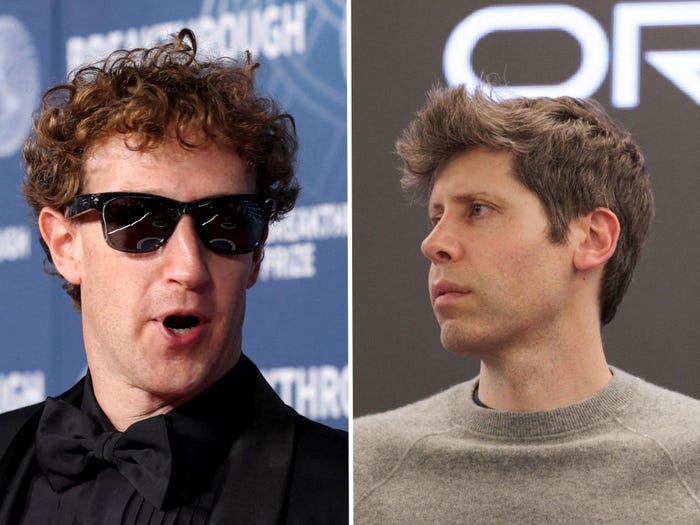
OpenAI experienced a significant talent exodus in 2025, losing at least twelve key executives and researchers. Among those departures, more than half a dozen scientists transitioned to Meta’s Superintelligence Lab, which aims to enhance the company’s artificial intelligence capabilities. This trend follows a tumultuous restructuring period in 2024 that saw high-profile exits, leaving OpenAI’s leadership in a precarious position.
In the summer of 2025, OpenAI saw at least seven researchers and scientists leave for Meta’s ambitious AI project. These departures included notable figures such as Jason Wei, who worked on OpenAI’s advanced models, and Shengjia Zhao, a co-creator of ChatGPT and GPT-4, who became chief scientist at Meta’s Superintelligence Lab. Zhao now collaborates directly with Mark Zuckerberg and Chief AI Officer Alexandr Wang.
Other researchers who joined Meta include Jiahui Yu, credited with developing the sensory capabilities of large language models, and Hyung Won Chung, who left alongside his colleagues, expressing enthusiasm for building from a “clean slate” at Meta. The trend of departing talent paints a challenging picture for OpenAI, with CEO Sam Altman now among only two remaining members of the original founding team.
High-Profile Departures
The year 2025 marked a year of notable exits for OpenAI, which had already seen significant turnover in 2024. During the previous year, key leaders such as Chief Technology Officer Mira Murati, Chief Research Officer Bob McGrew, and Vice President of Research Barret Zoph left the company. These changes came amid a broader restructuring effort that aimed to refocus OpenAI’s strategic direction.
In addition to the research team, OpenAI also lost influential figures from its leadership. Julia Villagra, who was promoted to Chief People Officer in March 2025, resigned in August. Another notable departure is Liam Fedus, the former Vice President of Research and Post-Training, who left in March to co-found an AI startup named Periodic Labs. This new venture aims to pioneer the development of an AI scientist.
The organization also saw Tom Cunningham, a data scientist and economic researcher, resign in November to join Model Evaluation and Threat Research, a non-profit focused on assessing AI model capabilities and safety. Furthermore, Hannah Wong, OpenAI’s Chief Communications Officer, announced her departure just weeks before the end of the year. Wong’s exit leaves an interim leadership gap, with Lindsey Held Bolton stepping in temporarily.
The ongoing departures at OpenAI highlight a critical transition period for the organization. As it grapples with the loss of key talent, the implications for its future direction and projects remain uncertain. The shift of researchers to Meta underscores the competitive landscape within the AI sector, as companies vie for top talent to drive innovation forward.

Susquehanna Raises ConocoPhillips Price Target to $121 Amid Analyst Activity

US Firms Urged to Collaborate with China for Tech Competitiveness

Citigroup Reaffirms Sell Rating on Werner Enterprises Shares

Trump Official Exposed for Lies About Epstein Ties Amid Scandal

Cartoon Reflects Societal Struggles in Modern Rat Race

Discover 2026’s Best Vegetable Varieties for Thriving Gardens

MTA Reveals Snow Clearing Strategies as NYC Faces Winter Storm

Tensions Rise in Anti-ICE Movement Over Whistle Tactics

Esteemed Astronomer Donald York, Co-Founder of Sloan Survey, Dies at 81

ALMA Discovers Companion Orbiting Giant Red Star π 1 Gruis

Doctoral Candidate Trivanni Yadav Advances Battery Research at UTulsa

Global Air Forces Ranked by Annual Defense Budgets in 2025

New ‘Star Trek: Voyager’ Game Demo Released, Players Test Limits

Mass Production of F-35 Fighter Jet Drives Down Costs

NASCAR Faces Fan Backlash as Steve Phelps’ Texts Surface

Gold Investment Surge: Top Mutual Funds and ETF Alternatives

DirecTV to Launch AI-Driven Ads with User Likenesses in 2026

SEVENTEEN’s Mingyu Faces Backlash Over Alcohol Incident at Concert
-
 Science3 months ago
ALMA Discovers Companion Orbiting Giant Red Star π 1 Gruis
-
 Science3 months ago
Doctoral Candidate Trivanni Yadav Advances Battery Research at UTulsa
-
 World4 months ago
Global Air Forces Ranked by Annual Defense Budgets in 2025
-
 Top Stories4 months ago
New ‘Star Trek: Voyager’ Game Demo Released, Players Test Limits
-
 World4 months ago
Mass Production of F-35 Fighter Jet Drives Down Costs
-
 Sports3 months ago
NASCAR Faces Fan Backlash as Steve Phelps’ Texts Surface
-
 Business4 months ago
Gold Investment Surge: Top Mutual Funds and ETF Alternatives
-
 Top Stories4 months ago
DirecTV to Launch AI-Driven Ads with User Likenesses in 2026
-
 Politics4 months ago
SEVENTEEN’s Mingyu Faces Backlash Over Alcohol Incident at Concert
-
 Science4 months ago
Time Crystals Revolutionize Quantum Computing Potential
-

 Entertainment4 months ago
Freeport Art Gallery Transforms Waste into Creative Masterpieces
-
 Science4 months ago
Remembering David E. Brest: A Life Dedicated to Nature and Family