
Science
Scientist Tackles Antibiotic Resistance Using AI Innovations

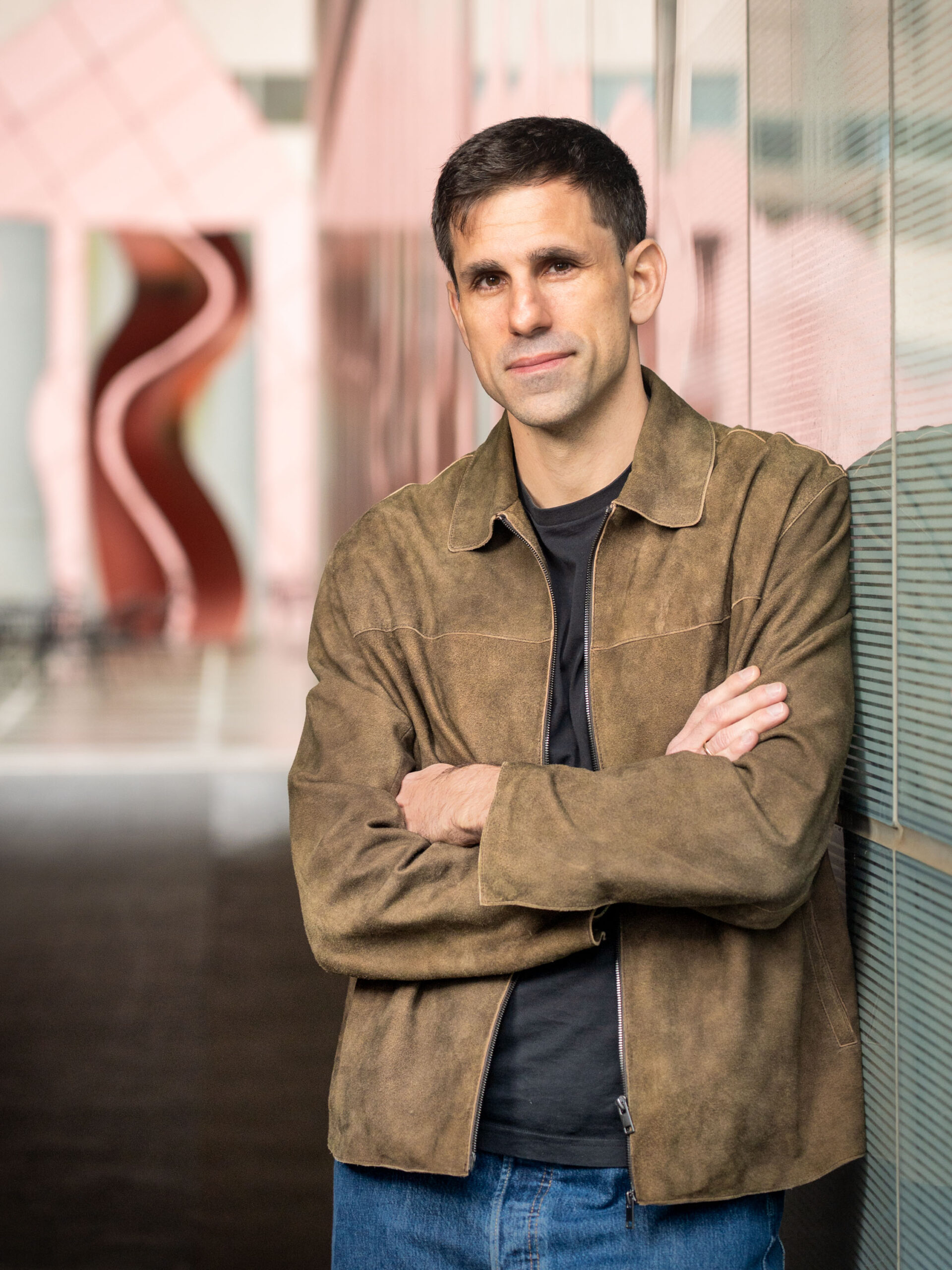
César de la Fuente, a bioengineer at the University of Pennsylvania, is leveraging artificial intelligence to combat the escalating issue of antimicrobial resistance. His innovative approach aims to identify new antibiotics from diverse genetic sources, addressing a crisis that currently leads to more than 4 million deaths globally each year due to resistant infections.
The Rising Threat of Antimicrobial Resistance
Two decades ago, as a teenager, de la Fuente recognized antimicrobial resistance as a critical global challenge. Today, this issue has intensified, with projections indicating that deaths from resistant infections could exceed 8 million annually by 2050, according to a recent analysis published in The Lancet. In a compelling essay featured in Physical Review Letters, de la Fuente and synthetic biologist James Collins highlighted the precarious state of antibiotic discovery, noting that the pipeline for new antibiotics is alarmingly thin due to high development costs and low financial returns.
De la Fuente’s research team is employing AI to explore the genetic codes of various organisms for antimicrobial peptides—short chains of amino acids that can potentially fight infections. By training AI models to search for these peptides, he aims to create novel combinations that could provide effective treatments against drug-resistant bacteria.
Innovative Discoveries and Future Directions
Since beginning this work, de la Fuente’s team has unearthed promising candidates from unexpected sources, including the genetic material of ancient single-celled organisms known as archaea, and even the venom of snakes and spiders. One of his ongoing projects, termed “molecular de-extinction,” involves analyzing genetic sequences from extinct species such as Neanderthals and woolly mammoths, in hopes of finding functional antimicrobial molecules.
Through this extensive research, de la Fuente’s team has compiled a library of over 1 million genetic recipes for potential antimicrobial compounds. His innovative methods have earned him numerous accolades, including recognition from the American Society for Microbiology and the American Chemical Society. In 2019, he was named one of the “35 Innovators Under 35” for his contributions to antibiotic discovery using computational techniques.
The challenge of antimicrobial resistance is daunting, but de la Fuente is undeterred. He views this issue as an opportunity for exploration and innovation. The traditional methods of antibiotic discovery often lead to dead ends, primarily due to the high costs and lengthy timelines involved. De la Fuente emphasizes that many pharmaceutical companies have exited the antibiotic market because of poor returns on investment. He believes that AI can change this narrative by streamlining the discovery process.
Current antibiotic discovery largely relies on traditional methods that involve digging into soil and water to extract potential antimicrobial molecules. However, the complexity of these molecules poses significant challenges, with researchers estimating the number of possible organic combinations that can be synthesized to be around 1060. For context, this number far exceeds the estimated 1018 grains of sand on Earth.
As Jonathan Stokes, a chemical biologist at McMaster University, points out, drug discovery is fundamentally a statistical game, where success depends on the ability to generate a sufficient number of viable candidates. AI enhances researchers’ efficiency, allowing them to identify antimicrobial peptides more accurately.
Despite the promise of AI, de la Fuente acknowledges that these peptides have not yet been transformed into effective drugs for clinical use. Critical details, such as dosage and delivery methods, still require extensive research. Nevertheless, antimicrobial peptides are particularly appealing because they are naturally occurring elements of the immune system, serving as the body’s first line of defense against infections.
De la Fuente’s research group represents a growing movement harnessing AI to advance antibiotic discovery. While he specializes in peptides, others like Collins and Stokes focus on small-molecule discovery, each contributing unique insights into the field. The shift towards generative AI models marks a significant evolution in drug discovery, allowing researchers to design new molecules from scratch.
In a notable achievement, de la Fuente’s team recently tested two synthetic peptides on mice infected with a drug-resistant strain of Acinetobacter baumannii, an organism classified as a “critical priority” by the World Health Organization in the fight against antimicrobial resistance. Both compounds successfully treated the infection, marking a significant step forward in the application of AI in medicine.
Looking ahead, de la Fuente is developing a sophisticated multimodal model called ApexOracle. This model aims to analyze new pathogens, identify their genetic vulnerabilities, and match them with effective antimicrobial peptides. Although still in the preliminary stages, this project represents a significant advance in the quest to develop new antibiotics.
De la Fuente is optimistic that AI can help researchers keep pace with the growing threat of antimicrobial resistance. He envisions a future where the technology not only accelerates research but also improves patient outcomes. With his ongoing efforts, he aims to turn innovative discoveries into life-saving treatments.

Robinhood Stock Surges 2.5% in Early Trading on March 17

Israel Intensifies Strikes as Global Energy Crisis Looms

CALV Offers Class on Communication Skills for Real Estate Professionals

Historic Bideford Pub Reopens as The Patch Wine Bar & Kitchen

Oscar Night Celebrations: Winners, Guests, and Exclusive After-Parties

Samsung Galaxy Watch 9 Set for Larger Battery Boost, Report Reveals

Kibble vs. Fresh Dog Food: What’s Best for Your Dog’s Health?

Acclaimed San Francisco Pizzeria Del Popolo to Close in May

‘Invincible’ Season 4 Launches on Prime Video with Epic Action

ALMA Discovers Companion Orbiting Giant Red Star π 1 Gruis

Doctoral Candidate Trivanni Yadav Advances Battery Research at UTulsa

Global Air Forces Ranked by Annual Defense Budgets in 2025

Rev. Bry Shields to Retire as McGill-Toolen President in 2026

Mass Production of F-35 Fighter Jet Drives Down Costs

Tucson Celebrates Life and Remembrance at 36th Annual All Souls Procession

Gold Investment Surge: Top Mutual Funds and ETF Alternatives

DirecTV to Launch AI-Driven Ads with User Likenesses in 2026

Paul Giamatti Reveals Villainous Role in Star Trek: Starfleet Academy
-
 Science9 months ago
ALMA Discovers Companion Orbiting Giant Red Star π 1 Gruis
-
 Science8 months ago
Doctoral Candidate Trivanni Yadav Advances Battery Research at UTulsa
-
 World10 months ago
Global Air Forces Ranked by Annual Defense Budgets in 2025
-
 Lifestyle9 months ago
Rev. Bry Shields to Retire as McGill-Toolen President in 2026
-
 World10 months ago
Mass Production of F-35 Fighter Jet Drives Down Costs
-
 Lifestyle9 months ago
Tucson Celebrates Life and Remembrance at 36th Annual All Souls Procession
-
 Business10 months ago
Gold Investment Surge: Top Mutual Funds and ETF Alternatives
-
 Top Stories10 months ago
DirecTV to Launch AI-Driven Ads with User Likenesses in 2026
-
 Entertainment10 months ago
Paul Giamatti Reveals Villainous Role in Star Trek: Starfleet Academy
-

 Top Stories10 months ago
New ‘Star Trek: Voyager’ Game Demo Released, Players Test Limits
-

 Lifestyle8 months ago
Maumee’s Shop With a Hero Event Delivers Joy to Local Children
-

 Lifestyle7 months ago
Cape May Shines as New Jersey’s Only Entry on Beach Town List