
Science
Scientists Explore Biosignatures in Exoplanet Atmospheres

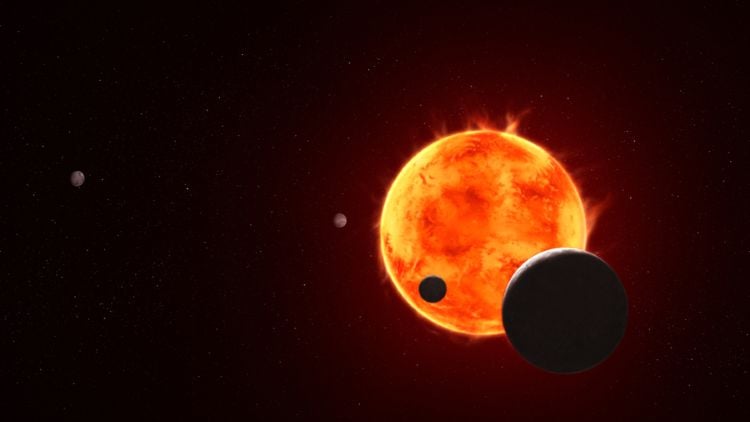
Researchers have recently submitted a manuscript that investigates the potential for discovering life within the clouds of exoplanet atmospheres. This study aims to identify the biosignatures of microbial life, which could significantly enhance our methods of detecting extraterrestrial organisms. By exploring how these biosignatures can be recognized in the atmospheres of distant planets, the team opens new avenues for astrobiological research.
The study involved a series of laboratory experiments focusing on seven airborne microbial strains collected from Earth’s atmosphere. Among these were strains related to Modestobacter versicolor, Roseomonas vinacea, Micrococcus luteus, Massilia niabensis, and Curtobacterium aetherium. The researchers employed spectroscopy to analyze the reflected light from these samples, also known as spectral features, to determine whether they could serve as indicators of biosignatures in exoplanetary atmospheres.
The findings revealed that each microbial sample displayed unique biosignatures, which could potentially be identified in the clouds and atmospheres of exoplanets. The authors concluded, “Here, we present an additional path for searching for life on Earth-like exoplanets: the search for biopigments as signs of life in clouds.” This research provides a crucial spectral reference to guide the detection and interpretation of potential biosignatures in the reflected light of Earth-like exoplanets during future missions.
Historical Context and Future Missions
The study draws inspiration from a 1976 investigation by renowned astronomer Dr. Carl Sagan and astrophysicist Dr. Ed Salpeter, who theorized about the possibility of life in Jupiter’s clouds. They proposed four types of organisms that could exist within the gas giant’s atmosphere: “Sinkers,” “Floaters,” “Hunters,” and “Scavengers,” each adapted to specific ecological niches.
Another significant motivation for this research is the upcoming Habitable Worlds Observatory (HWO), a planned space telescope set for launch in the 2040s. HWO aims to utilize spectroscopy to observe and analyze 25 habitable exoplanets for biosignatures. This raises the question of whether the biosignatures identified in this study could be detectable by HWO. The observatory’s broader mission will also include studies on galaxy growth, star formation, and various solar system objects.
NASA’s James Webb Space Telescope (JWST) has already made strides in exoplanet research. It has successfully observed several exoplanet atmospheres, such as WASP-39 b and WASP-17 b, located around 700 and 1,324 light-years away from Earth, respectively. For WASP-39 b, JWST identified water, carbon dioxide, and carbon monoxide in its atmosphere, while WASP-17 b showed the presence of quartz particles at high altitudes.
Most recently, JWST has published findings in *The Astrophysical Journal Letters* regarding the atmosphere of TRAPPIST-1 e, an Earth-sized exoplanet within its star’s habitable zone. The results from these observations did not confirm the existence of a substantial atmosphere but emphasize the need for further research to verify such findings. The TRAPPIST-1 system is approximately 41 light-years away and consists of seven known Earth-sized planets, three of which orbit within the habitable zone.
As researchers continue to explore the potential for life in exoplanet atmospheres and clouds, the implications of this study offer a promising trajectory for future investigations. The integration of laboratory findings with observational data from advanced telescopes could lead to significant breakthroughs in our understanding of life’s potential beyond Earth. As these explorations unfold, the scientific community remains engaged, eager to uncover new insights into the vast possibilities of extraterrestrial life.

Robinhood Stock Surges 2.5% in Early Trading on March 17

Israel Intensifies Strikes as Global Energy Crisis Looms

CALV Offers Class on Communication Skills for Real Estate Professionals

Historic Bideford Pub Reopens as The Patch Wine Bar & Kitchen

Oscar Night Celebrations: Winners, Guests, and Exclusive After-Parties

Samsung Galaxy Watch 9 Set for Larger Battery Boost, Report Reveals

Kibble vs. Fresh Dog Food: What’s Best for Your Dog’s Health?

Acclaimed San Francisco Pizzeria Del Popolo to Close in May

‘Invincible’ Season 4 Launches on Prime Video with Epic Action

ALMA Discovers Companion Orbiting Giant Red Star π 1 Gruis

Doctoral Candidate Trivanni Yadav Advances Battery Research at UTulsa

Global Air Forces Ranked by Annual Defense Budgets in 2025

Rev. Bry Shields to Retire as McGill-Toolen President in 2026

Mass Production of F-35 Fighter Jet Drives Down Costs

Tucson Celebrates Life and Remembrance at 36th Annual All Souls Procession

Gold Investment Surge: Top Mutual Funds and ETF Alternatives

DirecTV to Launch AI-Driven Ads with User Likenesses in 2026

Paul Giamatti Reveals Villainous Role in Star Trek: Starfleet Academy
-
 Science9 months ago
ALMA Discovers Companion Orbiting Giant Red Star π 1 Gruis
-
 Science8 months ago
Doctoral Candidate Trivanni Yadav Advances Battery Research at UTulsa
-
 World10 months ago
Global Air Forces Ranked by Annual Defense Budgets in 2025
-
 Lifestyle9 months ago
Rev. Bry Shields to Retire as McGill-Toolen President in 2026
-
 World10 months ago
Mass Production of F-35 Fighter Jet Drives Down Costs
-
 Lifestyle9 months ago
Tucson Celebrates Life and Remembrance at 36th Annual All Souls Procession
-
 Business10 months ago
Gold Investment Surge: Top Mutual Funds and ETF Alternatives
-
 Top Stories10 months ago
DirecTV to Launch AI-Driven Ads with User Likenesses in 2026
-
 Entertainment10 months ago
Paul Giamatti Reveals Villainous Role in Star Trek: Starfleet Academy
-

 Top Stories10 months ago
New ‘Star Trek: Voyager’ Game Demo Released, Players Test Limits
-

 Lifestyle8 months ago
Maumee’s Shop With a Hero Event Delivers Joy to Local Children
-
 Lifestyle7 months ago
Cape May Shines as New Jersey’s Only Entry on Beach Town List