
Science
Simulation Suggests Civil War Could Erupt Over ICE Actions

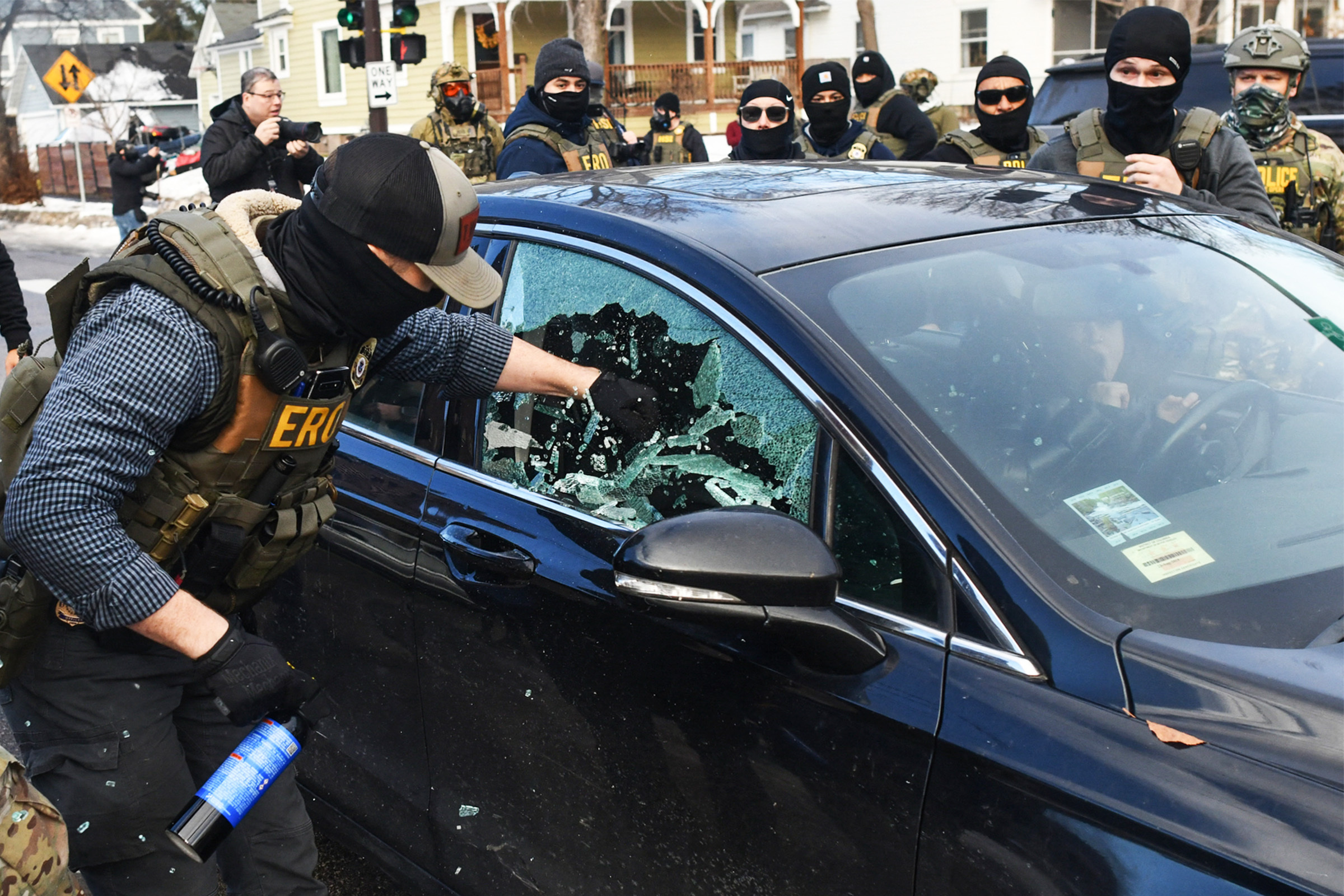
A recent simulation conducted by the Center for Ethics and the Rule of Law (CERL) at the University of Pennsylvania suggests that current actions by federal law enforcement in Minneapolis could potentially lead to a civil conflict in the United States. The experiment, which took place in October 2024, involved a scenario where a president ordered a controversial federal enforcement operation in the city.
In the simulation, the fictional president attempted to federalize the Pennsylvania National Guard to support the operation, which met resistance from the state’s governor. As the situation escalated, National Guard troops loyal to the state followed suit, prompting the president to deploy acting U.S. military personnel to take control of the city. According to CERL director Claire Finkelstein, the exercise concluded with a violent confrontation between state and federal forces, highlighting the potential for significant unrest in a major urban area.
Finkelstein shared insights from the simulation with the Guardian, noting that participants included actual government officials and former senior military leaders, all of whom did not view the scenario as unrealistic. The findings indicated that during a rapidly evolving civil emergency, courts might be largely ineffective in curbing federal overreach.
While the simulation reflects the tensions currently felt in Minneapolis, where residents have been impacted by actions from Immigration and Customs Enforcement (ICE), it diverges from reality in a critical aspect. Local and state officials appear to be refraining from outright confrontation with ICE agents. For instance, a 2025 municipal ordinance in Minneapolis explicitly prohibits police cooperation with ICE, yet does not allow interference in federal enforcement actions.
Furthermore, Minnesota’s governor, Tim Walz, has urged protesters to avoid acts of civil disobedience as he mobilizes the Minnesota National Guard. Although some interpreted this action as preparation to remove ICE agents from Minneapolis, state officials clarified that if the National Guard is deployed, their role will focus on maintaining public order, directing traffic, and safeguarding property during protests.
The current environment suggests that while tensions are high, the prospect of organized official resistance remains largely theoretical at this time. State power continues to be directed toward managing protests rather than confronting federal agents.
This simulation serves as a stark reminder of the potential consequences of escalating civil unrest and the importance of fostering dialogue between federal and state authorities to avoid a situation that could spiral into conflict. As the situation evolves, the focus remains on finding peaceful resolutions rather than allowing tensions to escalate further.

Robinhood Stock Surges 2.5% in Early Trading on March 17

Israel Intensifies Strikes as Global Energy Crisis Looms

CALV Offers Class on Communication Skills for Real Estate Professionals

Historic Bideford Pub Reopens as The Patch Wine Bar & Kitchen

Oscar Night Celebrations: Winners, Guests, and Exclusive After-Parties

Samsung Galaxy Watch 9 Set for Larger Battery Boost, Report Reveals

Kibble vs. Fresh Dog Food: What’s Best for Your Dog’s Health?

Acclaimed San Francisco Pizzeria Del Popolo to Close in May

‘Invincible’ Season 4 Launches on Prime Video with Epic Action

ALMA Discovers Companion Orbiting Giant Red Star π 1 Gruis

Doctoral Candidate Trivanni Yadav Advances Battery Research at UTulsa

Global Air Forces Ranked by Annual Defense Budgets in 2025

Rev. Bry Shields to Retire as McGill-Toolen President in 2026

Mass Production of F-35 Fighter Jet Drives Down Costs

Tucson Celebrates Life and Remembrance at 36th Annual All Souls Procession

Gold Investment Surge: Top Mutual Funds and ETF Alternatives

DirecTV to Launch AI-Driven Ads with User Likenesses in 2026

Paul Giamatti Reveals Villainous Role in Star Trek: Starfleet Academy
-
 Science9 months ago
ALMA Discovers Companion Orbiting Giant Red Star π 1 Gruis
-
 Science8 months ago
Doctoral Candidate Trivanni Yadav Advances Battery Research at UTulsa
-
 World10 months ago
Global Air Forces Ranked by Annual Defense Budgets in 2025
-
 Lifestyle10 months ago
Rev. Bry Shields to Retire as McGill-Toolen President in 2026
-
 World10 months ago
Mass Production of F-35 Fighter Jet Drives Down Costs
-
 Lifestyle9 months ago
Tucson Celebrates Life and Remembrance at 36th Annual All Souls Procession
-
 Business10 months ago
Gold Investment Surge: Top Mutual Funds and ETF Alternatives
-
 Top Stories10 months ago
DirecTV to Launch AI-Driven Ads with User Likenesses in 2026
-
 Entertainment10 months ago
Paul Giamatti Reveals Villainous Role in Star Trek: Starfleet Academy
-

 Lifestyle8 months ago
Maumee’s Shop With a Hero Event Delivers Joy to Local Children
-

 Top Stories10 months ago
New ‘Star Trek: Voyager’ Game Demo Released, Players Test Limits
-

 Lifestyle7 months ago
Cape May Shines as New Jersey’s Only Entry on Beach Town List