
World
Pentagon Aims for Early 2030s Launch of Sentinel ICBM Program

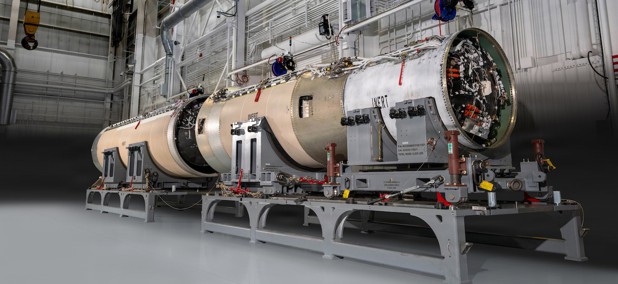
U.S. Air Force officials confirmed on Tuesday that the troubled Sentinel intercontinental ballistic missile (ICBM) program is on track to achieve significant milestones by the end of this year. The initial ICBM deployment is now targeted for the early 2030s, a change in timeline reflecting ongoing efforts to address previous setbacks in the program.
The Sentinel program, managed by Northrop Grumman, has faced considerable challenges. In 2024, it exceeded its budget so significantly that the Pentagon revoked its decision to advance the program into the engineering and manufacturing development phase, a critical step in its progression. Officials had initially hoped to resume this phase by mid-2027, but recent announcements suggest a renewed optimism in meeting key milestones sooner.
According to a statement from the Air Force, “Leveraging considerable progress over the last 12-18 months, program officials are executing a transformed acquisition strategy.” This strategy aims to complete the program’s restructure and achieve a Milestone B decision by the end of 2026, while delivering an initial capability targeted for the early 2030s.
Key Developments in the Sentinel Program
Air Force leaders highlighted several achievements that mark a turnaround for the Sentinel program. Successful ground tests, qualifications for solid rocket motors, and critical design reviews are cited as examples of the necessary progress made since the program triggered a Nunn-McCurdy Act review in 2024. This act is invoked when program costs exceed a certain threshold, prompting a review of the program’s viability.
Additionally, the establishment of a direct reporting portfolio manager role for critical major weapon systems—including the F-47, B-21, and Sentinel—was noted as a key factor in accelerating the program. Gen. Dale White was confirmed for this position in December. In his role, White has the authority to make decisions based on integrated inputs and in alignment with priorities set by the Secretary of War and the Secretary for the Air Force.
“The DRPM construct allows us to resolve tradeoffs quickly and move with the speed required to deliver credible deterrence,” White stated. He emphasized the importance of maintaining the discipline necessary for the mission.
Critics, such as Todd Harrison, a defense budget expert at the American Enterprise Institute, interpret the new role as a sign of diminishing confidence in the Air Force’s ability to manage its acquisition programs. Harrison remarked, “This signifies a major lack of confidence in the Air Force to pull off its main acquisition programs.”
Infrastructure Developments and Future Plans
Infrastructure for the Sentinel program is also advancing. Construction has commenced on the first of three new command and control centers at F.E. Warren Air Force Base in Wyoming, along with test facilities at Vandenberg Space Force Base in California.
This month, teams plan to break ground on a prototype launch silo at Northrop Grumman’s site in Promontory, Utah. This facility will allow engineers to test and refine modern construction techniques, validating the new silo design ahead of construction in the missile fields. Prototyping activities this summer at F.E. Warren aim to verify construction methods for utility corridors.
The initial missile pad launch for Sentinel is scheduled for 2027. Navy Adm. Richard Correll, head of U.S. Strategic Command, expressed confidence in the program’s trajectory. “The deliberate progress being made on Sentinel ensures that for decades to come, there will be no doubt in the minds of our adversaries about the credibility and readiness of our nation’s nuclear deterrent,” he stated.
The ongoing developments within the Sentinel program highlight its critical role in the U.S. nuclear triad and underscore the urgency of its successful implementation in the coming years.

Robinhood Stock Surges 2.5% in Early Trading on March 17

Israel Intensifies Strikes as Global Energy Crisis Looms

CALV Offers Class on Communication Skills for Real Estate Professionals

Historic Bideford Pub Reopens as The Patch Wine Bar & Kitchen

Oscar Night Celebrations: Winners, Guests, and Exclusive After-Parties

Samsung Galaxy Watch 9 Set for Larger Battery Boost, Report Reveals

Kibble vs. Fresh Dog Food: What’s Best for Your Dog’s Health?

Acclaimed San Francisco Pizzeria Del Popolo to Close in May

‘Invincible’ Season 4 Launches on Prime Video with Epic Action

ALMA Discovers Companion Orbiting Giant Red Star π 1 Gruis

Doctoral Candidate Trivanni Yadav Advances Battery Research at UTulsa

Global Air Forces Ranked by Annual Defense Budgets in 2025

Rev. Bry Shields to Retire as McGill-Toolen President in 2026

Mass Production of F-35 Fighter Jet Drives Down Costs

DirecTV to Launch AI-Driven Ads with User Likenesses in 2026

Gold Investment Surge: Top Mutual Funds and ETF Alternatives

Tucson Celebrates Life and Remembrance at 36th Annual All Souls Procession

New ‘Star Trek: Voyager’ Game Demo Released, Players Test Limits
-
 Science8 months ago
ALMA Discovers Companion Orbiting Giant Red Star π 1 Gruis
-
 Science8 months ago
Doctoral Candidate Trivanni Yadav Advances Battery Research at UTulsa
-
 World9 months ago
Global Air Forces Ranked by Annual Defense Budgets in 2025
-
 Lifestyle9 months ago
Rev. Bry Shields to Retire as McGill-Toolen President in 2026
-
 World9 months ago
Mass Production of F-35 Fighter Jet Drives Down Costs
-
 Top Stories9 months ago
DirecTV to Launch AI-Driven Ads with User Likenesses in 2026
-
 Business9 months ago
Gold Investment Surge: Top Mutual Funds and ETF Alternatives
-
 Lifestyle8 months ago
Tucson Celebrates Life and Remembrance at 36th Annual All Souls Procession
-
 Top Stories9 months ago
New ‘Star Trek: Voyager’ Game Demo Released, Players Test Limits
-

 Entertainment9 months ago
Paul Giamatti Reveals Villainous Role in Star Trek: Starfleet Academy
-

 Entertainment9 months ago
Freeport Art Gallery Transforms Waste into Creative Masterpieces
-
 Science9 months ago
NTSB Report Reveals Hull Damage Caused Titan Submersible Implosion