
Science
Unveiling Neutron Stars: Extreme Density and Cosmic Mysteries

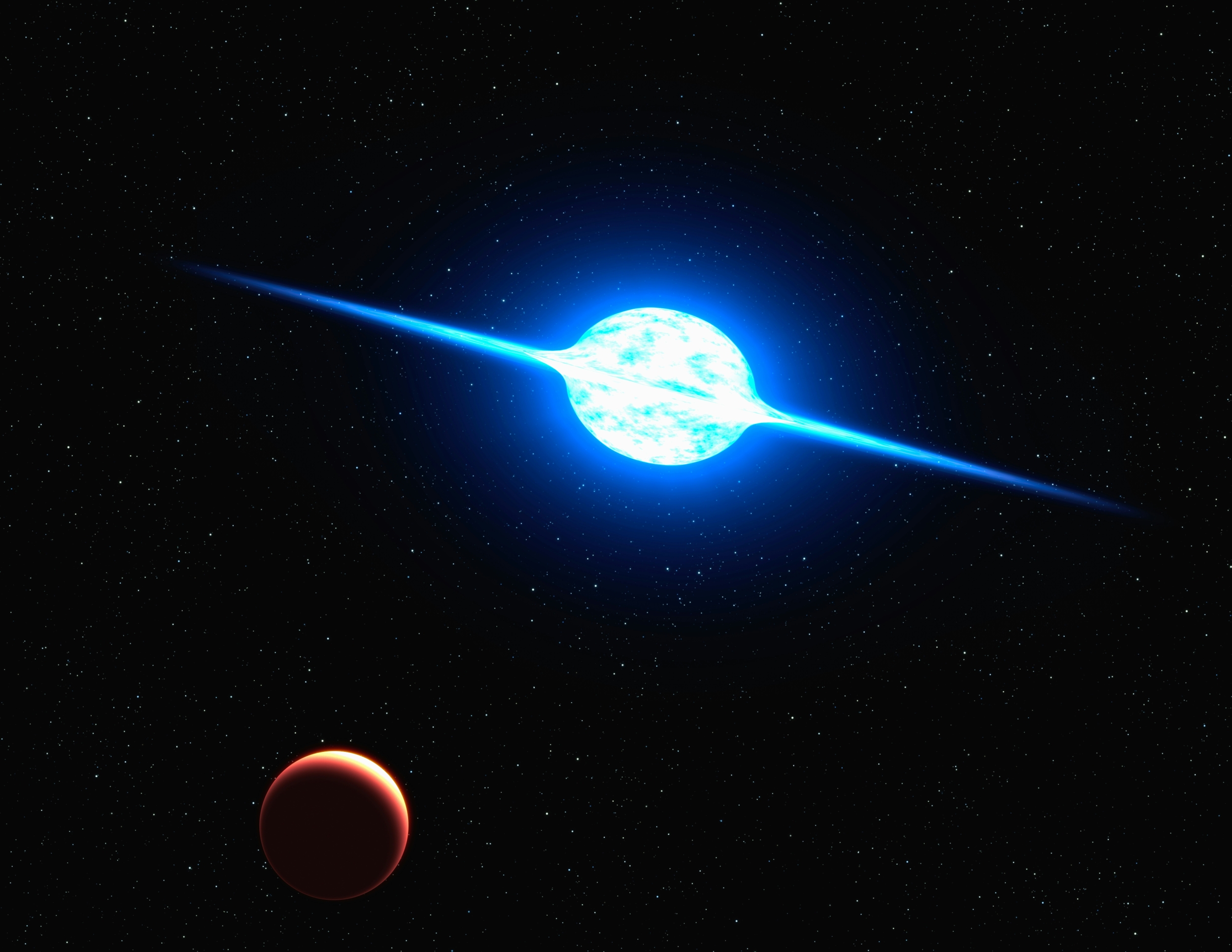
Neutron stars, some of the most extreme objects in the universe, form from the remnants of massive stars that have reached the end of their life cycles. When stars with masses between eight and twenty times that of the Sun exhaust their nuclear fuel, gravity takes over, leading to a cataclysmic supernova. This explosive event leaves behind a stellar remnant roughly the size of a city while containing more mass than the Sun itself.
The densities within these collapsed stars are staggering, often reaching around 1017 kilograms per cubic meter. To put this into perspective, such density is akin to compressing the entire mass of Mount Everest into a single teaspoon. At these levels, atomic structures break down, causing protons and electrons to merge into neutrons. This phenomenon generates neutron degeneracy pressure, a quantum force that halts further collapse, preventing the formation of black holes.
Formation and Structure of Neutron Stars
Neutron stars are born from core-collapse supernovae, where the fusion process in a massive star’s iron core ceases to produce energy. As the internal pressure diminishes, electrons are forced into protons, resulting in the creation of neutrons and a significant release of neutrinos that carry away most of the star’s gravitational binding energy. The violent rebound of this collapse ejects the star’s outer layers while the core compresses into a neutron star.
Structurally, neutron stars exhibit distinct internal layers shaped by extreme pressure. The outer crust is composed of tightly packed atomic nuclei, while deeper regions experience a phenomenon known as “neutron drip,” where neutrons escape atomic bonds. Below this crust lies a superfluid outer core dominated by free neutrons, which may transition into quark matter in the innermost layer.
The mass limit for stable neutron stars is approximately 2.2 solar masses. Beyond this threshold, the neutron degeneracy pressure becomes insufficient to support the star, resulting in further collapse into a black hole. This delineates a clear boundary between neutron stars and black holes, emphasizing the drastic changes in stellar evolution.
Dynamic Properties and Observational Insights
As neutron stars collapse, they conserve angular momentum, leading to rapid rotation speeds. A progenitor star that once rotated once per day may evolve into a neutron star spinning hundreds of times per second. Some millisecond pulsars achieve rotational frequencies exceeding 700 hertz, emitting precisely timed radio pulses that can be detected across the Milky Way.
Among the fascinating subtypes of neutron stars are magnetars, which exhibit extraordinarily strong magnetic fields that can exceed 1015 gauss. These intense fields can fracture the star’s crust, leading to starquakes that release gamma-ray bursts more powerful than typical supernovae. This highlights the potential for collapsed stars to store and release massive amounts of energy through magnetic processes.
Observational advancements in gravitational-wave astronomy have revolutionized our understanding of neutron stars. The detection of GW170817 confirmed that merging neutron stars generate ripples in spacetime measurable across hundreds of millions of light-years. Such events have established a direct connection between neutron star mergers and the synthesis of heavy elements like gold and platinum, essential for the formation of planets and life.
The NICER (Neutron Star Interior Composition Explorer) mission aboard the International Space Station has played a significant role in refining measurements of neutron star properties. By analyzing X-ray hotspots on rotating neutron stars, astronomers are able to confirm mass-radius relationships that support the existence of dense yet stable cores.
Neutron stars also undergo cooling processes, initially losing heat rapidly through neutrino emission during their early life. As this output diminishes, surface cooling slows and is dominated by photon radiation. Observations of cooling curves provide insights into the superfluidity of the core, with sudden temperature drops suggesting enhanced neutrino processes linked to paired neutrons.
The study of neutron stars extends beyond theoretical physics, as these stellar remnants contribute to the chemical evolution of galaxies. Binary neutron star mergers eject neutron-rich material, seeding galaxies with heavy elements, which are crucial for the development of complex structures, including planets and, ultimately, life itself.
Neutron stars serve as laboratories for testing the fundamental principles of nuclear physics, relativity, and quantum mechanics under conditions that cannot be replicated on Earth. As observational technologies continue to improve, insights into the formation, evolution, and collisions of neutron stars will deepen our understanding of the universe’s most extreme environments. Each discovery enhances the narrative of cosmic evolution, illuminating the profound connections between these stellar remnants and the fabric of the cosmos.

Robinhood Stock Surges 2.5% in Early Trading on March 17

Israel Intensifies Strikes as Global Energy Crisis Looms

CALV Offers Class on Communication Skills for Real Estate Professionals

Historic Bideford Pub Reopens as The Patch Wine Bar & Kitchen

Oscar Night Celebrations: Winners, Guests, and Exclusive After-Parties

Samsung Galaxy Watch 9 Set for Larger Battery Boost, Report Reveals

Kibble vs. Fresh Dog Food: What’s Best for Your Dog’s Health?

Acclaimed San Francisco Pizzeria Del Popolo to Close in May

‘Invincible’ Season 4 Launches on Prime Video with Epic Action

ALMA Discovers Companion Orbiting Giant Red Star π 1 Gruis

Doctoral Candidate Trivanni Yadav Advances Battery Research at UTulsa

Global Air Forces Ranked by Annual Defense Budgets in 2025

Rev. Bry Shields to Retire as McGill-Toolen President in 2026

Mass Production of F-35 Fighter Jet Drives Down Costs

Tucson Celebrates Life and Remembrance at 36th Annual All Souls Procession

Gold Investment Surge: Top Mutual Funds and ETF Alternatives

DirecTV to Launch AI-Driven Ads with User Likenesses in 2026

Paul Giamatti Reveals Villainous Role in Star Trek: Starfleet Academy
-
 Science9 months ago
ALMA Discovers Companion Orbiting Giant Red Star π 1 Gruis
-
 Science8 months ago
Doctoral Candidate Trivanni Yadav Advances Battery Research at UTulsa
-
 World10 months ago
Global Air Forces Ranked by Annual Defense Budgets in 2025
-
 Lifestyle10 months ago
Rev. Bry Shields to Retire as McGill-Toolen President in 2026
-
 World10 months ago
Mass Production of F-35 Fighter Jet Drives Down Costs
-
 Lifestyle9 months ago
Tucson Celebrates Life and Remembrance at 36th Annual All Souls Procession
-
 Business10 months ago
Gold Investment Surge: Top Mutual Funds and ETF Alternatives
-
 Top Stories10 months ago
DirecTV to Launch AI-Driven Ads with User Likenesses in 2026
-
 Entertainment10 months ago
Paul Giamatti Reveals Villainous Role in Star Trek: Starfleet Academy
-

 Lifestyle8 months ago
Maumee’s Shop With a Hero Event Delivers Joy to Local Children
-

 Top Stories10 months ago
New ‘Star Trek: Voyager’ Game Demo Released, Players Test Limits
-

 Lifestyle8 months ago
Cape May Shines as New Jersey’s Only Entry on Beach Town List