
Science
Human-Plant Hybrid Cells Illuminate Role of Junk DNA

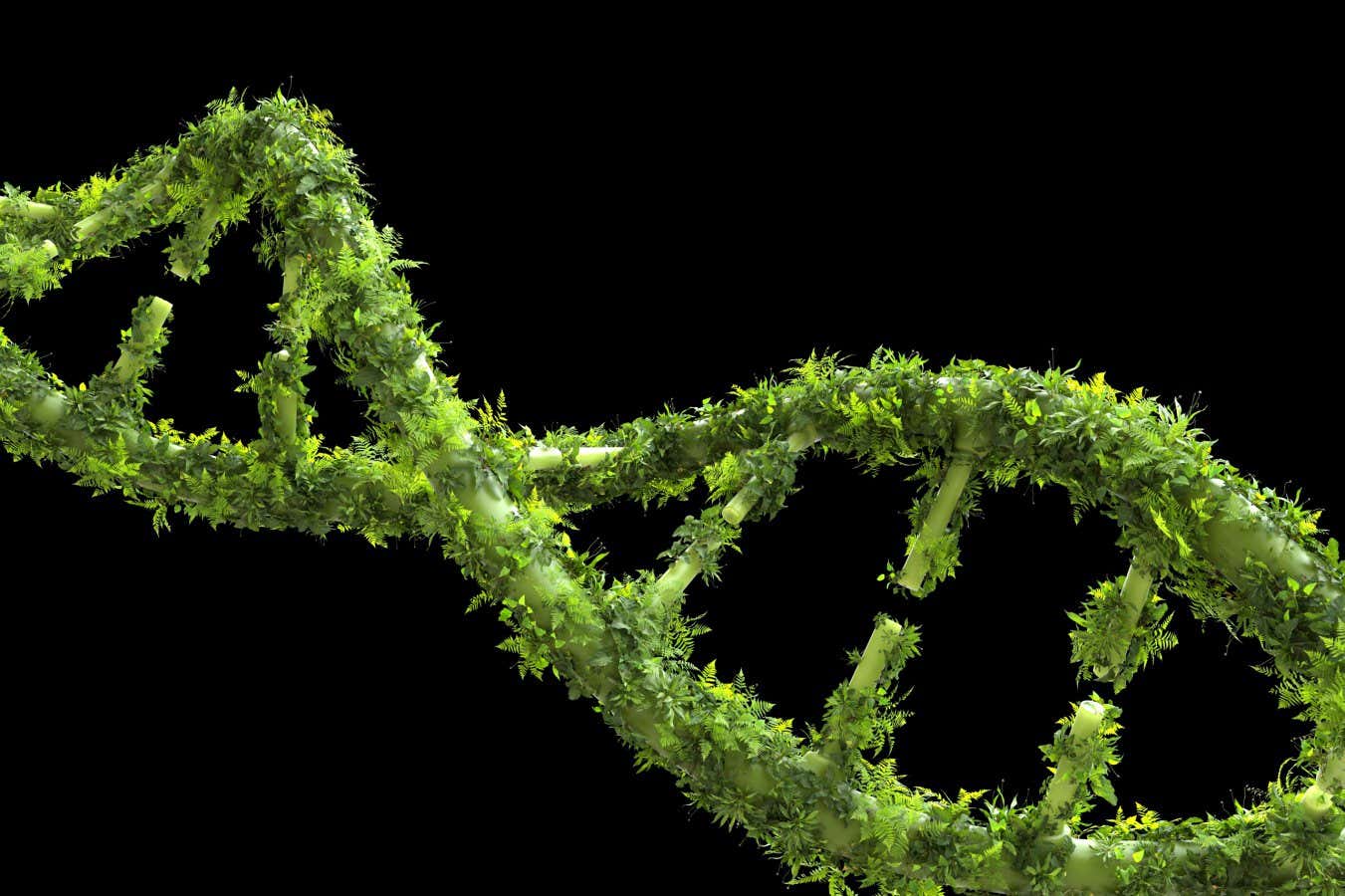
Recent research involving hybrid cells that contain both human and plant DNA has provided significant insights into the largely debated concept of “junk DNA” within the human genome. A team led by researchers from the University of Auckland in New Zealand has discovered that the activity observed within vast segments of DNA, previously considered non-functional, may largely be noise rather than serving a crucial biological purpose.
The study focused on cells that included substantial portions of DNA from the plant species Arabidopsis thaliana, which were created by researchers in Japan. The aim was to scrutinize how this plant DNA behaved in a human cellular environment. Initial hypotheses suggested that because this DNA is effectively random, it would not demonstrate significant activity. Contrary to expectations, the findings revealed that the plant DNA exhibited around 80 percent of the activity seen in human DNA.
The implications of these results challenge the notion that all genomic activity indicates functional significance. According to Brett Adey, one of the study’s authors, “A large amount can simply be explained by background noise,” supporting the argument that much of the human genome might not be as vital as previously thought. This aligns with the long-standing theory that a significant portion of the human genome is composed of “junk” DNA, which, despite appearing active, does not contribute to essential cellular functions.
Understanding DNA Functionality and Activity
Historically, the primary role of DNA has been understood as a repository for genetic instructions used in protein synthesis, the essential building blocks of life. Yet, it is now known that only about 1.2 percent of the human genome directly codes for proteins. This raises critical questions about the purpose of the remaining DNA, with many scientists arguing that it serves little to no functional role.
In a noteworthy project in 2012, the ENCODE initiative asserted that over 80 percent of the human genome was active, suggesting that such non-coding regions might have undiscovered functions. This perspective introduced the concept of “dark DNA,” referring to segments of DNA that are active but not yet understood in terms of their biological significance. Yet, this latest research counters that claim by indicating that much of this activity may simply be biological noise.
In response to the ongoing debate, Sean Eddy from Harvard University had previously proposed a “random genome project,” questioning whether introducing random synthetic DNA into human cells would yield similar activity levels observed by ENCODE. The recent study, which utilized hybrid cells containing 35 million base pairs of plant DNA, appears to support Eddy’s hypothesis by demonstrating comparable activity levels between human and plant DNA.
Implications of the Findings
The research team, including Austen Ganley, suggests that their findings underscore the chaotic nature of biological systems. “This is an excellent demonstration of how biology is, indeed, noisy,” remarked Chris Ponting, from the University of Edinburgh. The study indicates that the biochemical activities observed within the plant DNA do not provide any functional benefits to the human cells, reinforcing the argument that much of the human genome is indeed non-essential.
Despite these findings, the researchers noted that human DNA still exhibited approximately 25 percent more activity than the plant DNA, a discrepancy that requires further investigation. While it is possible that some of the additional RNAs produced have functions, the overarching conclusion remains that the majority of non-coding DNA is likely to be classified as junk.
The team is currently exploring advanced methodologies, including machine learning, to differentiate between biologically meaningful activity and background noise. The results of this research, which aim to expand our understanding of genomic functionality, are expected to be published in the near future, potentially influencing ongoing discussions in genomics and evolutionary biology.
As the scientific community continues to unravel the complexities of the human genome, this study marks a significant step towards clarifying the function of regions once deemed extraneous.

Robinhood Stock Surges 2.5% in Early Trading on March 17

Israel Intensifies Strikes as Global Energy Crisis Looms

CALV Offers Class on Communication Skills for Real Estate Professionals

Historic Bideford Pub Reopens as The Patch Wine Bar & Kitchen

Oscar Night Celebrations: Winners, Guests, and Exclusive After-Parties

Samsung Galaxy Watch 9 Set for Larger Battery Boost, Report Reveals

Kibble vs. Fresh Dog Food: What’s Best for Your Dog’s Health?

Acclaimed San Francisco Pizzeria Del Popolo to Close in May

‘Invincible’ Season 4 Launches on Prime Video with Epic Action

ALMA Discovers Companion Orbiting Giant Red Star π 1 Gruis

Doctoral Candidate Trivanni Yadav Advances Battery Research at UTulsa

Global Air Forces Ranked by Annual Defense Budgets in 2025

Rev. Bry Shields to Retire as McGill-Toolen President in 2026

Mass Production of F-35 Fighter Jet Drives Down Costs

Tucson Celebrates Life and Remembrance at 36th Annual All Souls Procession

Gold Investment Surge: Top Mutual Funds and ETF Alternatives

DirecTV to Launch AI-Driven Ads with User Likenesses in 2026

Paul Giamatti Reveals Villainous Role in Star Trek: Starfleet Academy
-
 Science9 months ago
ALMA Discovers Companion Orbiting Giant Red Star π 1 Gruis
-
 Science8 months ago
Doctoral Candidate Trivanni Yadav Advances Battery Research at UTulsa
-
 World10 months ago
Global Air Forces Ranked by Annual Defense Budgets in 2025
-
 Lifestyle10 months ago
Rev. Bry Shields to Retire as McGill-Toolen President in 2026
-
 World10 months ago
Mass Production of F-35 Fighter Jet Drives Down Costs
-
 Lifestyle9 months ago
Tucson Celebrates Life and Remembrance at 36th Annual All Souls Procession
-
 Business10 months ago
Gold Investment Surge: Top Mutual Funds and ETF Alternatives
-
 Top Stories10 months ago
DirecTV to Launch AI-Driven Ads with User Likenesses in 2026
-
 Entertainment10 months ago
Paul Giamatti Reveals Villainous Role in Star Trek: Starfleet Academy
-

 Lifestyle8 months ago
Maumee’s Shop With a Hero Event Delivers Joy to Local Children
-

 Top Stories10 months ago
New ‘Star Trek: Voyager’ Game Demo Released, Players Test Limits
-

 Lifestyle8 months ago
Cape May Shines as New Jersey’s Only Entry on Beach Town List