
Science
Mars Dust Storms Emit Electricity, Transforming Planetary Science

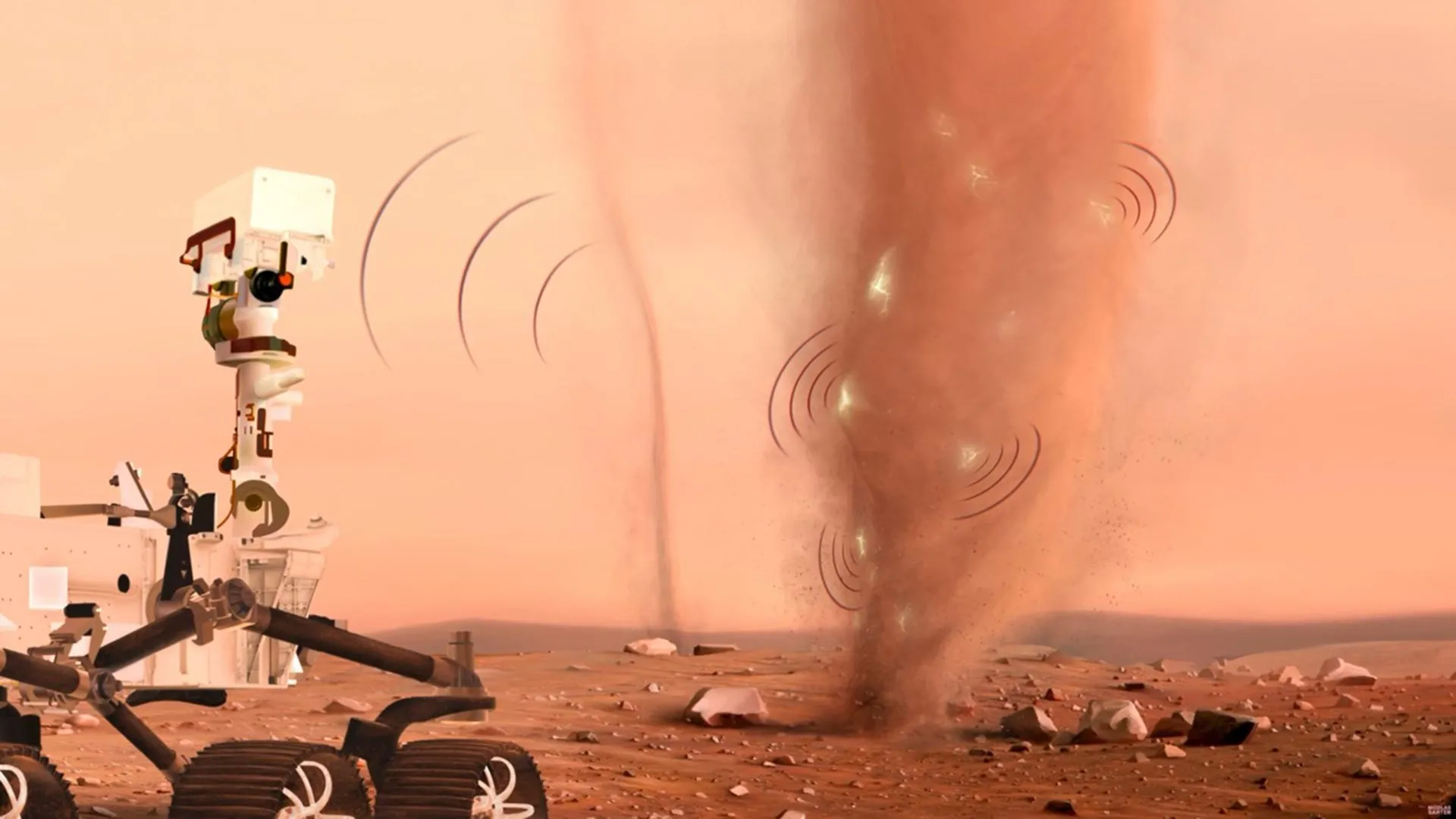
Martian dust storms are now recognized for their unique ability to produce electrical discharges, a phenomenon recently documented by the microphone on NASA’s Perseverance rover. This groundbreaking discovery, made public on December 29, 2025, reveals that dust devils on Mars can generate tiny electric sparks, which may significantly alter our understanding of the Red Planet’s atmosphere and chemistry.
Researchers from the Institut de recherche en astrophysique et planétologie and the laboratoire Atmosphères et observations spatiales analyzed audio recordings from Perseverance’s SuperCam instrument. They identified electromagnetic and acoustic signals arising from electric discharges at the heart of dust devils. This marks the first time that such activity has been directly observed in the Martian atmosphere, a significant milestone in planetary science.
Understanding the Mechanism Behind Electric Sparks
Electricity is generated when countless tiny dust particles collide and rub against one another, creating friction that builds static charges. On Mars, these charges are released as brief electric arcs, typically only a few centimeters long. The phenomenon is similar to the mild static shocks experienced on Earth, particularly in dry conditions.
The thin Martian atmosphere, predominantly composed of carbon dioxide, facilitates the generation of these electric charges. Scientists note that it requires significantly less energy to create sparks on Mars compared to Earth, making the planet a more conducive environment for such electrical activity.
The implications of these findings extend beyond mere scientific curiosity. The discovery of electric discharges suggests that Mars’ atmosphere can reach charge levels sufficient to produce highly oxidizing compounds. These reactive substances can decompose organic molecules on the surface and alter various atmospheric chemicals. This may offer insights into the rapid disappearance of methane on Mars, a long-standing mystery, as electrically driven reactions could be destroying methane more quickly than previously understood.
Impacts on Martian Climate and Future Exploration
The presence of electrical charging in dust storms could also influence the movement of dust across Mars. Dust plays a crucial role in shaping the planet’s weather and climate, and understanding these effects is essential for deciphering atmospheric behavior, which remains largely unexplored.
Additionally, the potential for electrical discharges to interfere with sensitive electronics on robotic spacecraft raises practical concerns for future missions. If not properly managed, these discharges could pose hazards for upcoming human explorations of Mars.
Since landing on Mars, the SuperCam microphone has captured over 30 hours of audio, including wind gusts and the sounds of the Ingenuity helicopter. This ongoing research emphasizes the importance of sound recordings in planetary exploration, revealing hidden processes that might otherwise go unnoticed.
The findings underscore the need for continued research into Mars’ atmospheric phenomena, as each discovery deepens our understanding of the planet and its potential for supporting life.

Robinhood Stock Surges 2.5% in Early Trading on March 17

Israel Intensifies Strikes as Global Energy Crisis Looms

CALV Offers Class on Communication Skills for Real Estate Professionals

Historic Bideford Pub Reopens as The Patch Wine Bar & Kitchen

Oscar Night Celebrations: Winners, Guests, and Exclusive After-Parties

Samsung Galaxy Watch 9 Set for Larger Battery Boost, Report Reveals

Kibble vs. Fresh Dog Food: What’s Best for Your Dog’s Health?

Acclaimed San Francisco Pizzeria Del Popolo to Close in May

‘Invincible’ Season 4 Launches on Prime Video with Epic Action

ALMA Discovers Companion Orbiting Giant Red Star π 1 Gruis

Doctoral Candidate Trivanni Yadav Advances Battery Research at UTulsa

Global Air Forces Ranked by Annual Defense Budgets in 2025

Rev. Bry Shields to Retire as McGill-Toolen President in 2026

Mass Production of F-35 Fighter Jet Drives Down Costs

Tucson Celebrates Life and Remembrance at 36th Annual All Souls Procession

Gold Investment Surge: Top Mutual Funds and ETF Alternatives

DirecTV to Launch AI-Driven Ads with User Likenesses in 2026

Paul Giamatti Reveals Villainous Role in Star Trek: Starfleet Academy
-
 Science9 months ago
ALMA Discovers Companion Orbiting Giant Red Star π 1 Gruis
-
 Science8 months ago
Doctoral Candidate Trivanni Yadav Advances Battery Research at UTulsa
-
 World10 months ago
Global Air Forces Ranked by Annual Defense Budgets in 2025
-
 Lifestyle10 months ago
Rev. Bry Shields to Retire as McGill-Toolen President in 2026
-
 World10 months ago
Mass Production of F-35 Fighter Jet Drives Down Costs
-
 Lifestyle9 months ago
Tucson Celebrates Life and Remembrance at 36th Annual All Souls Procession
-
 Business10 months ago
Gold Investment Surge: Top Mutual Funds and ETF Alternatives
-
 Top Stories10 months ago
DirecTV to Launch AI-Driven Ads with User Likenesses in 2026
-
 Entertainment10 months ago
Paul Giamatti Reveals Villainous Role in Star Trek: Starfleet Academy
-

 Top Stories10 months ago
New ‘Star Trek: Voyager’ Game Demo Released, Players Test Limits
-

 Lifestyle8 months ago
Maumee’s Shop With a Hero Event Delivers Joy to Local Children
-

 Lifestyle8 months ago
Cape May Shines as New Jersey’s Only Entry on Beach Town List