
Science
NASA Plans Rollback of Artemis II Rocket to Address Helium Issue

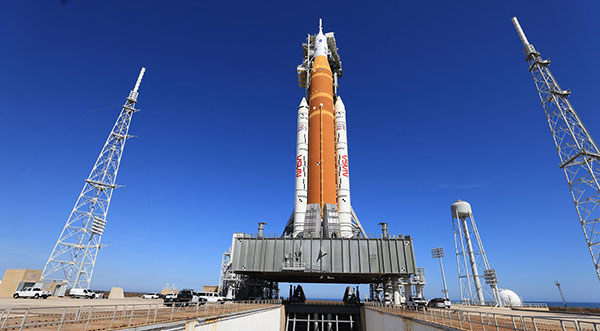
NASA is preparing to potentially roll back the Artemis II rocket and Orion spacecraft to the Vehicle Assembly Building (VAB) at the Kennedy Space Center in Florida. This decision follows an incident on February 21, 2024, when engineers observed an interrupted flow of helium to the Space Launch System (SLS) rocket’s interim cryogenic propulsion stage.
The situation arose during routine operations following a successful wet dress rehearsal that concluded on February 19. Engineers are currently reviewing data to identify the root causes of the helium flow issue. Potential problems could stem from the interface between the ground and rocket lines, a valve in the upper stage, or a filter that connects the two systems.
Rollback Preparations Underway
To facilitate troubleshooting, teams are making arrangements to remove the access platforms installed at Launch Pad B. These platforms cannot be removed during high winds, which are forecasted for the coming days. The rollback would signify that NASA will not be able to launch Artemis II during the March launch window.
Should a rollback occur, NASA aims to preserve the possibility of an April launch, contingent upon the findings from data analysis and subsequent repair efforts. In the meantime, operators are employing a backup method to maintain environmental conditions for the upper stage engines and the rocket, which remains in a safe configuration.
NASA previously encountered helium-related pressurization challenges with the upper stage during the Artemis I mission, which may provide relevant data as teams work to resolve the current issue.
The Artemis II mission is significant, featuring a crew that includes NASA astronauts Reid Wiseman, Victor Glover, and Christina Koch, alongside Jeremy Hansen from the Canadian Space Agency. This mission is part of NASA’s broader Artemis program, aimed at returning humans to the Moon and eventually preparing for future missions to Mars.
As the agency continues to address this critical issue, updates will follow, reflecting the ongoing efforts to ensure the success of the Artemis II mission.

Robinhood Stock Surges 2.5% in Early Trading on March 17

Israel Intensifies Strikes as Global Energy Crisis Looms

CALV Offers Class on Communication Skills for Real Estate Professionals

Historic Bideford Pub Reopens as The Patch Wine Bar & Kitchen

Oscar Night Celebrations: Winners, Guests, and Exclusive After-Parties

Samsung Galaxy Watch 9 Set for Larger Battery Boost, Report Reveals

Kibble vs. Fresh Dog Food: What’s Best for Your Dog’s Health?

Acclaimed San Francisco Pizzeria Del Popolo to Close in May

‘Invincible’ Season 4 Launches on Prime Video with Epic Action

ALMA Discovers Companion Orbiting Giant Red Star π 1 Gruis

Doctoral Candidate Trivanni Yadav Advances Battery Research at UTulsa

Global Air Forces Ranked by Annual Defense Budgets in 2025

Rev. Bry Shields to Retire as McGill-Toolen President in 2026

Mass Production of F-35 Fighter Jet Drives Down Costs

Tucson Celebrates Life and Remembrance at 36th Annual All Souls Procession

Gold Investment Surge: Top Mutual Funds and ETF Alternatives

DirecTV to Launch AI-Driven Ads with User Likenesses in 2026

Paul Giamatti Reveals Villainous Role in Star Trek: Starfleet Academy
-
 Science9 months ago
ALMA Discovers Companion Orbiting Giant Red Star π 1 Gruis
-
 Science8 months ago
Doctoral Candidate Trivanni Yadav Advances Battery Research at UTulsa
-
 World10 months ago
Global Air Forces Ranked by Annual Defense Budgets in 2025
-
 Lifestyle9 months ago
Rev. Bry Shields to Retire as McGill-Toolen President in 2026
-
 World10 months ago
Mass Production of F-35 Fighter Jet Drives Down Costs
-
 Lifestyle9 months ago
Tucson Celebrates Life and Remembrance at 36th Annual All Souls Procession
-
 Business10 months ago
Gold Investment Surge: Top Mutual Funds and ETF Alternatives
-
 Top Stories10 months ago
DirecTV to Launch AI-Driven Ads with User Likenesses in 2026
-
 Entertainment10 months ago
Paul Giamatti Reveals Villainous Role in Star Trek: Starfleet Academy
-

 Top Stories10 months ago
New ‘Star Trek: Voyager’ Game Demo Released, Players Test Limits
-

 Lifestyle7 months ago
Cape May Shines as New Jersey’s Only Entry on Beach Town List
-

 Lifestyle8 months ago
Maumee’s Shop With a Hero Event Delivers Joy to Local Children