
Science
NASA’s Webb Telescope Detects Unclassified Cosmic Objects

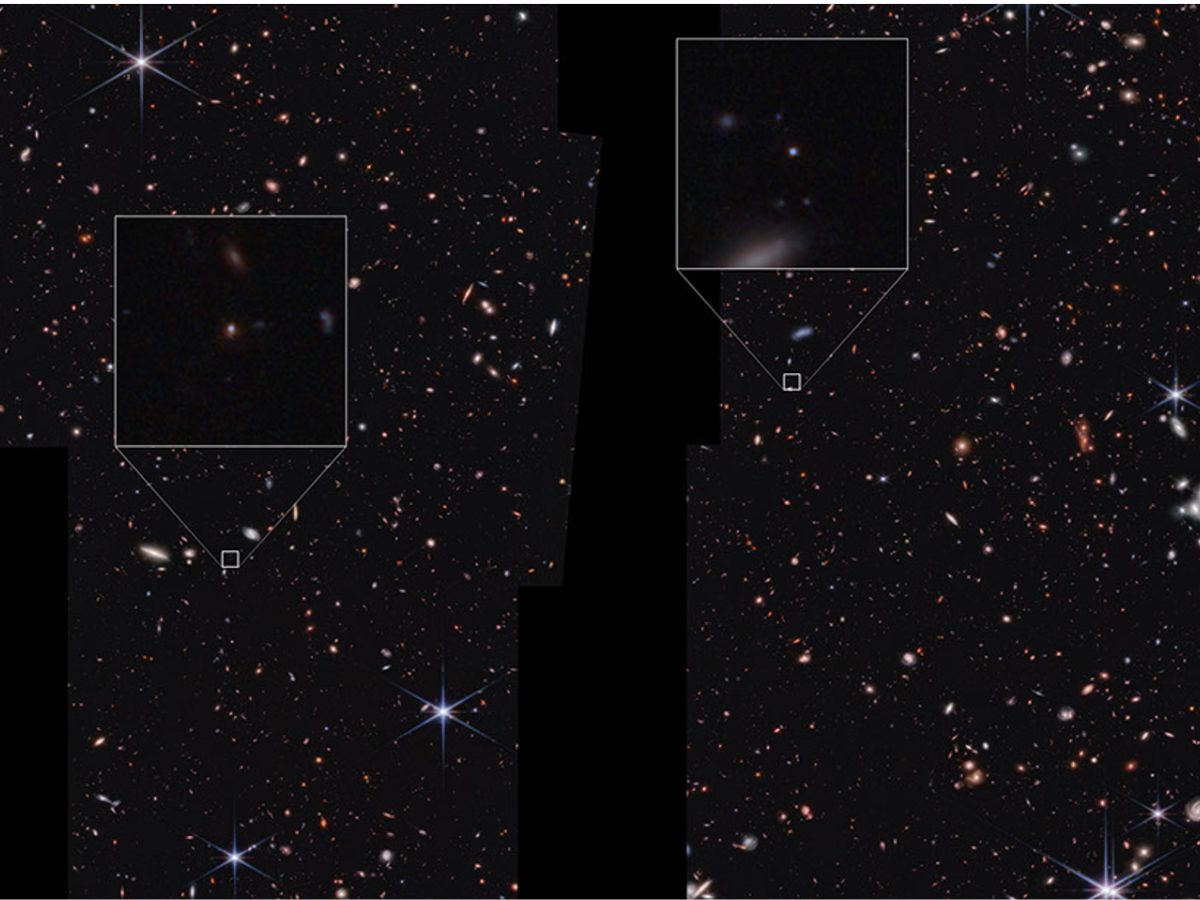
The James Webb Space Telescope has made a groundbreaking discovery, identifying several cosmic objects that defy any existing astronomical classification. This finding, announced in June 2023, raises intriguing questions about the nature of these objects and their place in the universe.
The telescope, which launched in December 2021, has been instrumental in advancing our understanding of the cosmos. Its advanced capabilities allow scientists to observe the universe in unprecedented detail. The recent findings include objects that exhibit unusual properties and behaviors, which challenge the conventional categories used by astronomers.
Exploring the Unknown
Researchers at NASA have noted that some of these newly discovered objects share characteristics with known celestial bodies, yet they do not conform to established classifications such as stars, planets, or galaxies. This discrepancy is compelling scientists to reconsider the frameworks they have used for years. As NASA astronomer Jane Doe stated, “These findings push the boundaries of our understanding and highlight how much we still have to learn about the universe.”
The objects were initially detected during routine observations aimed at studying the formation of stars and galaxies. As scientists scrutinized the data, they began to notice anomalies that could not be easily explained. Some objects appear to emit unusual light patterns, while others display unexpected movements.
Implications for Astronomy
The implications of this discovery are significant. Researchers suggest that these unclassified objects could provide insights into the early universe and the processes that govern cosmic evolution. The study of these phenomena may help to illuminate aspects of dark matter and dark energy, two of the most profound mysteries in modern astrophysics.
As the scientific community continues to analyze the data, further observations are planned to determine the nature of these enigmatic objects. The James Webb Space Telescope’s ability to capture high-resolution images and spectra positions it as a critical tool in this ongoing investigation.
The discovery not only captivates astronomers but also ignites public interest in space exploration. With each new finding, the James Webb Space Telescope reinforces its role as a pioneer in the quest to unravel the complexities of the universe. The excitement surrounding these discoveries serves as a reminder of the vastness of space and the mysteries that still await exploration.
In conclusion, the identification of these strange cosmic objects represents a significant milestone in astronomy. As researchers investigate further, the potential for groundbreaking revelations remains high, promising to reshape our understanding of the universe and our place within it.

Robinhood Stock Surges 2.5% in Early Trading on March 17

Israel Intensifies Strikes as Global Energy Crisis Looms

CALV Offers Class on Communication Skills for Real Estate Professionals

Historic Bideford Pub Reopens as The Patch Wine Bar & Kitchen

Oscar Night Celebrations: Winners, Guests, and Exclusive After-Parties

Samsung Galaxy Watch 9 Set for Larger Battery Boost, Report Reveals

Kibble vs. Fresh Dog Food: What’s Best for Your Dog’s Health?

Acclaimed San Francisco Pizzeria Del Popolo to Close in May

‘Invincible’ Season 4 Launches on Prime Video with Epic Action

ALMA Discovers Companion Orbiting Giant Red Star π 1 Gruis

Doctoral Candidate Trivanni Yadav Advances Battery Research at UTulsa

Global Air Forces Ranked by Annual Defense Budgets in 2025

Rev. Bry Shields to Retire as McGill-Toolen President in 2026

Mass Production of F-35 Fighter Jet Drives Down Costs

Tucson Celebrates Life and Remembrance at 36th Annual All Souls Procession

Gold Investment Surge: Top Mutual Funds and ETF Alternatives

DirecTV to Launch AI-Driven Ads with User Likenesses in 2026

Paul Giamatti Reveals Villainous Role in Star Trek: Starfleet Academy
-
 Science9 months ago
ALMA Discovers Companion Orbiting Giant Red Star π 1 Gruis
-
 Science8 months ago
Doctoral Candidate Trivanni Yadav Advances Battery Research at UTulsa
-
 World10 months ago
Global Air Forces Ranked by Annual Defense Budgets in 2025
-
 Lifestyle10 months ago
Rev. Bry Shields to Retire as McGill-Toolen President in 2026
-
 World10 months ago
Mass Production of F-35 Fighter Jet Drives Down Costs
-
 Lifestyle9 months ago
Tucson Celebrates Life and Remembrance at 36th Annual All Souls Procession
-
 Business10 months ago
Gold Investment Surge: Top Mutual Funds and ETF Alternatives
-
 Top Stories10 months ago
DirecTV to Launch AI-Driven Ads with User Likenesses in 2026
-
 Entertainment10 months ago
Paul Giamatti Reveals Villainous Role in Star Trek: Starfleet Academy
-

 Top Stories10 months ago
New ‘Star Trek: Voyager’ Game Demo Released, Players Test Limits
-

 Lifestyle8 months ago
Maumee’s Shop With a Hero Event Delivers Joy to Local Children
-

 Lifestyle8 months ago
Cape May Shines as New Jersey’s Only Entry on Beach Town List