
Science
New Insights into p53’s Role in Blood Vessel Growth Revealed

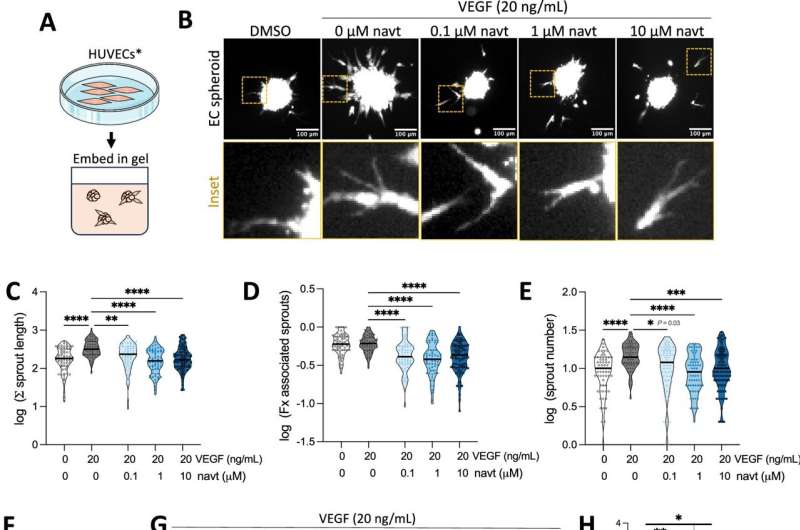
Research conducted by the **Karolinska Institutet** has uncovered significant insights into the dual role of the protein **p53**, often referred to as the “guardian of the genome.” This protein is primarily known for its function in preventing cancer but also plays a crucial role in regulating blood vessel growth. The findings, published on **January 2, 2026**, in the journal **Cell Death & Disease**, highlight how varying levels of p53 can lead to contrasting effects on blood vessels.
The study focused on how p53 influences the formation of new blood vessels, a process vital for healthy tissue. Researchers found that when p53 is activated, its effectiveness depends on the amount present in the cells. By utilizing a new class of compounds to adjust p53 levels, the team employed advanced imaging techniques to monitor how healthy blood vessel cells respond during angiogenesis—the formation of new blood vessels.
New vessels develop through a systematic process where specialized cells within the vessel walls proliferate, migrate, and organize into functional structures. In cases of cancer and certain eye diseases, this process can become dysregulated, leading to excessive vessel growth that exacerbates the conditions.
Understanding p53’s Dual Effects
One of the key findings of the research is the sensitivity of blood vessel cells to p53 levels, a response that differs from other cell types. **Pavitra Kannan**, a researcher in the Department of Microbiology, Tumor and Cell Biology at **Karolinska Institutet**, noted, “One of the most striking observations was how sensitive these blood vessel cells are even to very low p53 levels compared to other cell types.”
The research revealed that low levels of p53 cause endothelial cells to temporarily halt division, while elevated levels push these cells into a permanent state of senescence, where they can no longer divide or survive. These findings indicate that the cellular outcomes are fundamentally different depending on the p53 response strength, yet both low and high levels result in reduced blood vessel growth.
This duality underscores how p53 can influence cellular behavior in distinct ways, depending on its activation level. The implications of this research are significant, as they provide a clearer understanding of how p53 can be targeted in therapies aimed at controlling abnormal blood vessel growth in conditions such as cancer and various eye diseases.
Future Implications for Therapy
The research led by **Omayma Al-Radi** and colleagues may open new avenues for medical interventions. By understanding the precise mechanisms through which p53 operates, scientists can develop targeted therapies to manage diseases characterized by abnormal angiogenesis.
The advancements in this area could fundamentally change treatment approaches, enhancing the effectiveness of therapies aimed at controlling blood vessel growth in both cancer and ocular diseases. This nuanced understanding of p53’s functionality emphasizes the importance of targeted molecular approaches in medical research and treatment design.
As researchers continue to explore the complexities of p53, the potential for innovative therapeutic strategies becomes increasingly visible, promising to impact patient outcomes significantly.

Robinhood Stock Surges 2.5% in Early Trading on March 17

Israel Intensifies Strikes as Global Energy Crisis Looms

CALV Offers Class on Communication Skills for Real Estate Professionals

Historic Bideford Pub Reopens as The Patch Wine Bar & Kitchen

Oscar Night Celebrations: Winners, Guests, and Exclusive After-Parties

Samsung Galaxy Watch 9 Set for Larger Battery Boost, Report Reveals

Kibble vs. Fresh Dog Food: What’s Best for Your Dog’s Health?

Acclaimed San Francisco Pizzeria Del Popolo to Close in May

‘Invincible’ Season 4 Launches on Prime Video with Epic Action

ALMA Discovers Companion Orbiting Giant Red Star π 1 Gruis

Doctoral Candidate Trivanni Yadav Advances Battery Research at UTulsa

Global Air Forces Ranked by Annual Defense Budgets in 2025

Rev. Bry Shields to Retire as McGill-Toolen President in 2026

Mass Production of F-35 Fighter Jet Drives Down Costs

Tucson Celebrates Life and Remembrance at 36th Annual All Souls Procession

Gold Investment Surge: Top Mutual Funds and ETF Alternatives

DirecTV to Launch AI-Driven Ads with User Likenesses in 2026

Paul Giamatti Reveals Villainous Role in Star Trek: Starfleet Academy
-
 Science9 months ago
ALMA Discovers Companion Orbiting Giant Red Star π 1 Gruis
-
 Science8 months ago
Doctoral Candidate Trivanni Yadav Advances Battery Research at UTulsa
-
 World10 months ago
Global Air Forces Ranked by Annual Defense Budgets in 2025
-
 Lifestyle10 months ago
Rev. Bry Shields to Retire as McGill-Toolen President in 2026
-
 World10 months ago
Mass Production of F-35 Fighter Jet Drives Down Costs
-
 Lifestyle9 months ago
Tucson Celebrates Life and Remembrance at 36th Annual All Souls Procession
-
 Business10 months ago
Gold Investment Surge: Top Mutual Funds and ETF Alternatives
-
 Top Stories10 months ago
DirecTV to Launch AI-Driven Ads with User Likenesses in 2026
-
 Entertainment10 months ago
Paul Giamatti Reveals Villainous Role in Star Trek: Starfleet Academy
-

 Lifestyle8 months ago
Maumee’s Shop With a Hero Event Delivers Joy to Local Children
-

 Top Stories10 months ago
New ‘Star Trek: Voyager’ Game Demo Released, Players Test Limits
-

 Lifestyle8 months ago
Cape May Shines as New Jersey’s Only Entry on Beach Town List