
Science
Scientists Scan 3I/ATLAS for Alien Signals but Find None

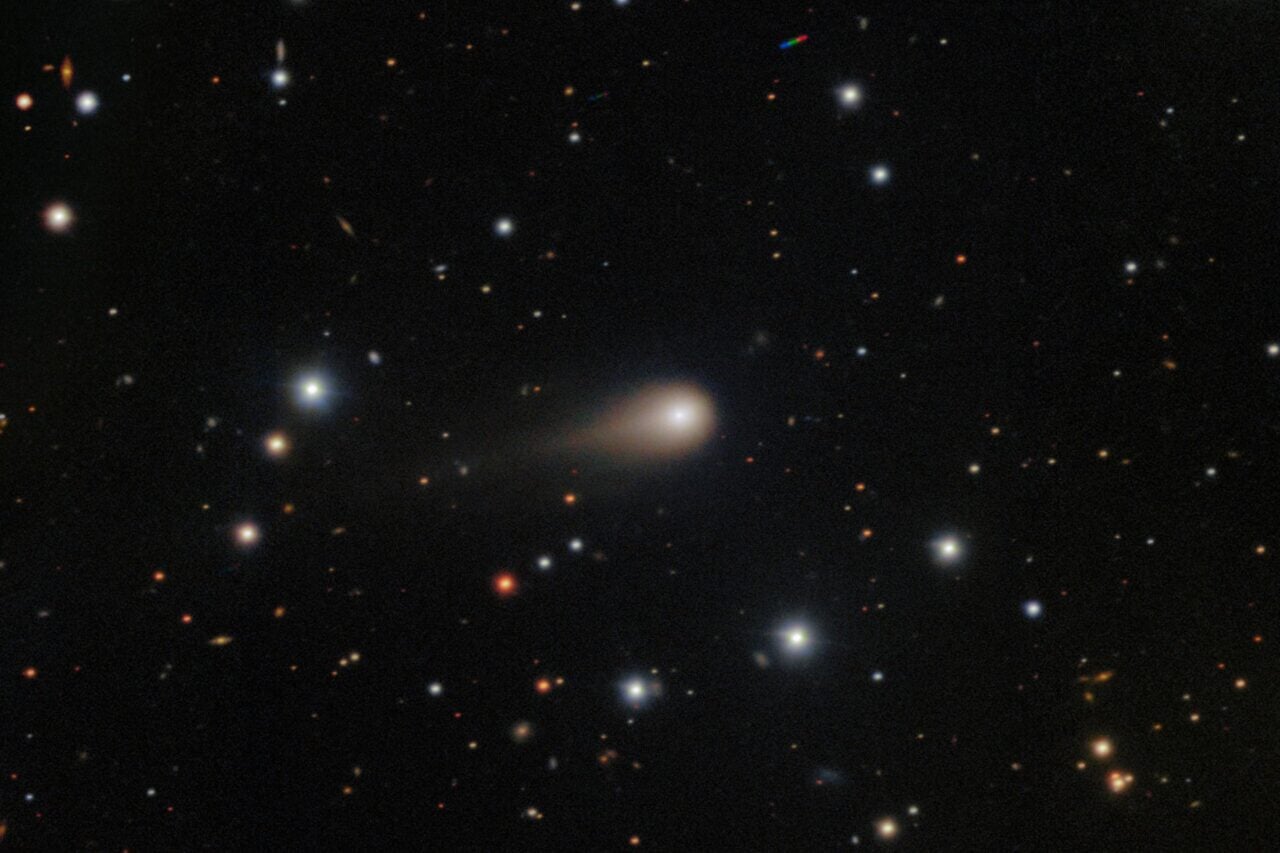
Astronomers recently conducted a comprehensive search for artificial signals from the interstellar object 3I/ATLAS, yet findings indicate it is likely a natural comet. The study was carried out by the Breakthrough Listen program as 3I/ATLAS approached its closest point to Earth on December 18, 2023. Despite speculation about the object’s origin, scientists found no credible evidence to suggest it is anything other than a cosmic body.
Since its discovery, 3I/ATLAS has sparked curiosity among scientists and the public alike. Initially classified as an interstellar comet, it became the subject of debate when Avi Loeb, a Harvard astronomer, proposed that it might be an alien spacecraft. Although subsequent studies have largely refuted this claim, Loeb has persisted in suggesting that the object may possess technological characteristics.
To clarify its nature, researchers employed the Robert C. Byrd Green Bank Telescope in Green Bank, West Virginia. This telescope, measuring 328 feet (100 meters), is recognized as the largest movable structure globally and plays a significant role in Search for Extraterrestrial Intelligence (SETI) research. The team scanned 3I/ATLAS for narrowband radio technosignatures—essentially searching for artificial radio signals that might indicate technology.
The analysis began with approximately 470,000 potential signals detected during the search, but further investigation reduced this to just nine candidates. Ultimately, these signals were dismissed as human-made interference. The researchers concluded, “There is currently no evidence to suggest that [interstellar objects] are anything other than natural astrophysical objects.” They emphasized the need for ongoing scrutiny due to the limited number of known interstellar objects—only three to date.
Understanding 3I/ATLAS
While the absence of artificial signals may disappoint some extraterrestrial enthusiasts, the natural origin of 3I/ATLAS does not lessen its scientific value. This comet represents a rare opportunity to study a celestial object from another star system. Discovered as the third known interstellar object, 3I/ATLAS displays characteristics that set it apart from its predecessors, which include Oumuamua and 2I/Borisov.
Evidence suggests that 3I/ATLAS is significantly older, larger, and faster than these earlier objects and exhibits unique chemical and physical properties. This distinction allows scientists to gain insights into the formation and evolution of other star systems.
As 3I/ATLAS continues its journey back into interstellar space, astronomers will analyze the extensive data collected during its visit. Although these studies may not lead to discoveries of intelligent extraterrestrial life, they will undoubtedly enhance our understanding of the universe and its myriad celestial bodies. The ongoing research surrounding 3I/ATLAS promises to yield valuable knowledge for years to come, making it a significant point of interest in the field of astronomy.

Robinhood Stock Surges 2.5% in Early Trading on March 17

Israel Intensifies Strikes as Global Energy Crisis Looms

CALV Offers Class on Communication Skills for Real Estate Professionals

Historic Bideford Pub Reopens as The Patch Wine Bar & Kitchen

Oscar Night Celebrations: Winners, Guests, and Exclusive After-Parties

Samsung Galaxy Watch 9 Set for Larger Battery Boost, Report Reveals

Kibble vs. Fresh Dog Food: What’s Best for Your Dog’s Health?

Acclaimed San Francisco Pizzeria Del Popolo to Close in May

‘Invincible’ Season 4 Launches on Prime Video with Epic Action

ALMA Discovers Companion Orbiting Giant Red Star π 1 Gruis

Doctoral Candidate Trivanni Yadav Advances Battery Research at UTulsa

Global Air Forces Ranked by Annual Defense Budgets in 2025

Rev. Bry Shields to Retire as McGill-Toolen President in 2026

Mass Production of F-35 Fighter Jet Drives Down Costs

Tucson Celebrates Life and Remembrance at 36th Annual All Souls Procession

Gold Investment Surge: Top Mutual Funds and ETF Alternatives

DirecTV to Launch AI-Driven Ads with User Likenesses in 2026

Paul Giamatti Reveals Villainous Role in Star Trek: Starfleet Academy
-
 Science9 months ago
ALMA Discovers Companion Orbiting Giant Red Star π 1 Gruis
-
 Science8 months ago
Doctoral Candidate Trivanni Yadav Advances Battery Research at UTulsa
-
 World10 months ago
Global Air Forces Ranked by Annual Defense Budgets in 2025
-
 Lifestyle10 months ago
Rev. Bry Shields to Retire as McGill-Toolen President in 2026
-
 World10 months ago
Mass Production of F-35 Fighter Jet Drives Down Costs
-
 Lifestyle9 months ago
Tucson Celebrates Life and Remembrance at 36th Annual All Souls Procession
-
 Business10 months ago
Gold Investment Surge: Top Mutual Funds and ETF Alternatives
-
 Top Stories10 months ago
DirecTV to Launch AI-Driven Ads with User Likenesses in 2026
-
 Entertainment10 months ago
Paul Giamatti Reveals Villainous Role in Star Trek: Starfleet Academy
-

 Lifestyle8 months ago
Maumee’s Shop With a Hero Event Delivers Joy to Local Children
-

 Top Stories10 months ago
New ‘Star Trek: Voyager’ Game Demo Released, Players Test Limits
-

 Lifestyle8 months ago
Cape May Shines as New Jersey’s Only Entry on Beach Town List